

Project Description
Sengo Muramasa
- Availability: Available
- Kanteisho: NBTHK Hozon
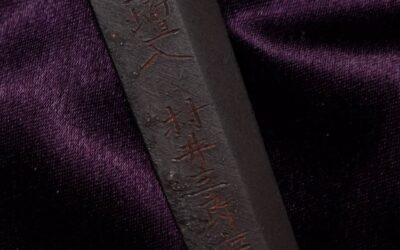
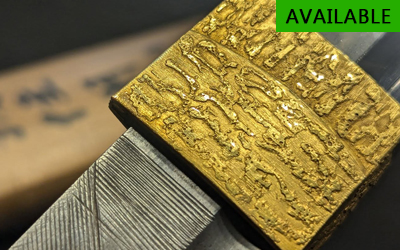
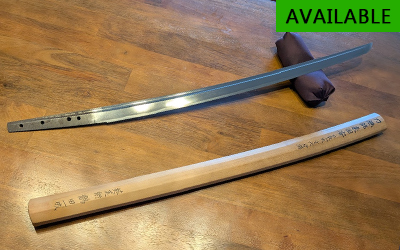
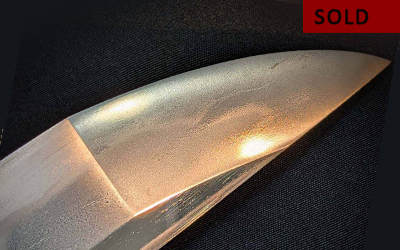
MURAMASA (村正), Bunki (文亀, 1501-1504), Ise – “Muramasa” (村正), “Uemon no Jō Muramasa saku” (右衛門尉村正作), “Seishū Kuwana-jū Muramasa” (勢州桑名住村正), “Kuwana-jū Muramasa” (桑名住村正), first name Uemon (右衛門), according to tradition the son of the Ryōken-smith (良賢) Kanemura (兼村) who was active around Bunmei (文明, 1469-1487) in Mino, other traditions see him as student of Seki Kaneharu (兼春), there exists also the theory that he was trained by the 5th gen. Heianjō Nagayoshi (平安城長吉) who had worked temporarily in Ise province but there are also blades extant which closely resemble works of Izumo no Kami Kanesada (和泉守兼定, No-Sada), and from No-Sada in turn we know the signature “Ise ni oite Yamada kore o saku” (於伊勢山田是作, “made in Ise´s Yamada”), so this smith had worked in Ise too, in addition, there is a gassaku-tantō of Muramasa with Seki Kanenaga (兼永) extant, that means we can confirm that there had been a close connection between Muramasa and the Seki smiths, his priest name was Myōdai (妙台) and his gō Sengo (千子) which was the name giver for the school he founded, we know blades from the Bunmei to the Eishō era (永正, 1504-1521) whereas the oldest exstant date signature is from the eighth month of the first year of Bunki (1501), there are katana, ko-wakizashi, and tantō extant, the former measure about 66.7 to 69.7 cm, show a sakizori, and have scarce hira-niku, tantō measure around 27.3 cm and have some sori, hira-zukuri ko-wakizashi measure around 39.4 to 42.4 cm and have sakizori too, the jigane is a dense itame mixed with masame and ji-nie, the hamon is a hitatsura in ko-nie-deki, a suguha with koshiba in nioi-deki, a notare, a notare mixed with angular gunome, or a hako-midare, whereas frequently mura-nie occur, often the gunome arrange to groups of two or three and the valleys in between lower noticeably towards ha, the hamon is identical on both sides of the blade, the bōshi is a midare-komi which tends to jizō, often with a long midare-kaeri, basically Muramasa´s workmanship can be regarded as a mix of the Mino and the Sōshū tradition, the tang has a characteristic tanagobara shape whereas the back of the tang is angular and the cutting edge of the tang roundish, at some blades the tang was later altered to resemble the tanagobara of Muramasa but in this case, the cutting edge of the tang is unnaturally thick, that means it is obvious that the tang was narrowed there without thinning it, there was once the legend going round hat Muramasa was a student of Masamune (正宗) but this was alreadys dismissed in sword publications of the Keichō era (慶長, 1596-1615), during the Edo period the wearing of Muramasa blades was temporarily prohibited by the bakufu because the family of the Tokugawa-shōgun declared them as being unlucky for them, as a result, the signatures of many blades were altered, for example mostly the character for “Mura” was removed and “hiro” was added underneath the character for “Masa” to get the name “Masahiro” (正広), other possible combinations are “Masamune” (正宗), “Muratada” (村忠), “Muramune” (村宗) or “Hiromasa” (広正), such a signature is called kaisan (改鏨, lit. “altered chisellings”), saijō-saku