

Project Info
Project Description
Keicho Shinto tanto by Owari-Sansaku Nobutaka
- Status: Sold
- Kanteisho: Tokubetsu Hozon
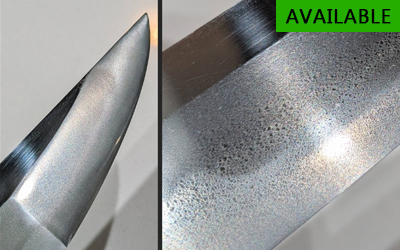
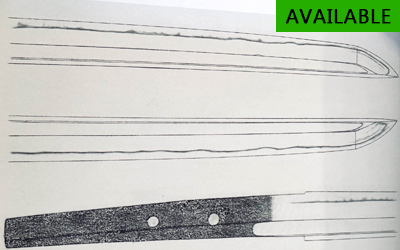
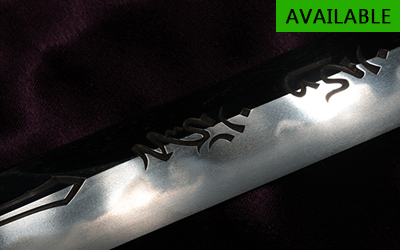
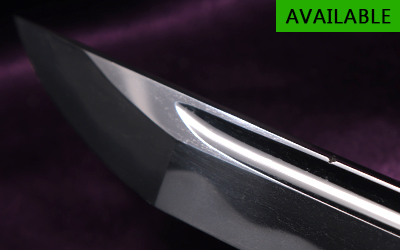
This is an exceptional and rare shodai Nobutaka tanto. This is the only tanto by the first generation Owari Nobutaka that I have seen documented. He was one of the famous Owari-sansaku (three famous masters of Owari). In polish with shakudo and gold foil habaki, Tokubetsu Hozon kanteisho, and koshirae with kamon mitokoromono.
NOBUTAKA, 1st gen., Keichō (1596-1615), Owari – “Nōshū Seki San´ami Kanekuni-matsuyō Hōki no Kami Fujiwara Nobutaka Bishū Nagoya ni oite rokujūsai saku” (“made by Hōki no Kami Fujiwara Nobutaka at the age of 60 in Nagoya in Owari province, successor of Mino San´ami Kanekuni”), “Hōki no Kami Fujiwara Nobutaka”, “Hōki no Kami Fujiwara Ason Nobutaka”, real name Kawamura Saemon, he was born in the sixth year of Eiroku (1563) in Kōzuchi in Mino province and was by his own account a successor of San´ami Kanekuni he moved to Kiyosu in Owari province around Tenshō 16 or 17 (1588/89) and received his honorary title Hōki no Kami, on the eleventh day of the fifth month of Tenshō 20 (1592) by the agency of the kanpaku regent Toyotomi Hidetsugu, but there is also the theory that he had already received this title back in Tenshō nine (1580) because a blade with that date supposedly exists which bears that title in the signature, anyway, it is assumed that he moved to Nagoya when the castle of the same name was finished in Keichō 15 (1610), in the ninth year of Kan´ei (1633) he retired and entered priesthood under the nyūdō-gō Keiyū, leaving the management of the school to his son, the 2nd generation Nobutataka, he died three years later in Kan´ei 13 (1636) at the age of 76, his blades have mostly a wide shinogi-ji, a high shinogi and an elongated kissaki, i.e. basically a Keichō-shintō-sugata, the jigane is a dense and beautifully forged itame mixed with masame and ji-nie but some works also show a standing-out hada and others in turn a shirake-utsuri, the hamon is a notare-midare or gunome-midare, rarely also a chōji or suguha, whereas he hardened in ko-nie-deki and with a wide nioiguchi, there are also some blades with ara-nie and plenty of sunagashi known, together with Sagami no Kami Masatsune and Hida no Kami Ujifusa he was one of the so-called Owari-sansaku, the “Three Owari Masters,” jō-saku