
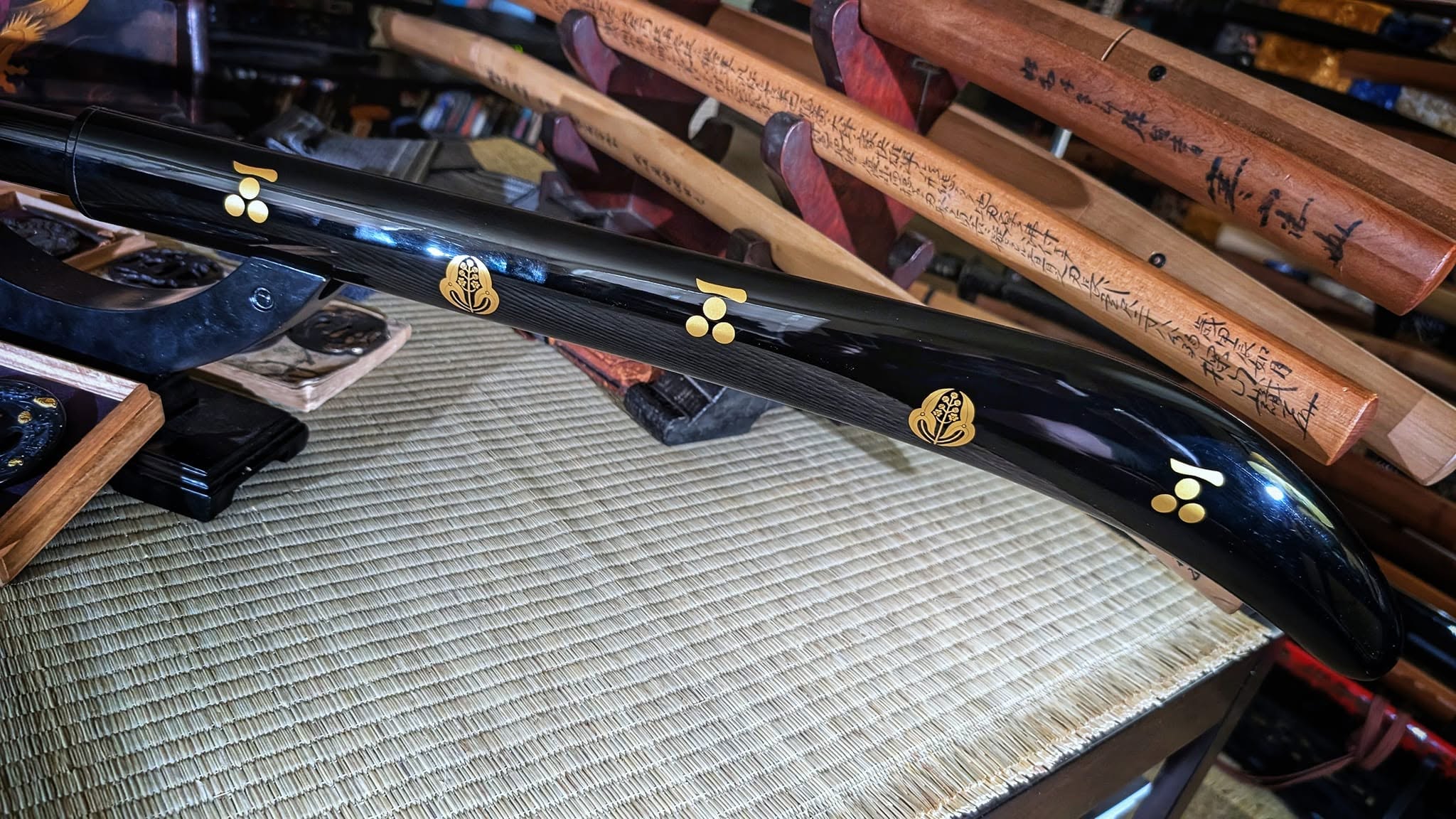
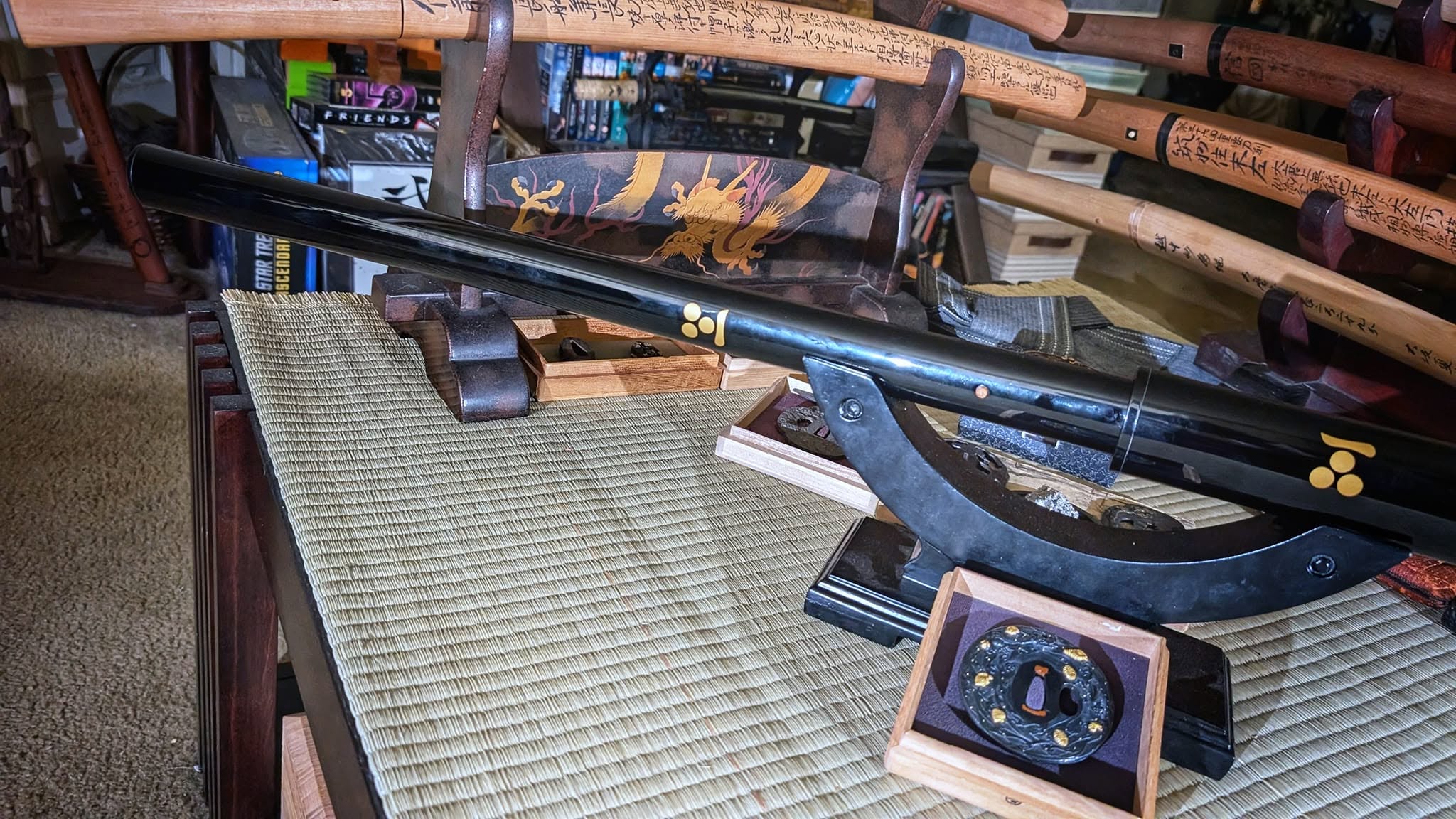
Project Info
Project Description
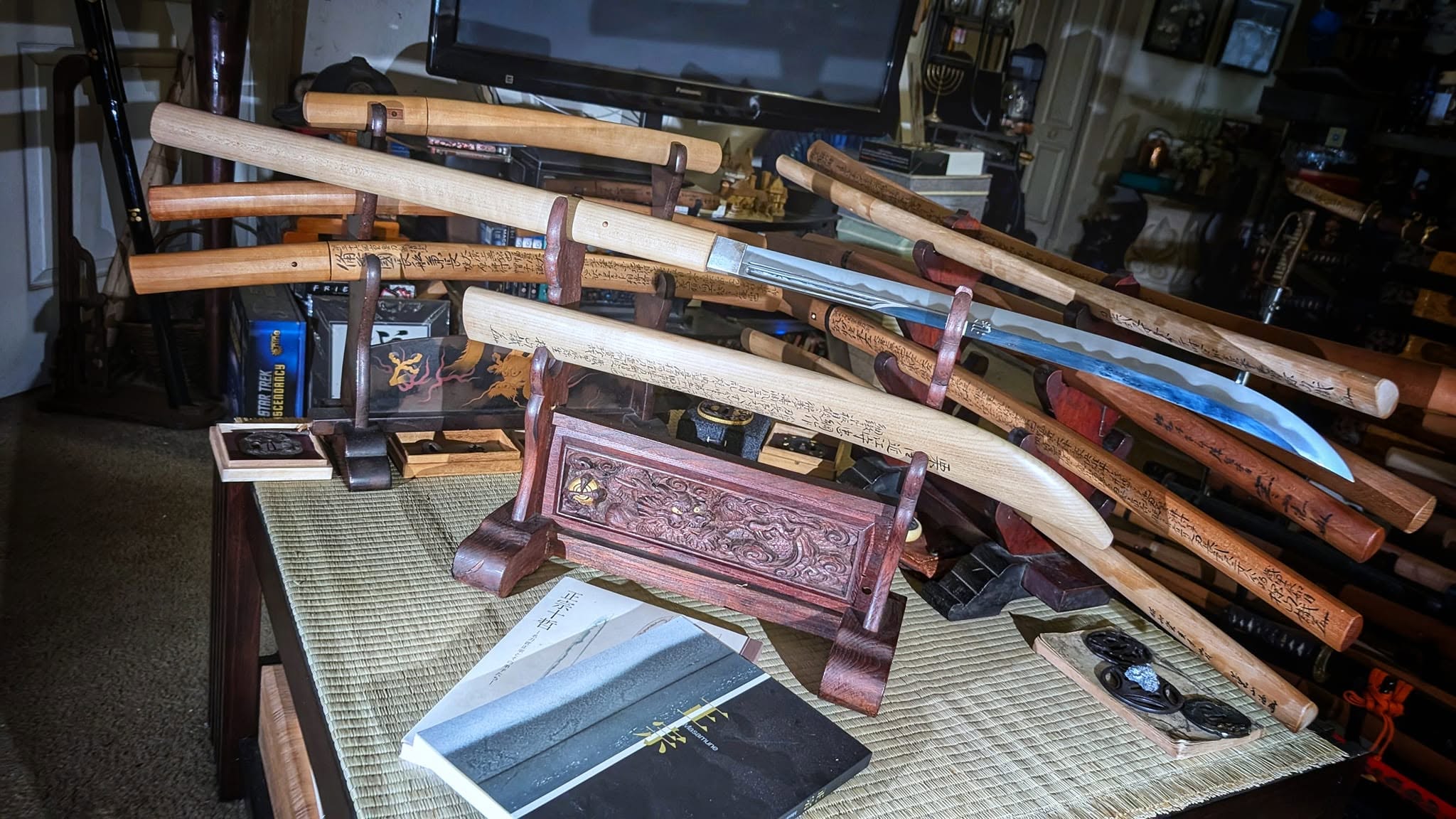
Sayagaki
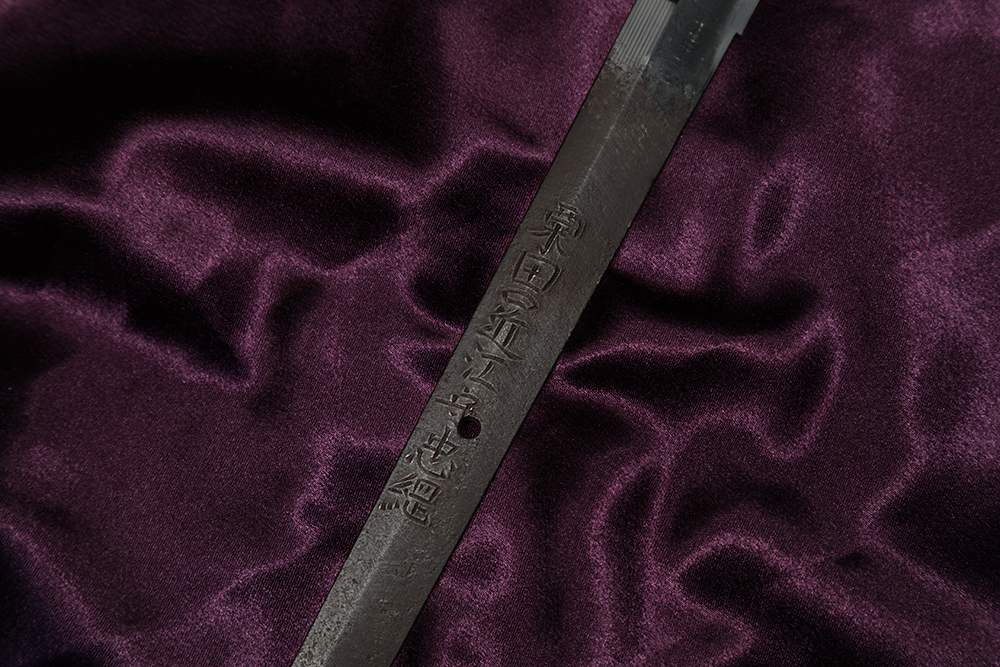
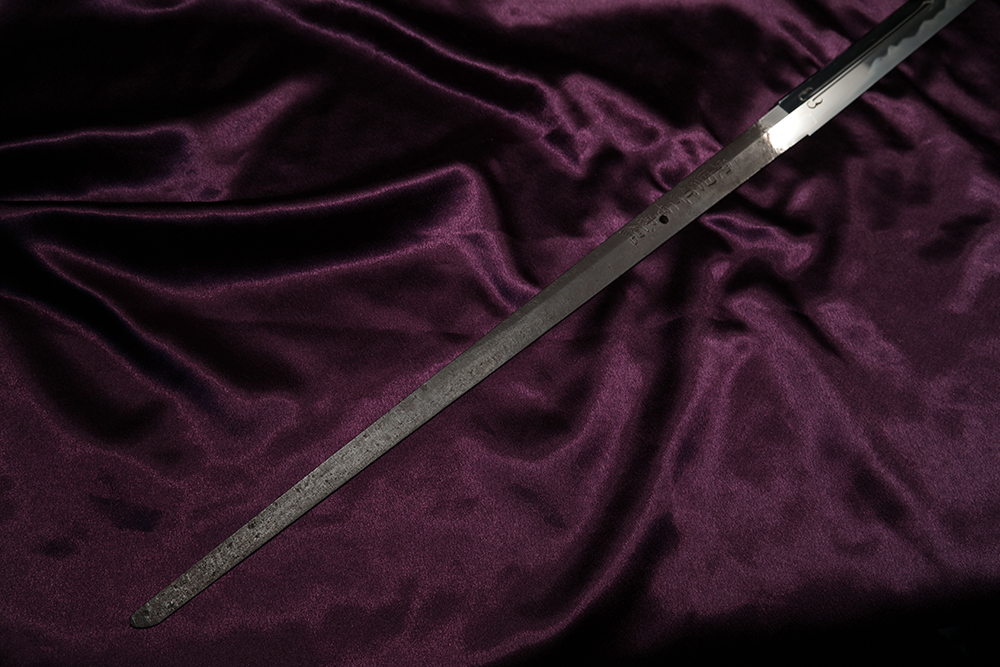
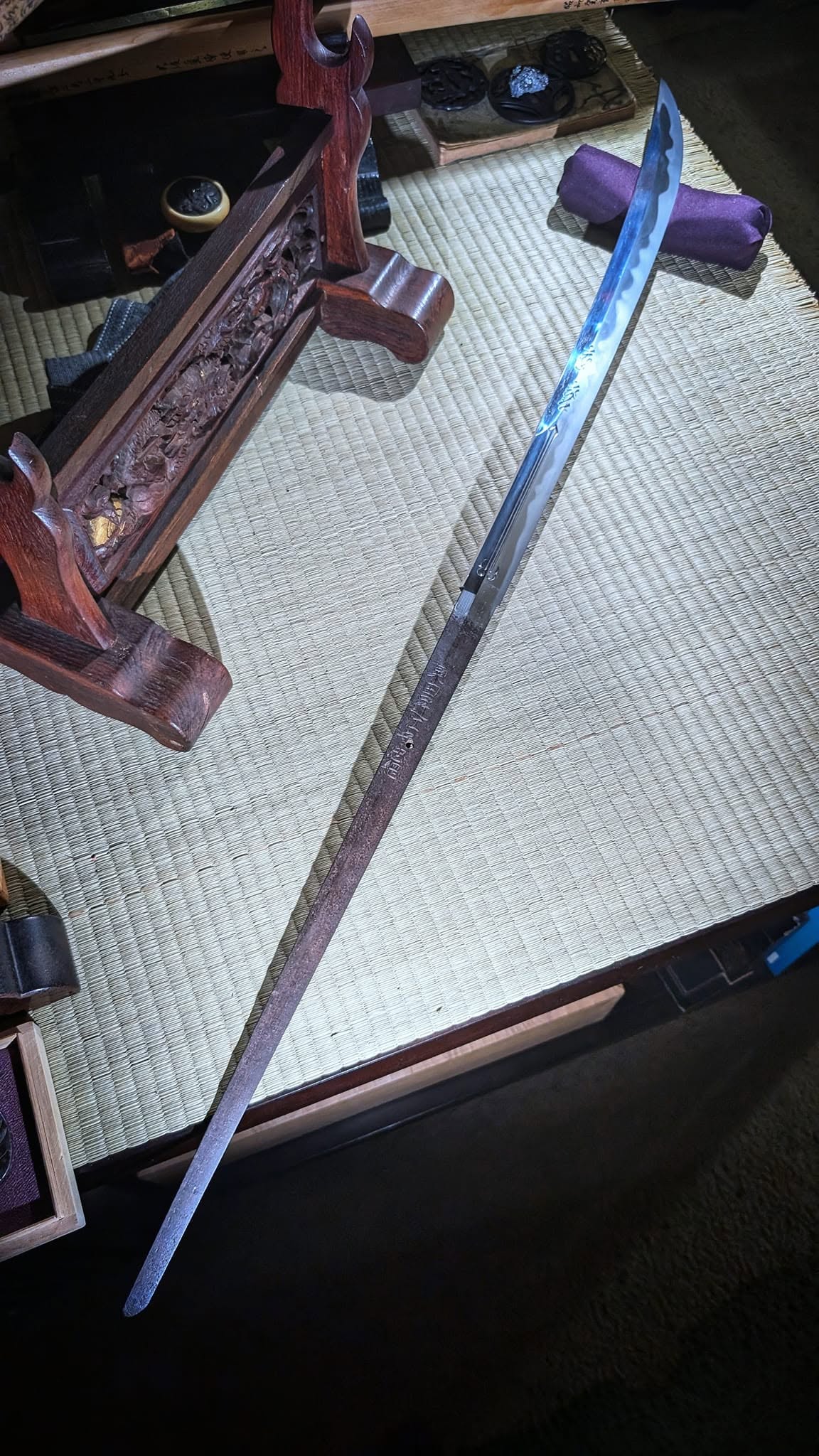
粟⽥⼝近江守忠綱
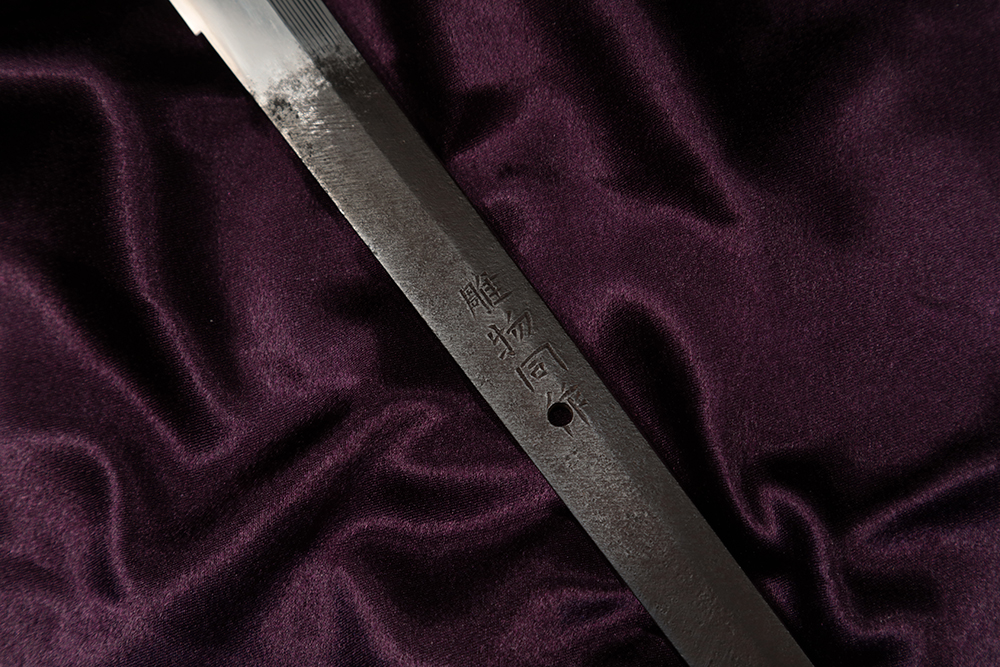
⼋字銘ニ彫物同作ヲ添フ⼆代忠綱即チ⼀竿⼦也
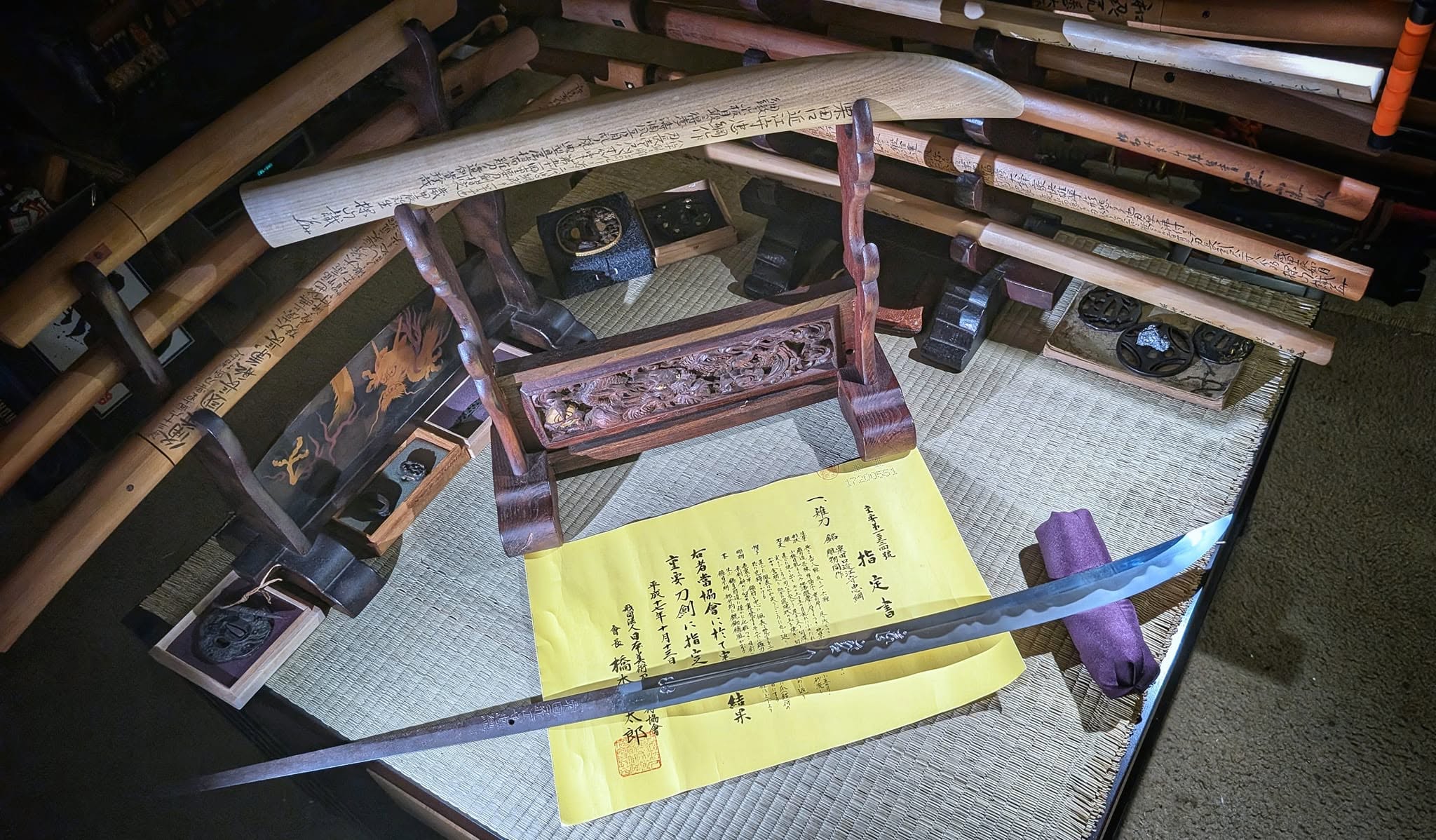
刃⻑壱尺⼋⼨分半第五⼗⼀回重要⼑剣指定
歳甲⾠弥⽣ 探⼭識「花押」
細緻ナル⼩板⽬鍛ヘニ得意ノ濤蘭⾵互乃⽬乱ヲ焼キ典型且屈指⽽薙⼑ノ遺例貴珍哉
Awataguchi Ōmi no Kami Tadatsuna
Hachiji-mei ni horimono-dōsaku o sou nidai Tadatsuna sunawachi Ikkanshi nari.
Hachō isshaku hassun buhan, gojūikkai Jūyō-Tōken shitei
Toki ni kinoe-tatsu yayoi – Tanzan shirusu + kaō
Saichi naru ko-itame kitae ni tokui no tōran-fū gunome-midare o yaki tenkei katsu kusshi shikamo naginata no irei kichin kana.
Awataguchi Ōmi no Kami Tadatsuna
This blade bears an eight-character signature and is also inscribed with the fact that the
engravings were executed by the same hand. Thus, we have here a work of the second generation, that is, of Ikkanshi Tadatsuna.
Blade length ~ 54.8 cm (21 9/16 in.). Jūyō-Tōken at the 51st Jūyō Shinsa.
Written by Tanzan [Tanobe Michihiro] in March of the year of the dragon of this era (2024) +
monogram.
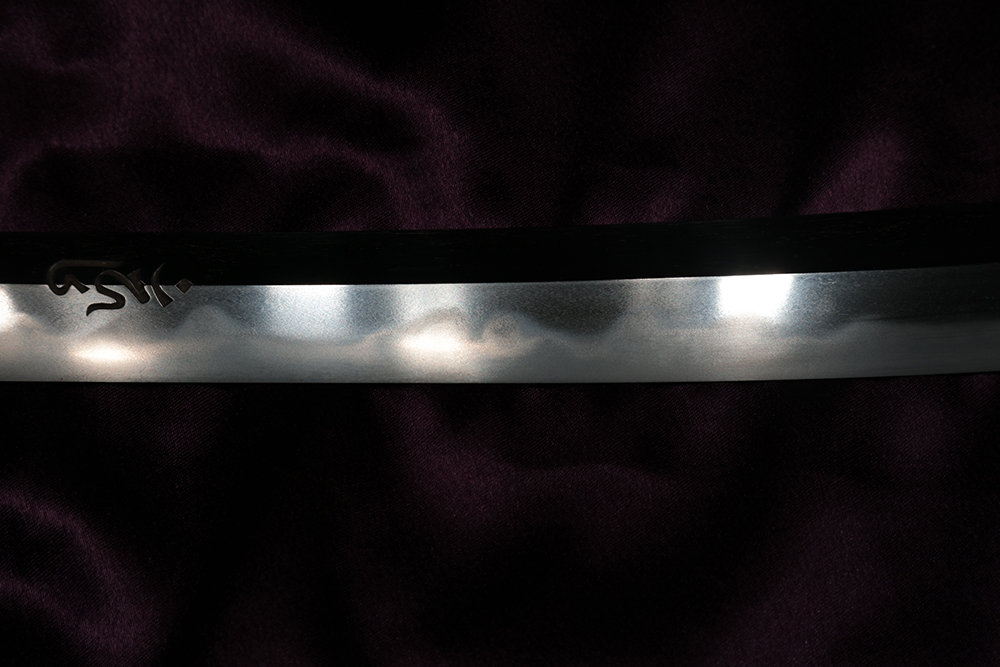
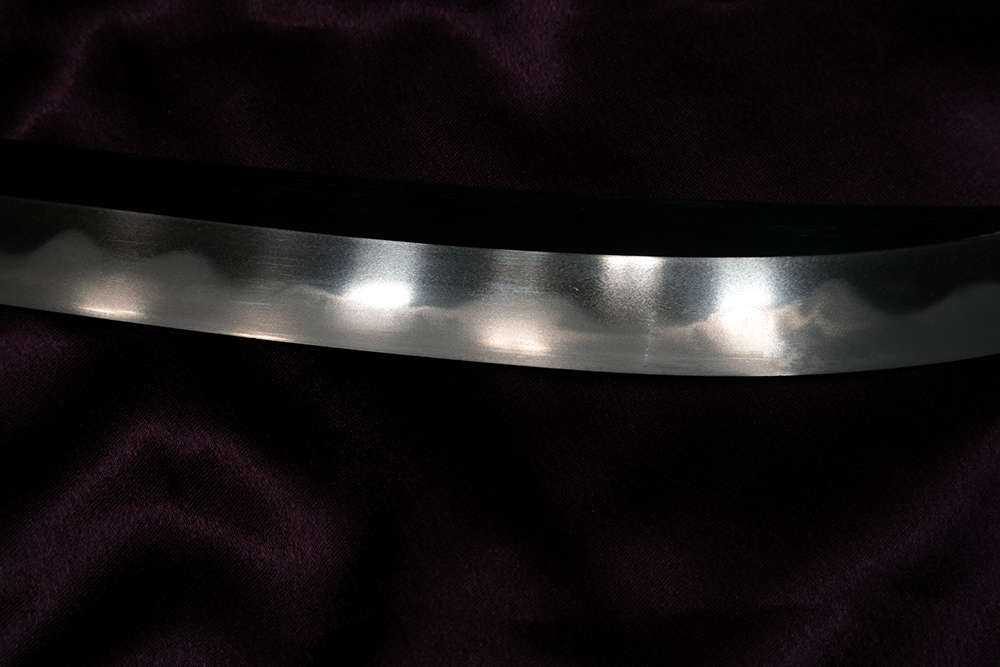
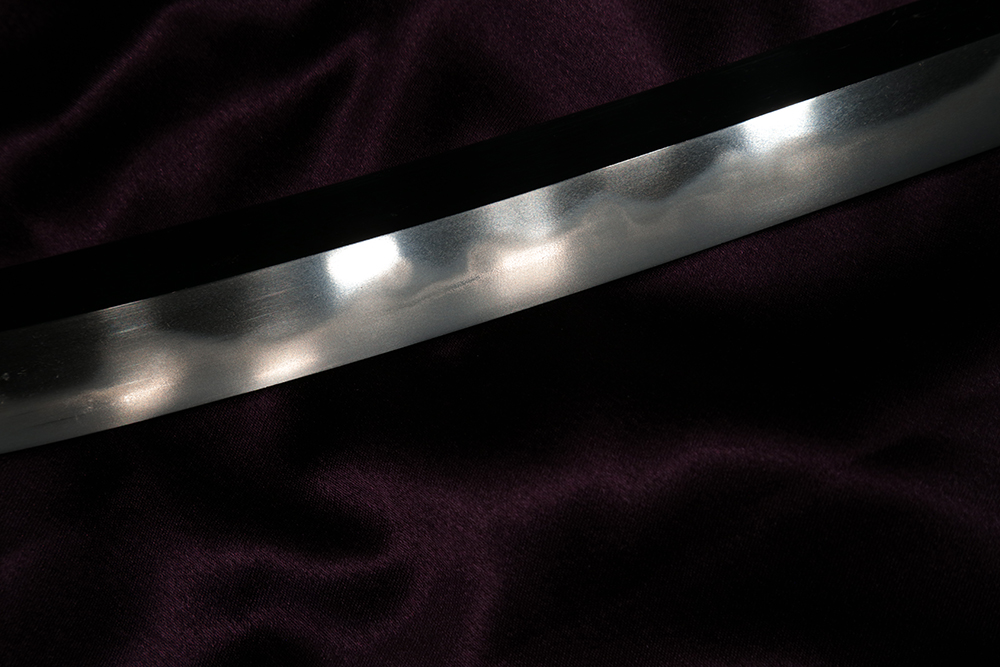
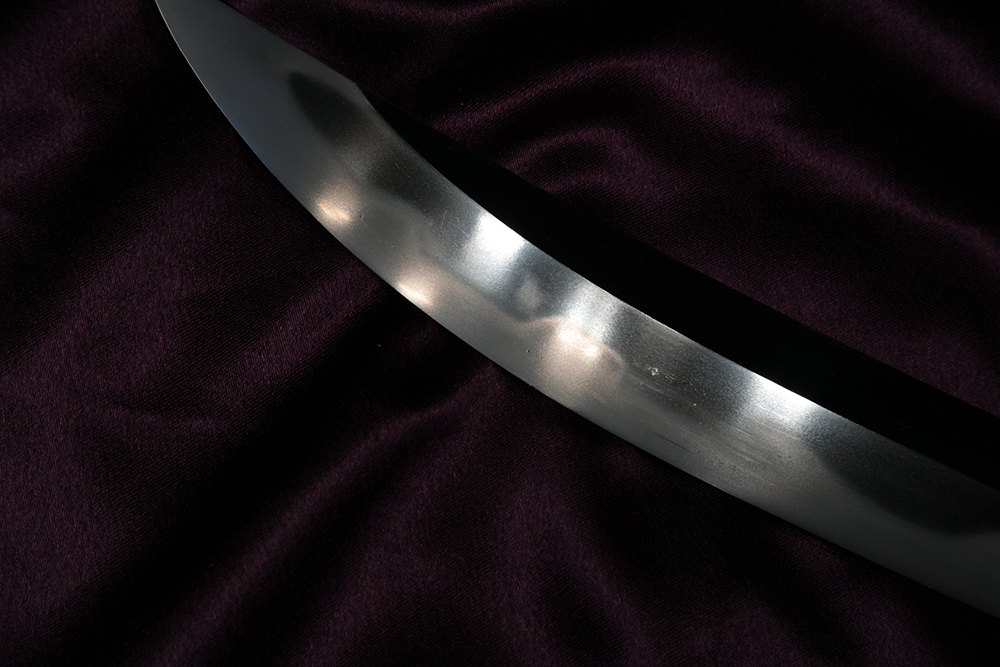
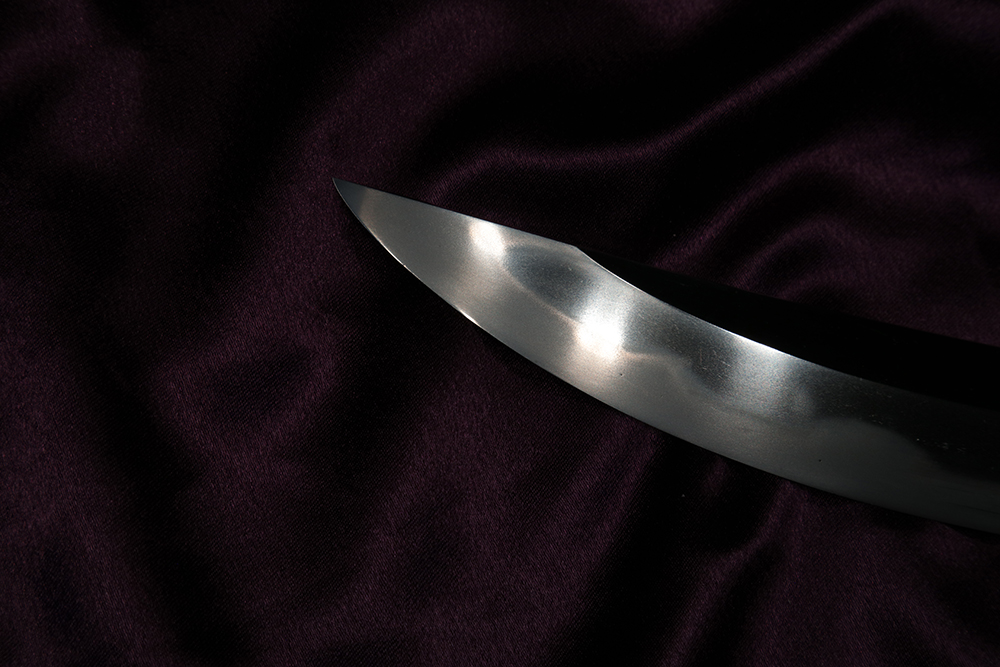
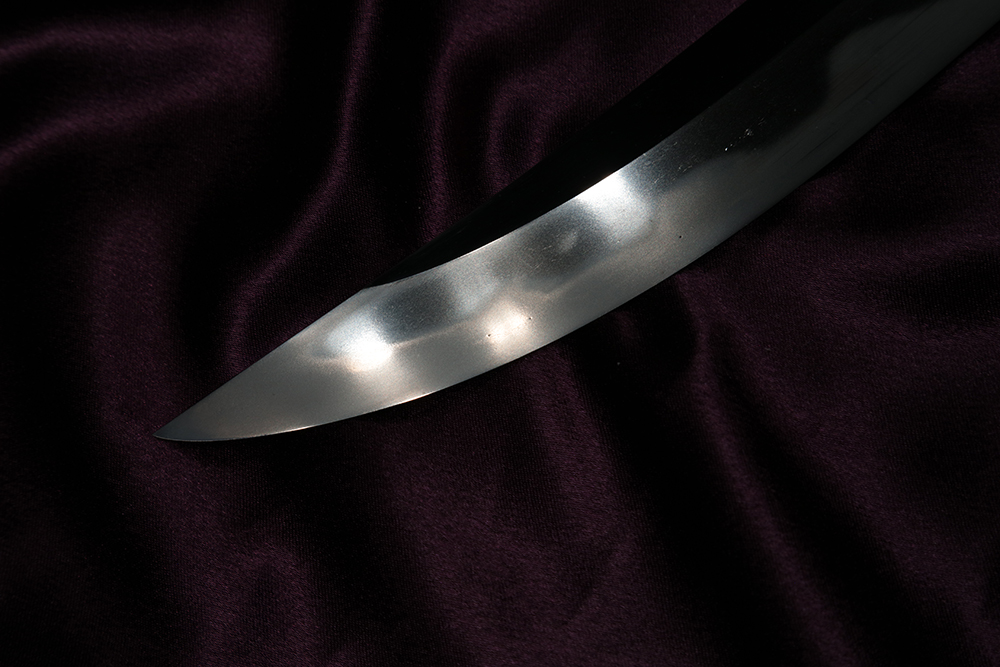
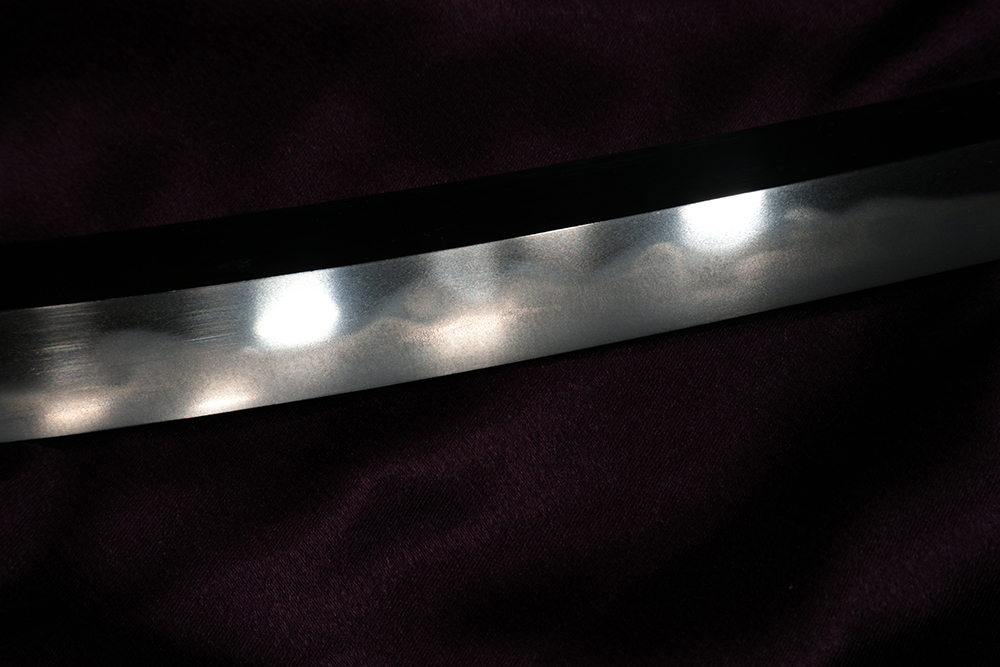
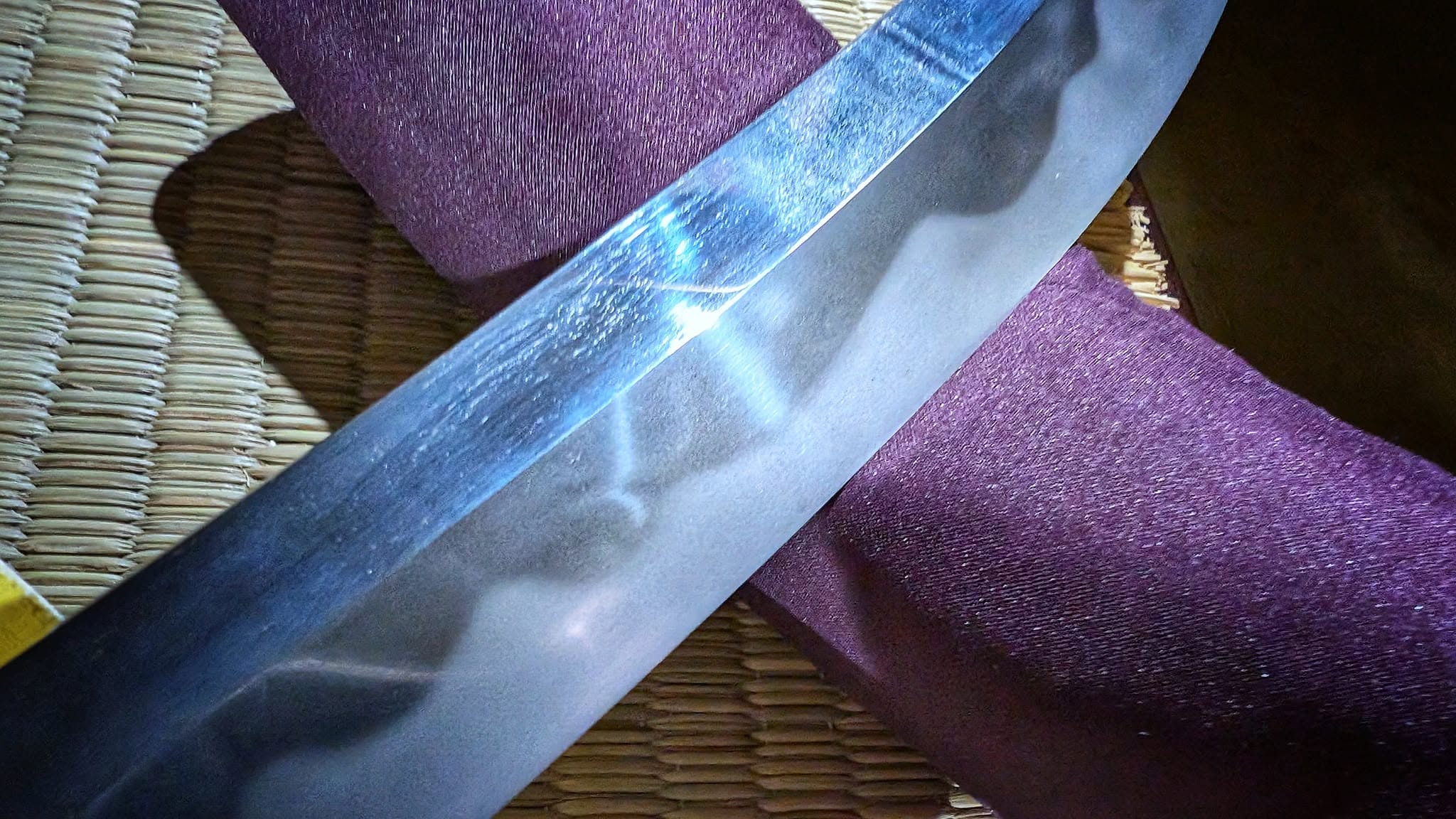
The kitae is a finely forged ko-itame and the blade is hardened in the tōran-style gunome-midare that was the forte of the smith. The blade can be considered textbook and is of outstanding make, and the fact that it is one of the few naginata in existence by Tadatsuna makes the work precious as well.
Juyo Setsu-mei
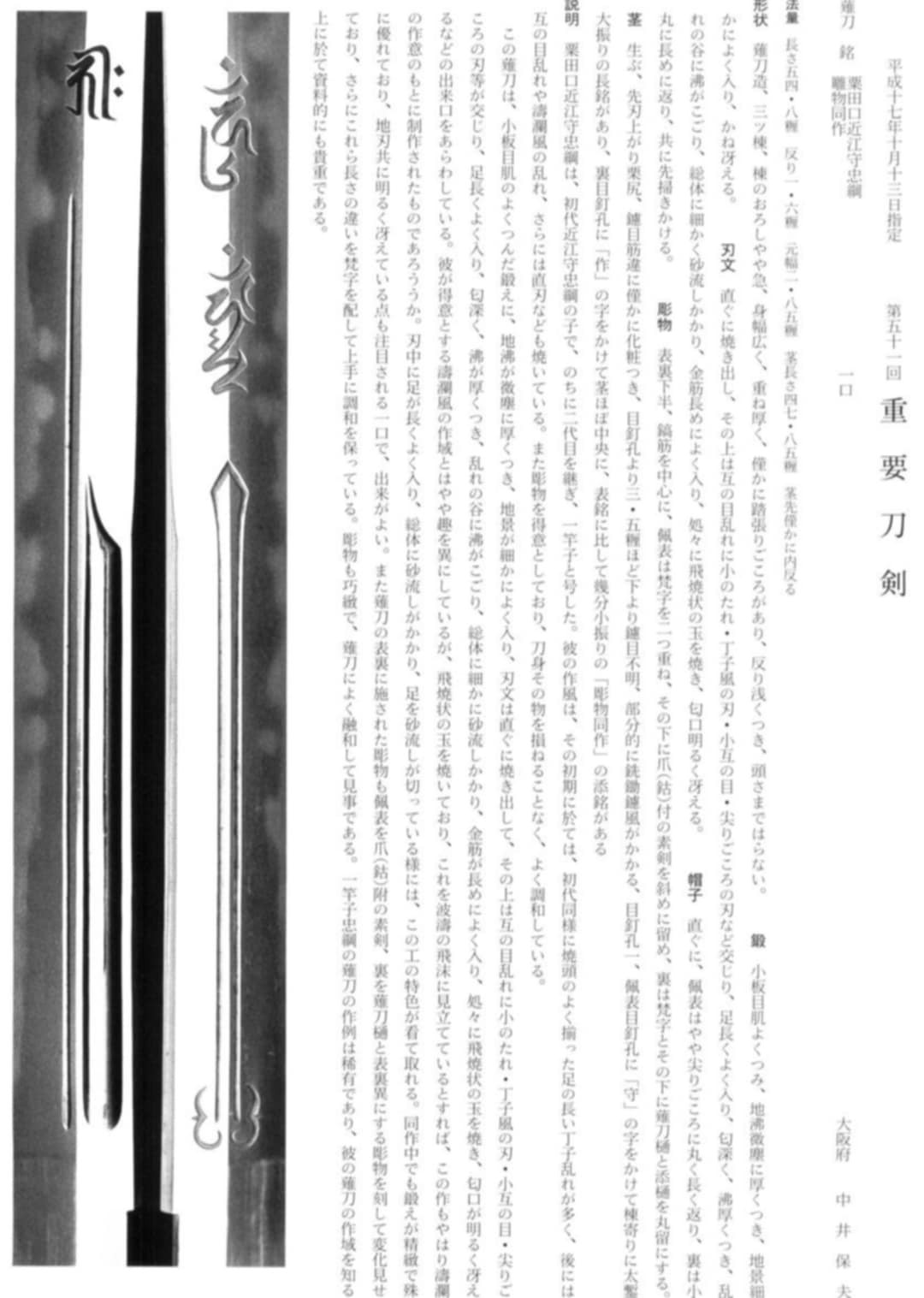
Jūyō-Tōken at the 51st jūyō shinsa held on October 13, 2005
Naginata, mei: Awataguchi Ōmi no Kami Tadatsuna – Horimono dōsaku (粟⽥⼝近江守忠綱・雕物同作) – “Awataguchi Ōmi no Kami Tadatsuna, engravings by
the same hand”
Ōsaka, Nakai Yasuo (中井保夫)
Measurements
Nagasa 54.8 cm, sori 1.8, motohaba 2.85 cm, nakago-nagasa 47.85 cm, slight uchizori at the tip of the tang
Description
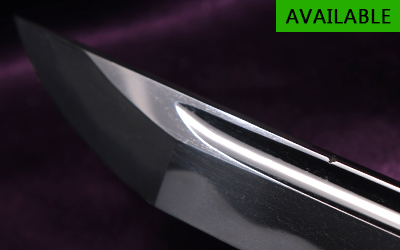
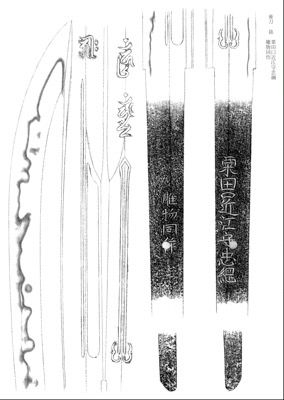
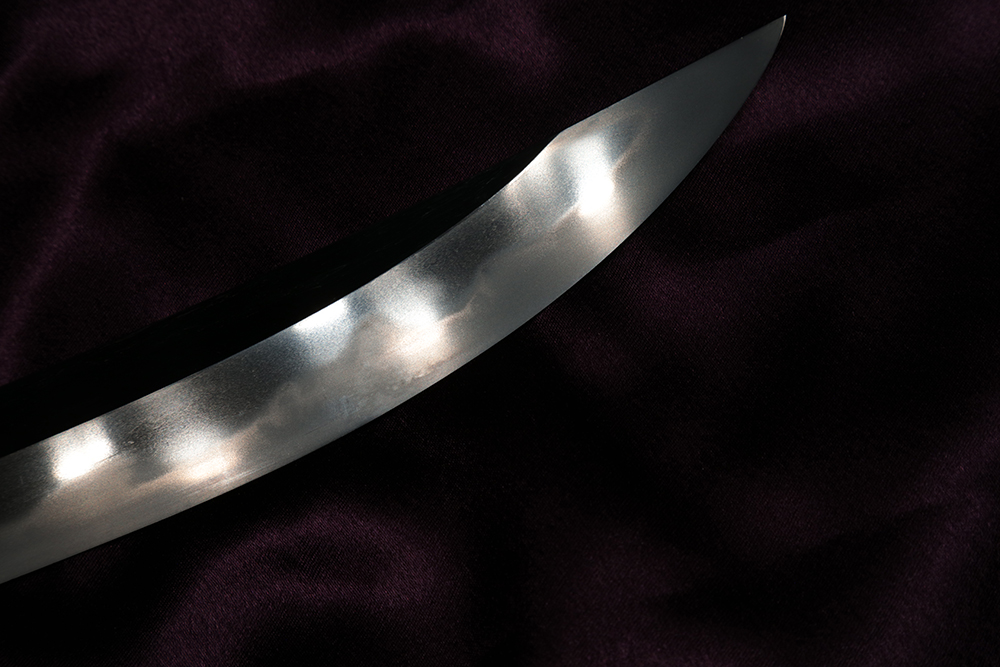
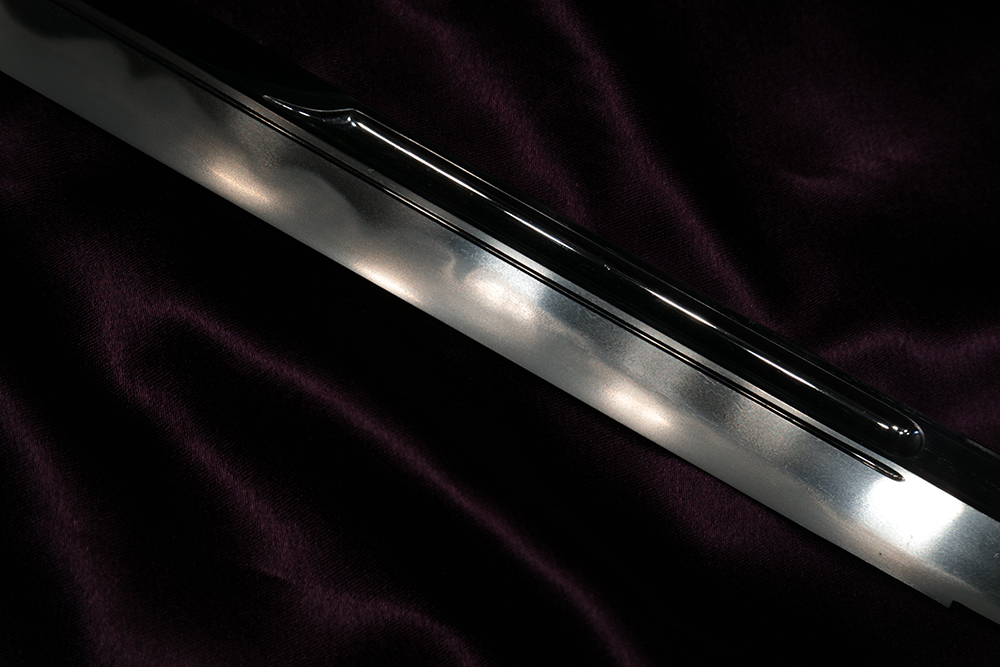
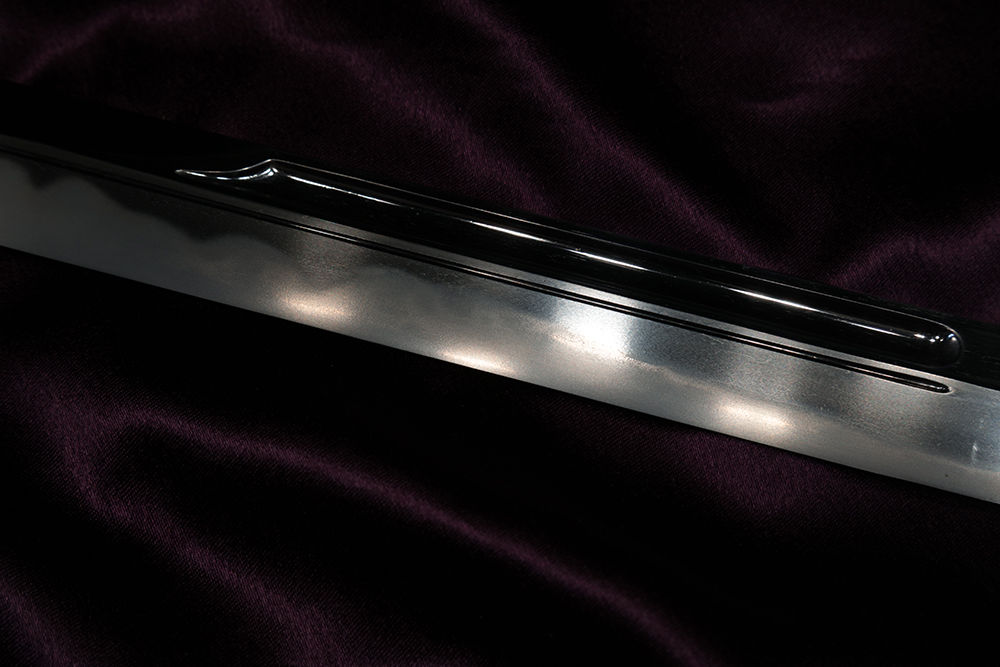
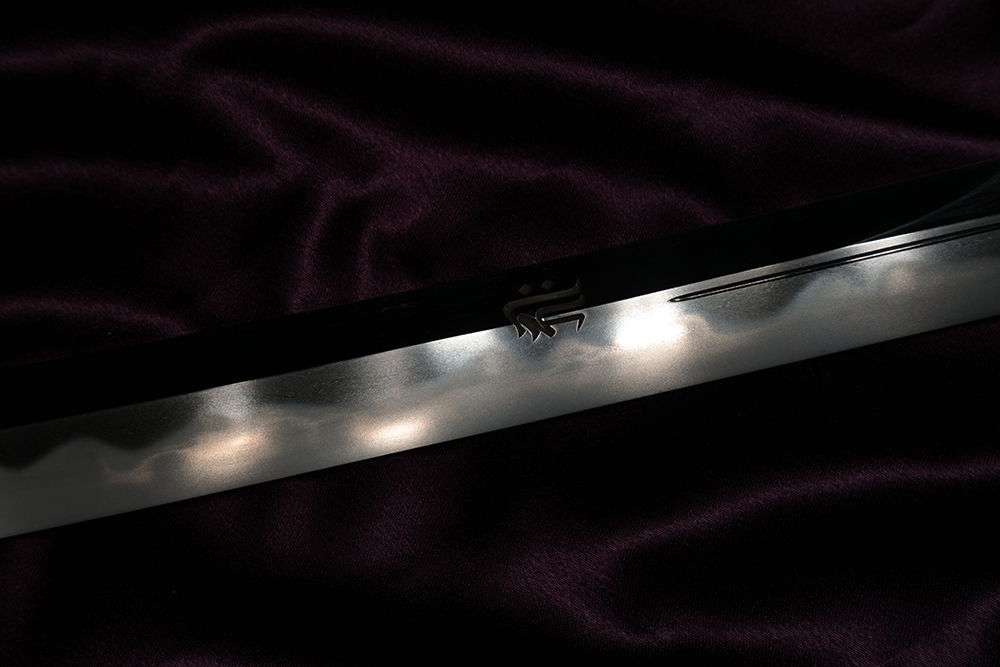
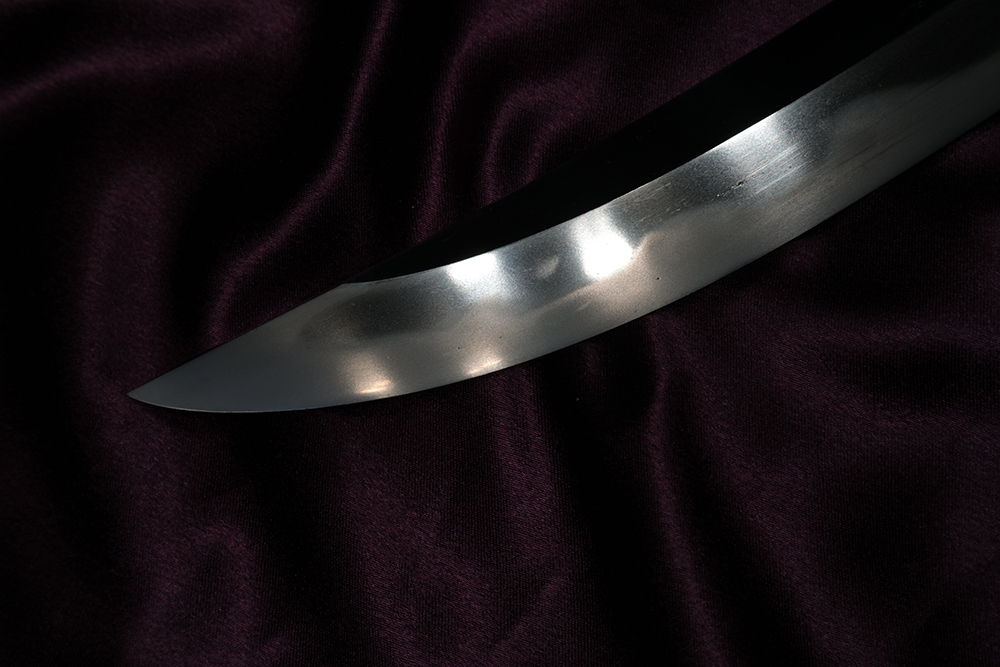
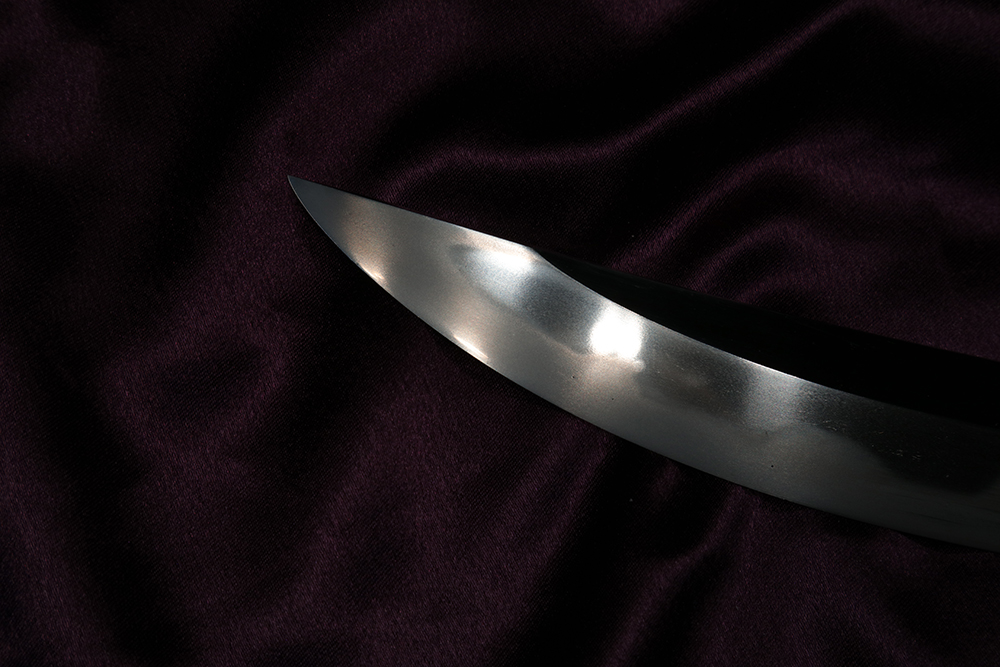
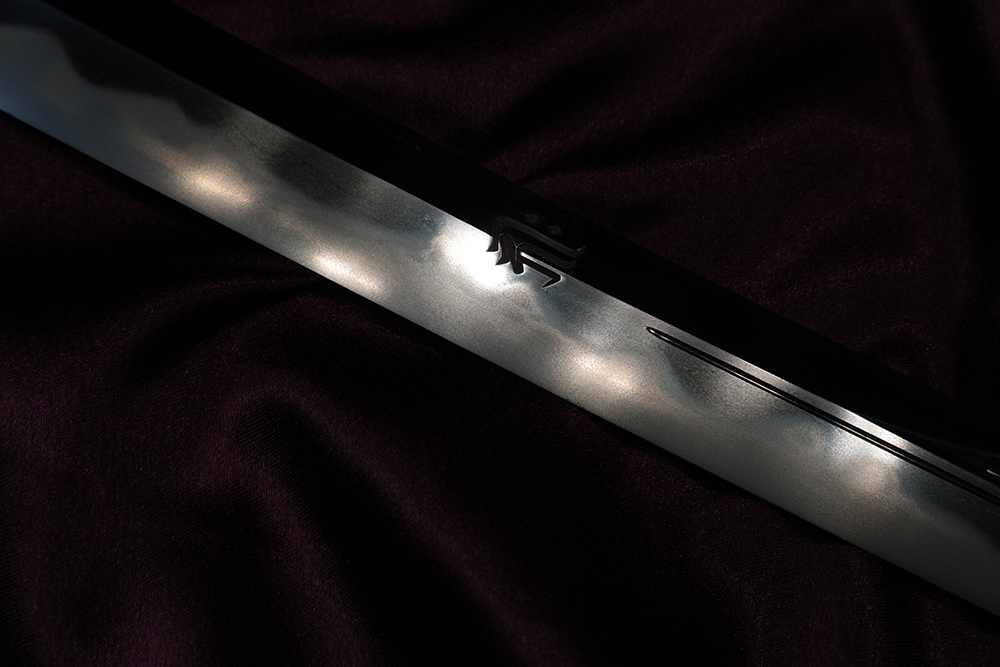
Keijo: naginata-zukuri, mitsu-mune, relatively steep iori-mune, wide mihaba, thick kasane, a hint of funbari, shallow sori, not that bulbous tip section
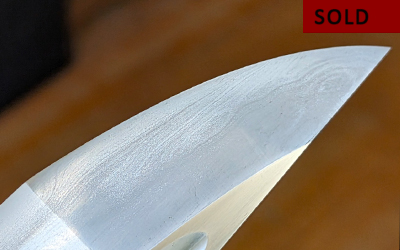
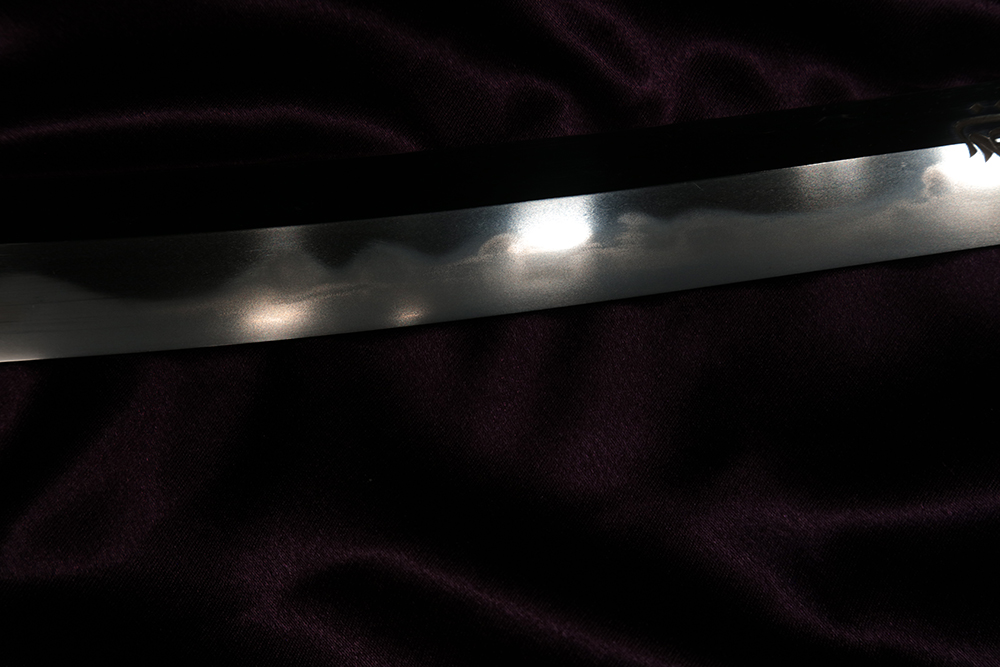
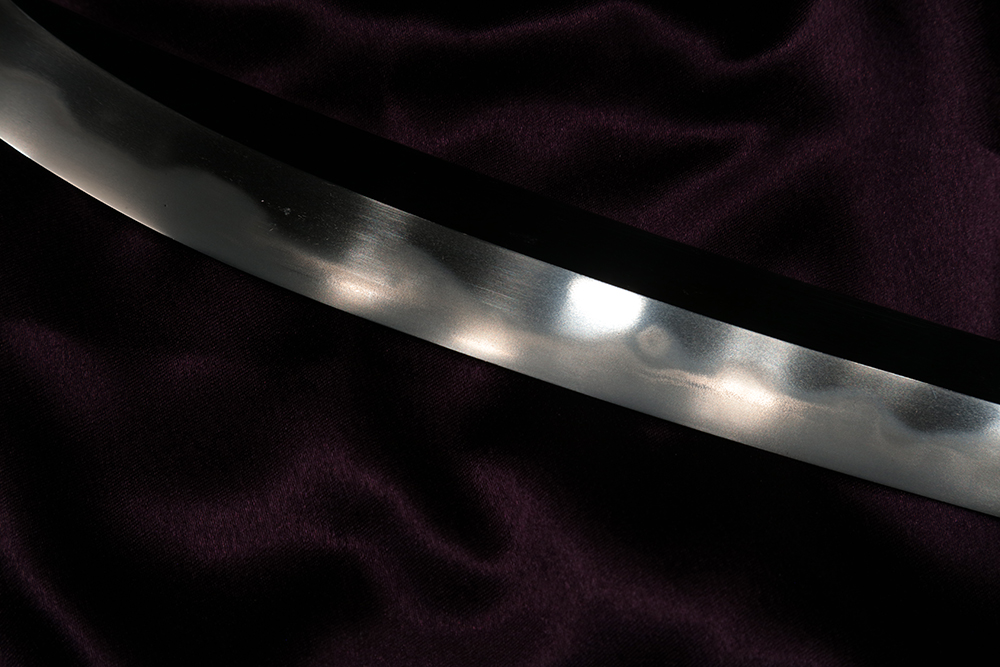
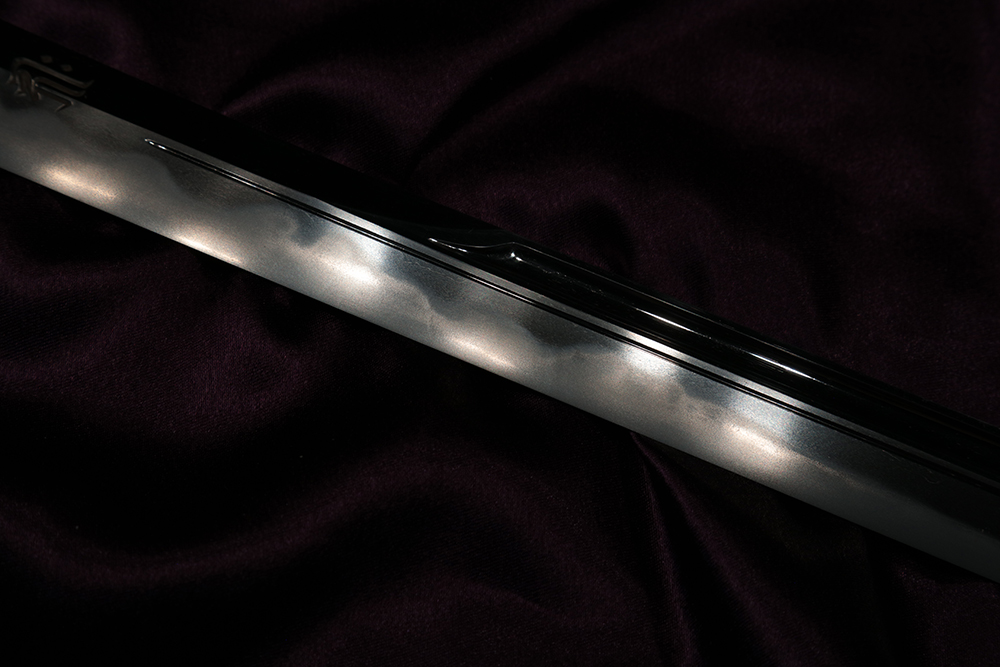
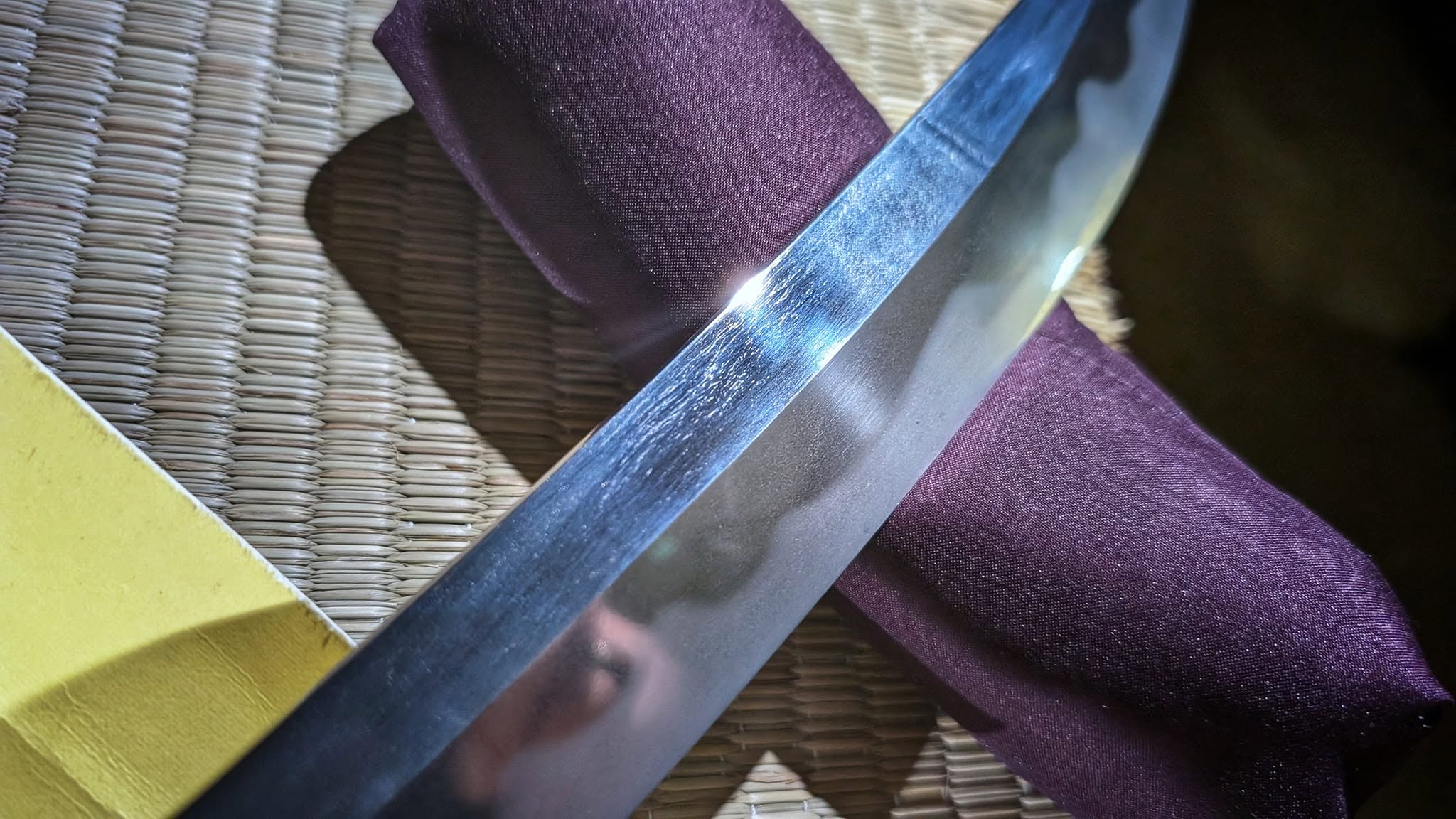
Kitae: densely forged ko-itame that features plenty of ji-nie and much fine chikei, the steel is clear
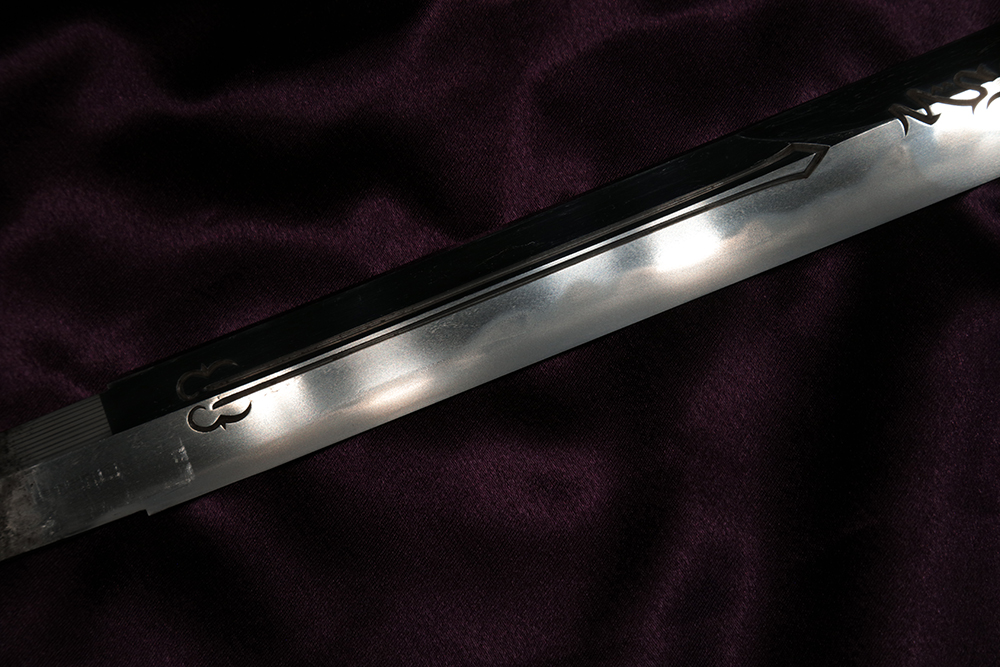
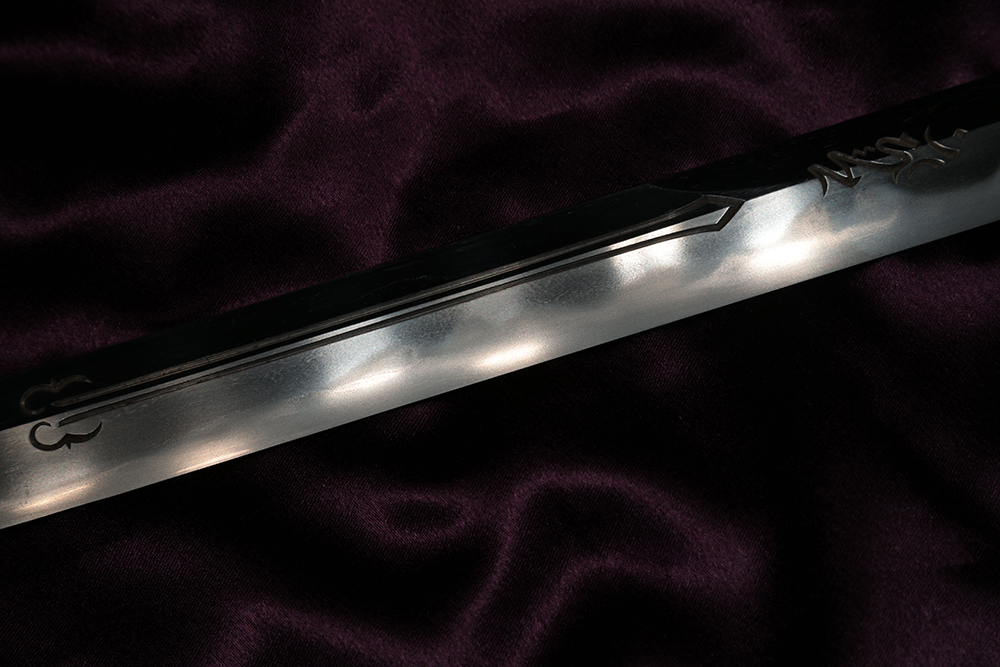
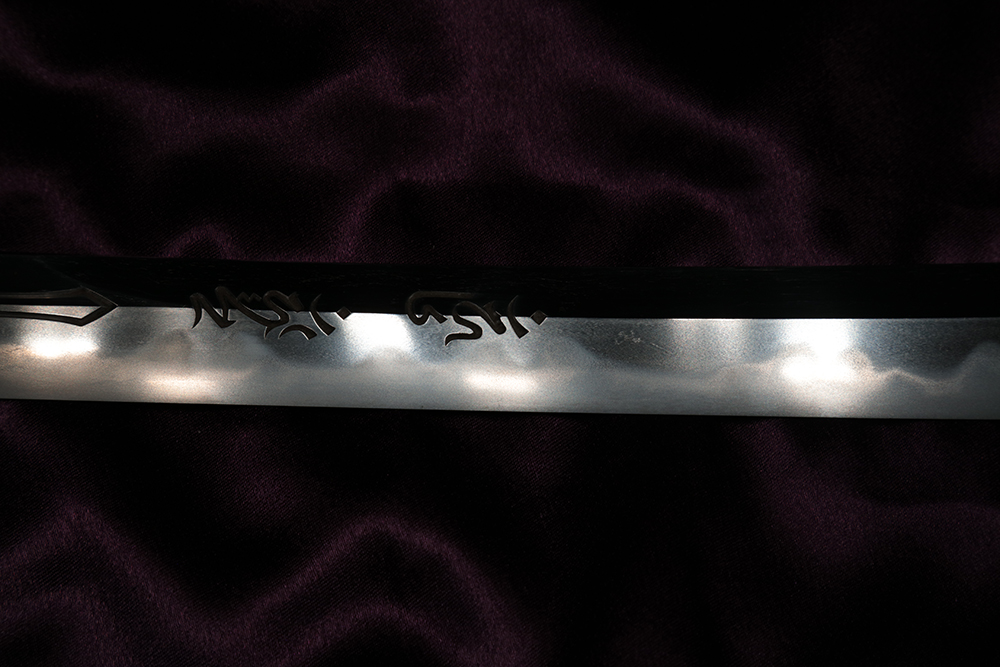
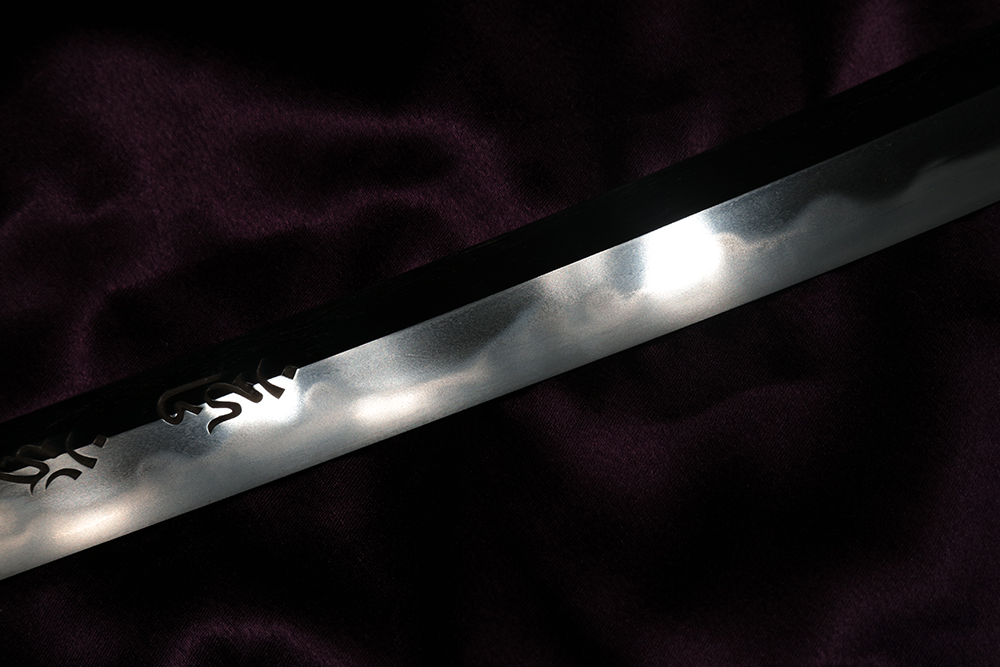
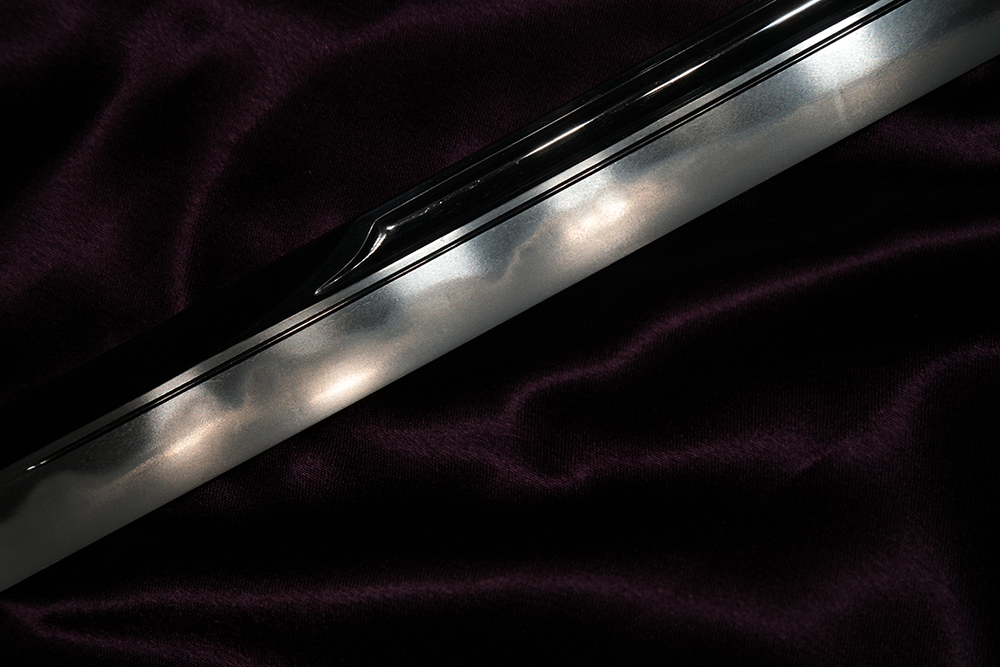
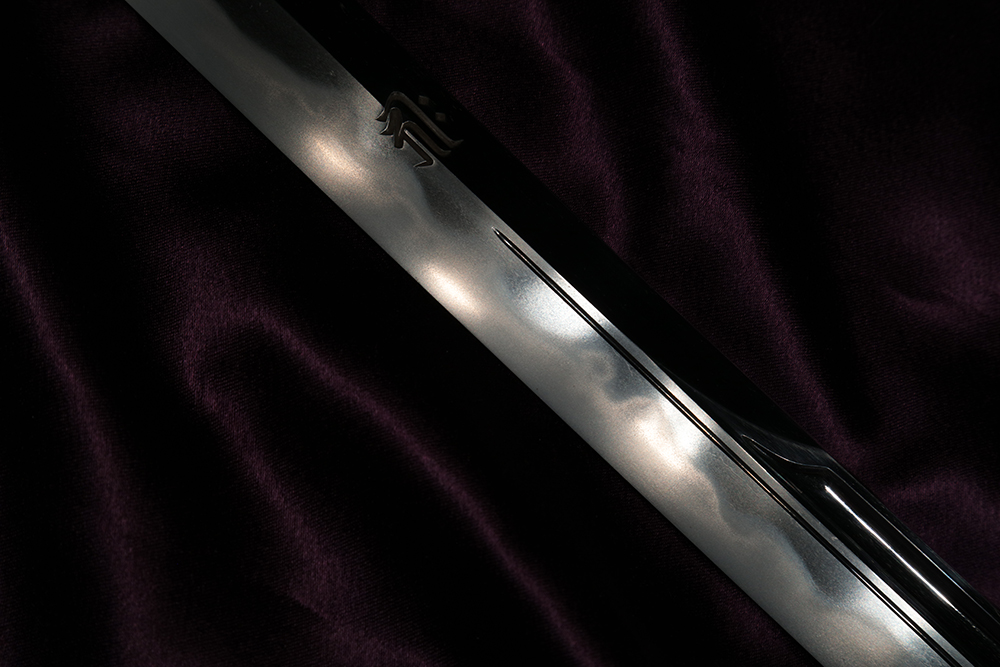
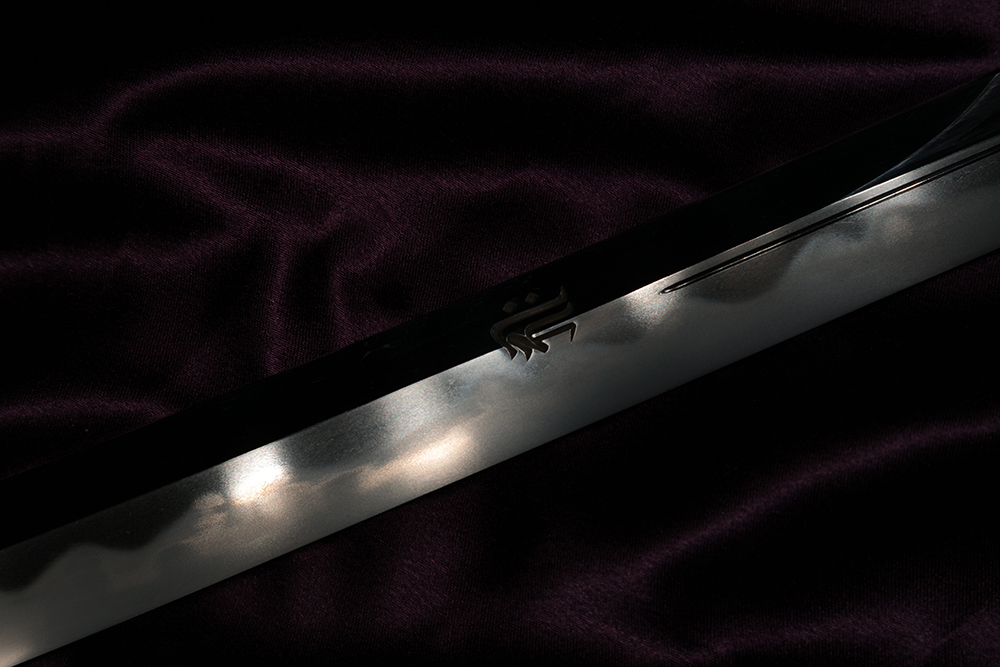
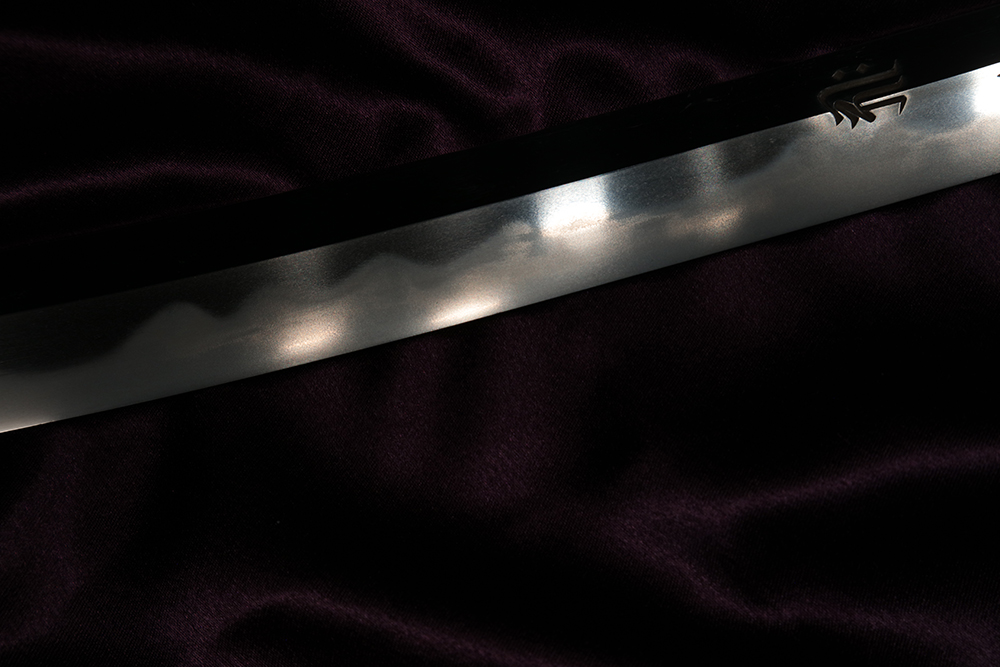
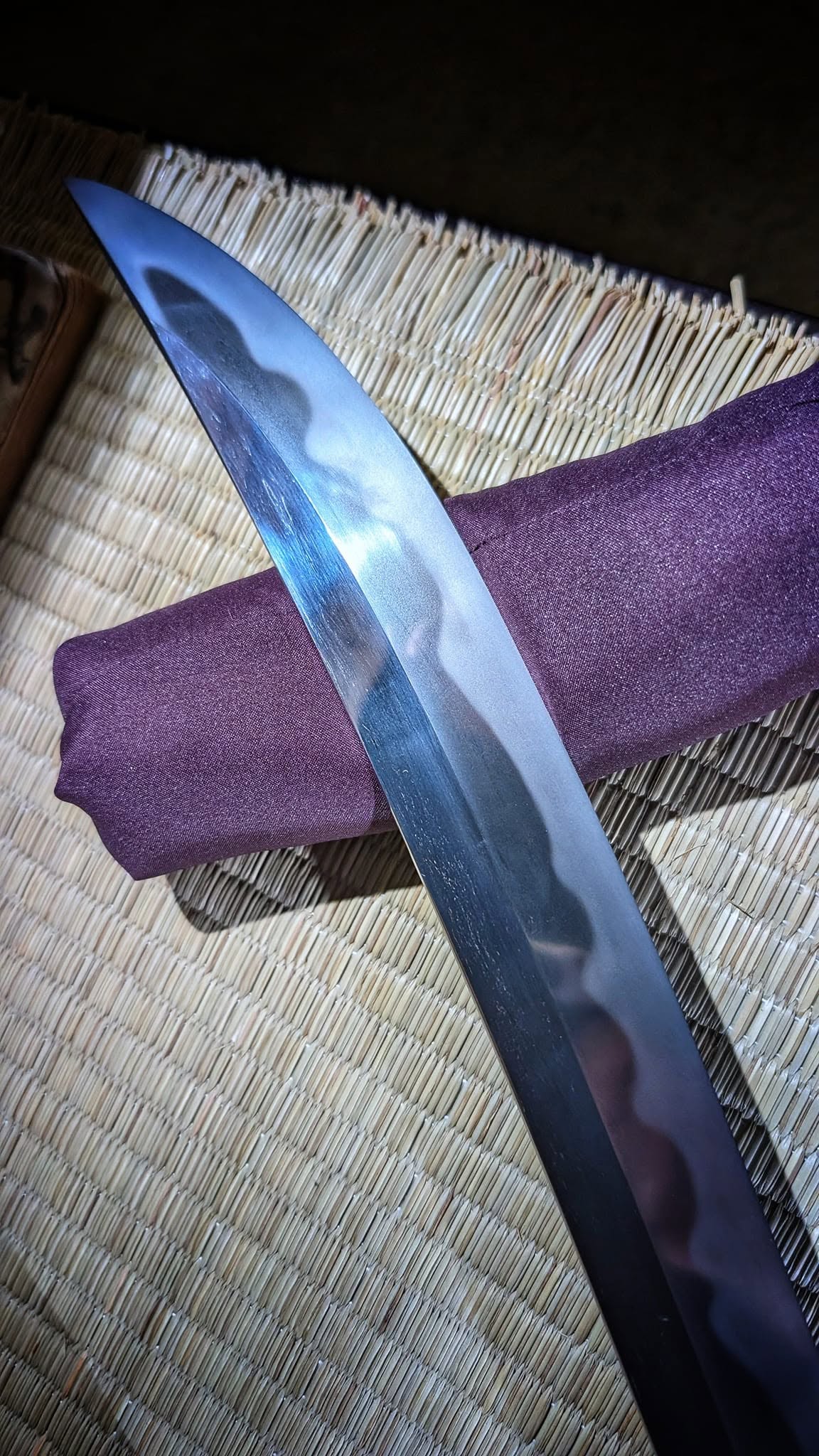
Hamon: nie-laden gunome-midare with a wide, bright, and clear nioiguchi that starts with a suguyakidashi and that is mixed with ko-notare, some chōji, ko-gunome, some togariba, many long ashi, fine sunagashi along the entire blade, many long kinsuji, and some tama-shaped tobiyaki in places, the valleys between the midare display nie accumulations
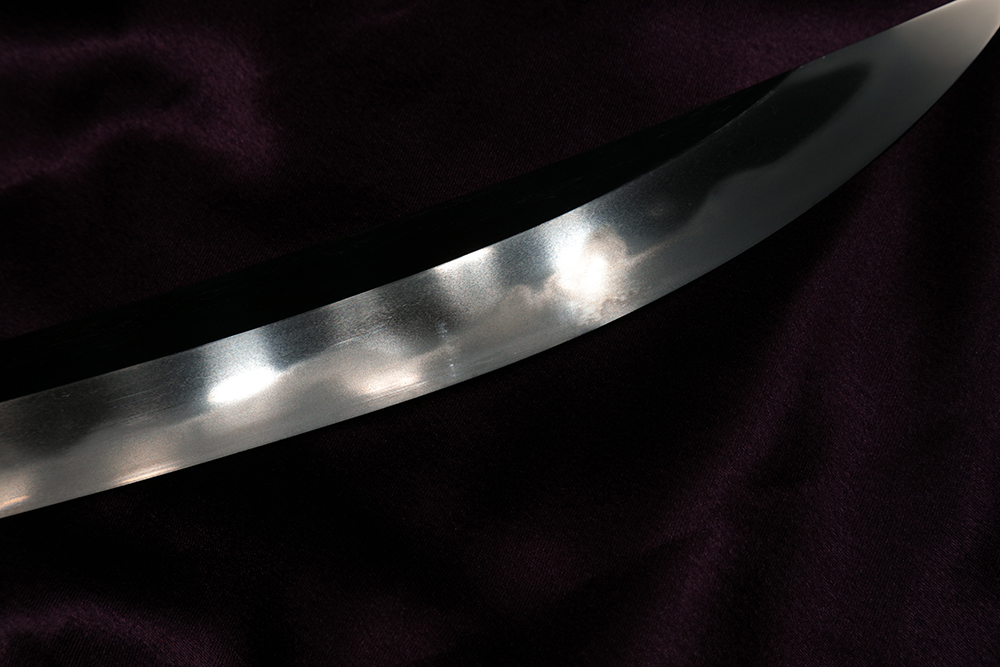
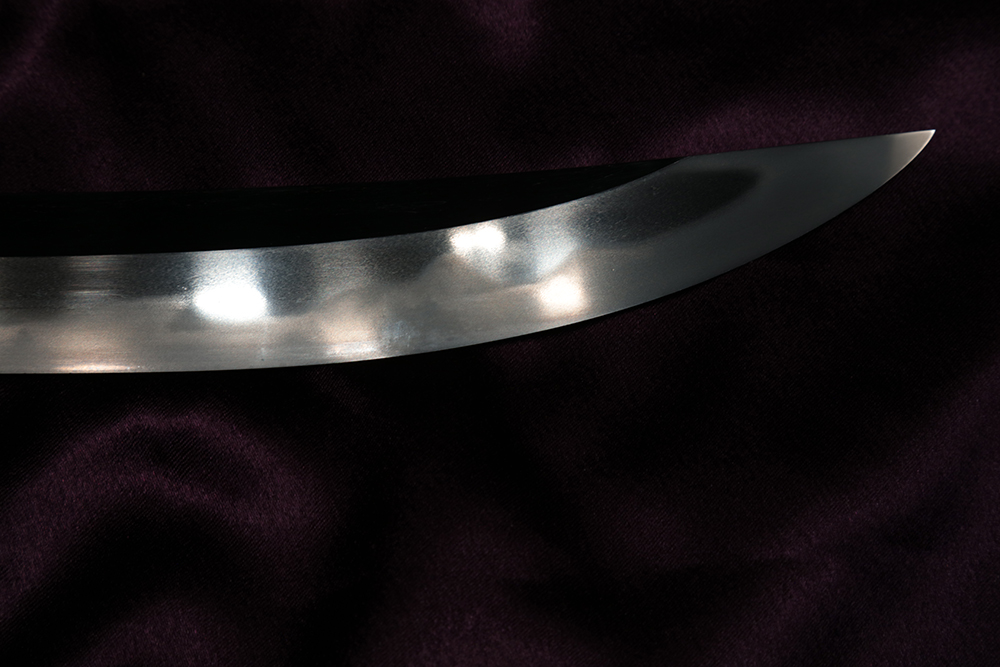
Bōshi: sugu with a rather pointed maru-kaeri on the haki-omote side, and with a ko-maru-kaeri on the ura side, with both sides featuring hakikake at the tip and with the kaeri running back in a
long fashion on both sides as well
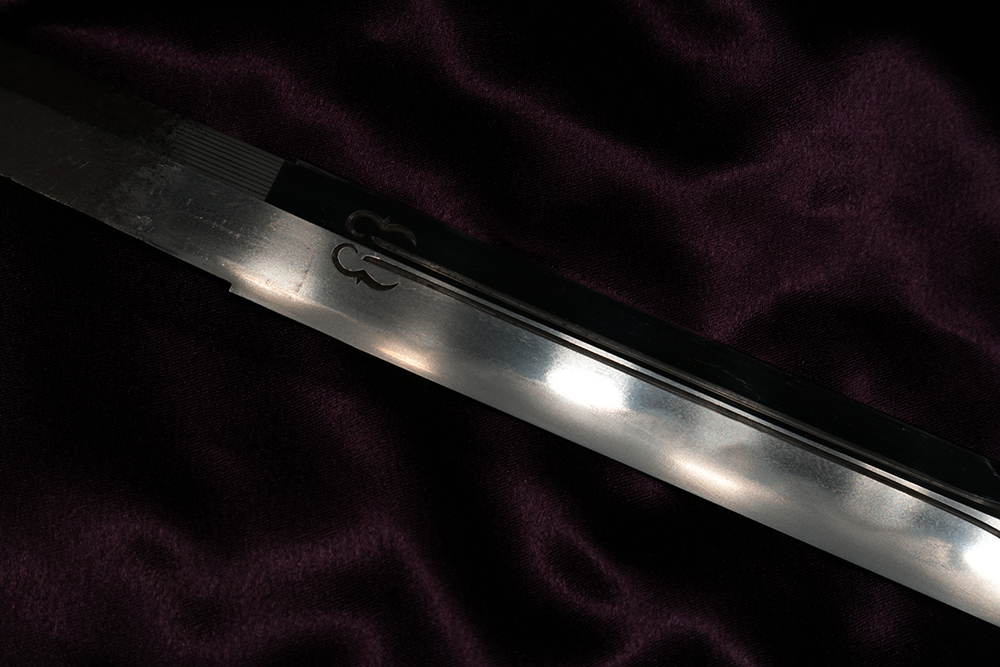
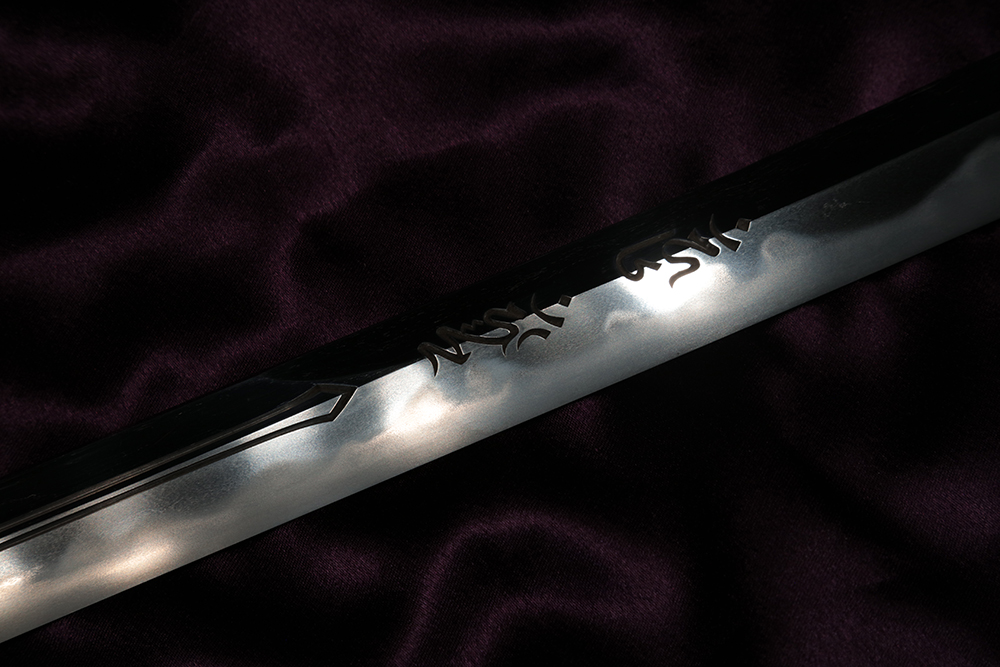
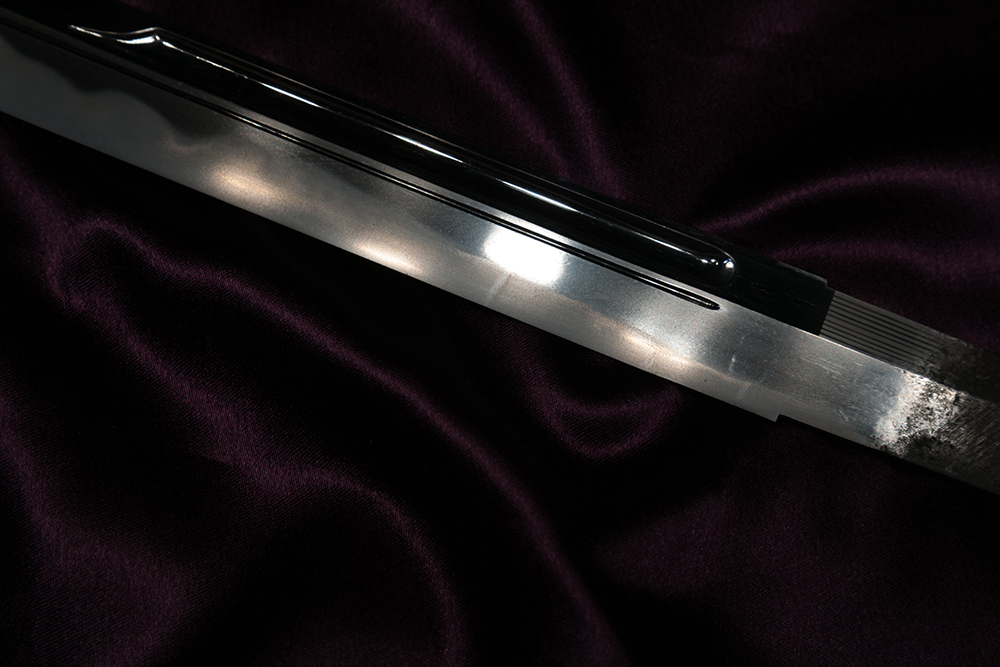
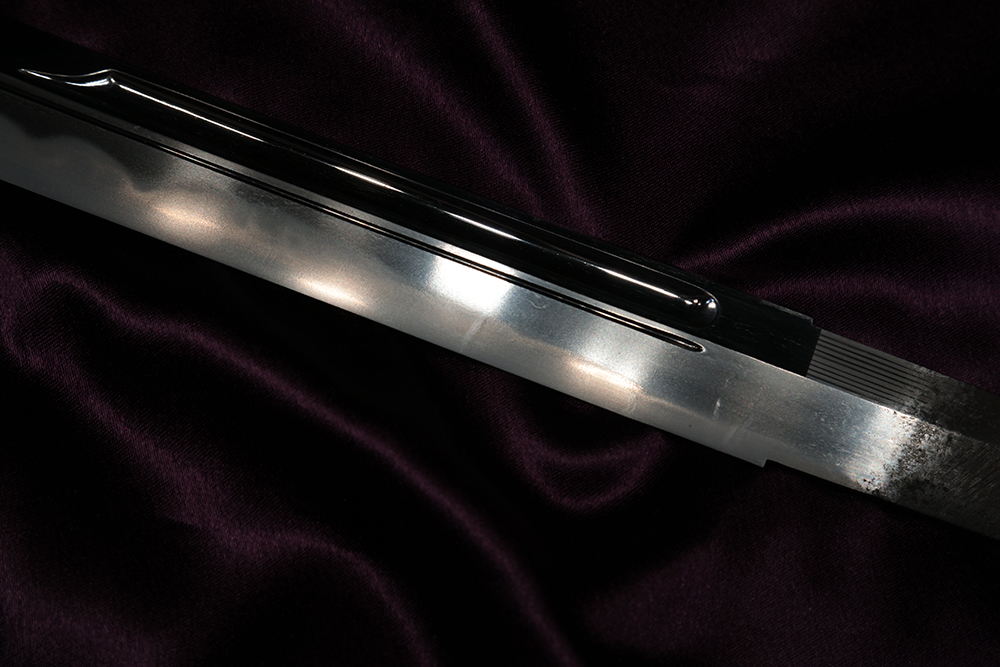
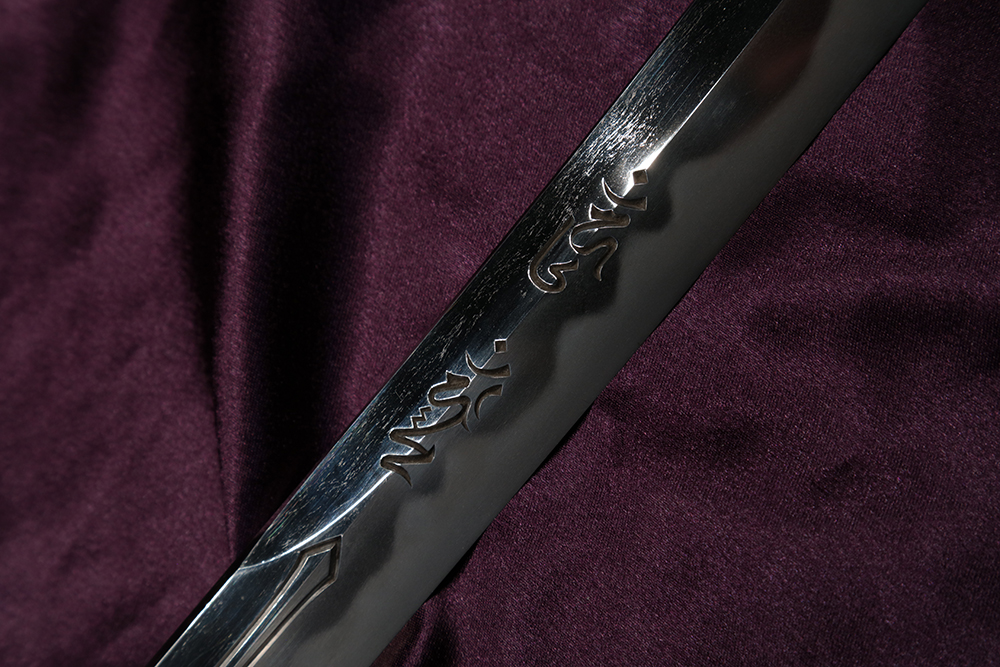
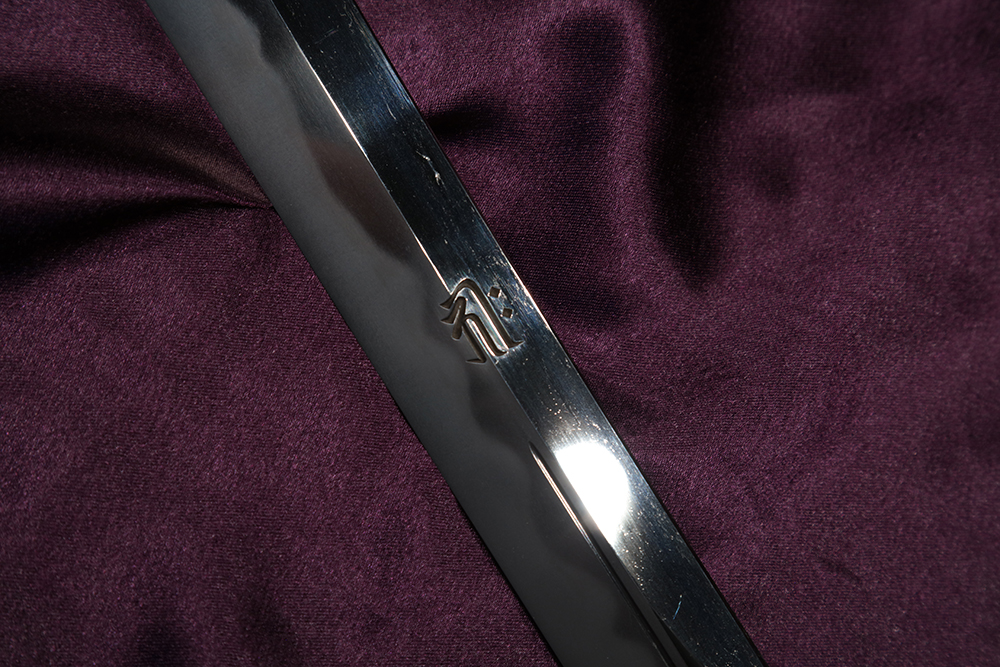
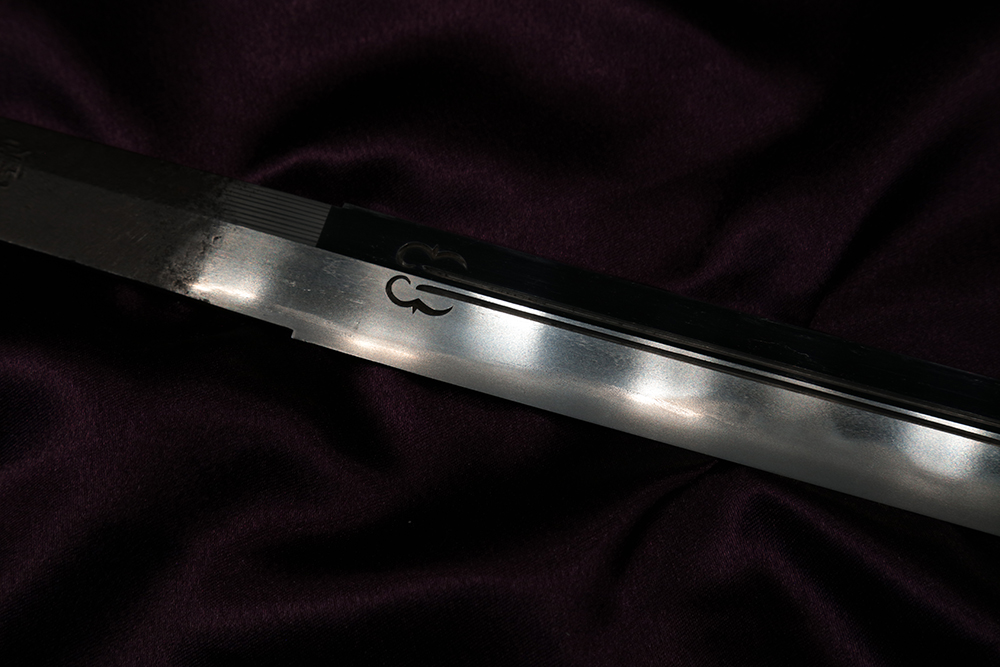
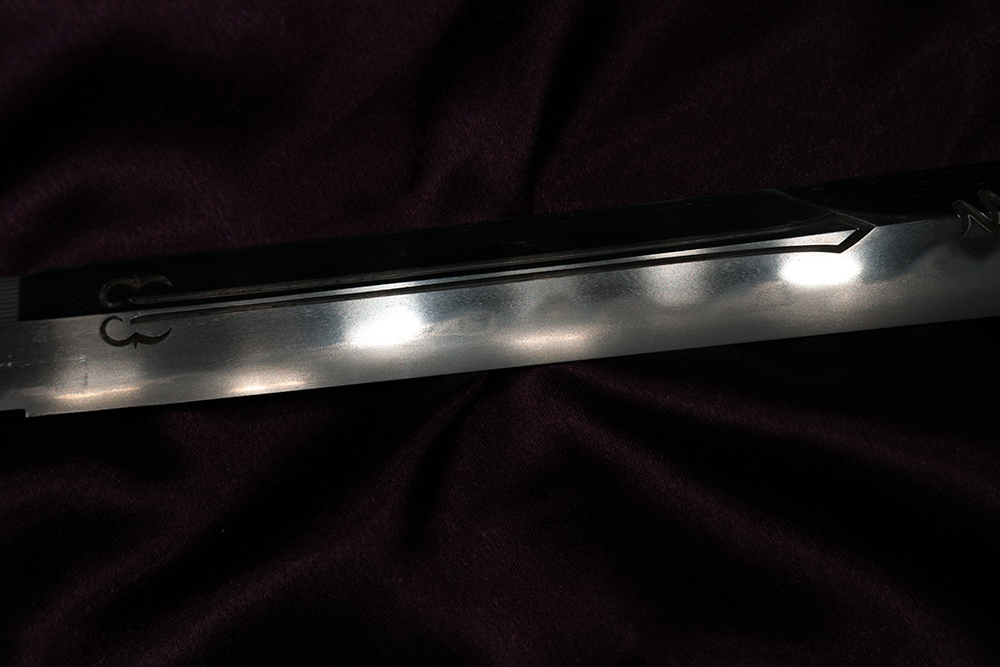
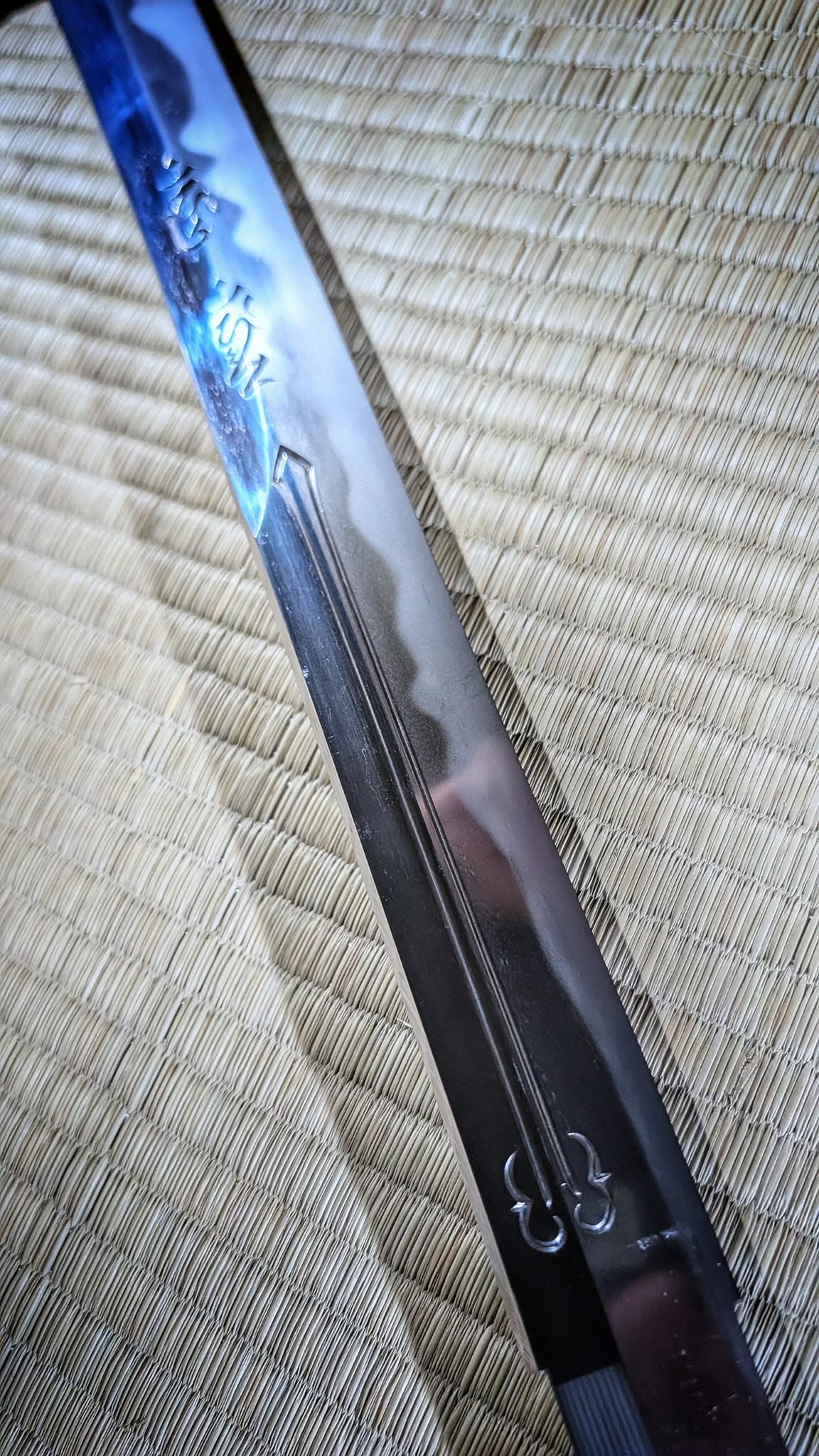
Horimono: on both sides, the horimono are positioned along the lower half of the blade and around the shinogi, the haki-omote side is engraved with two bonji and below with a suken with
slanting ends featuring tsume-like elements, the ura side is engraved with a bonji and below with a naginata-hi with soebi that ends in marudome
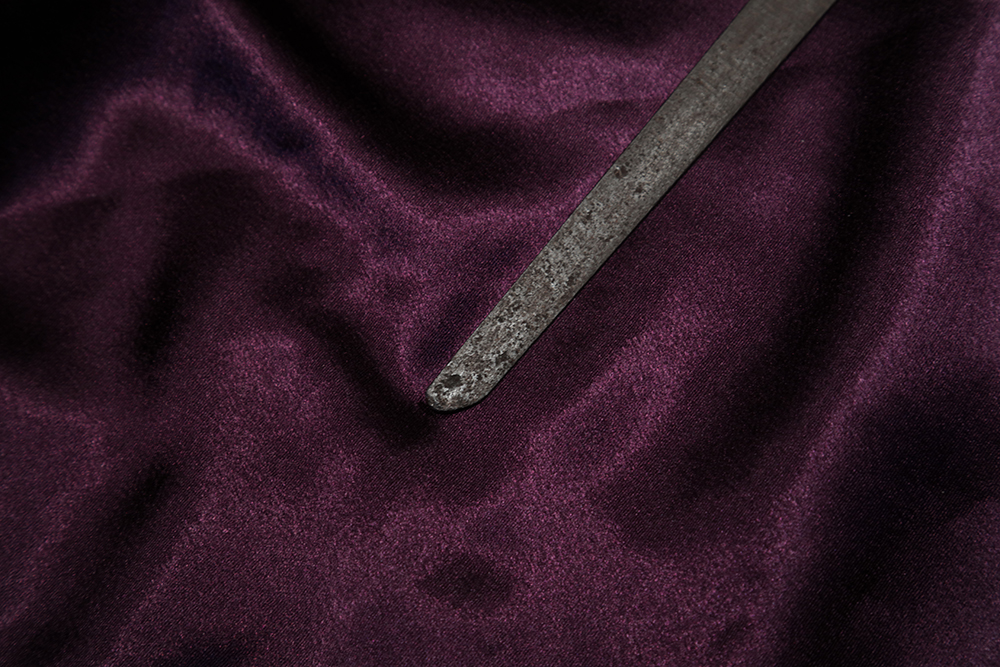
Nakago: ubu, ha-agari-kurijiri, sujikai-yasurime with a little bit of keshō, the yasurime become indisdinct from ca. 3.5 cm below of the single mekugi-ana downwards, but appear to be mixed with some senuki, the haki-omote side bears towards the nakago-mune a large and thickly chiseled naga-mei of which the character for kami is positioned at the mekugi-ana, compared to the signature of the omote side, the supplement hori-dōsaku of the ura side is somewhat smaller
Explanation
Awataguchi Ōmi no Kami Tadatsuna (粟⽥⼝近江守忠綱) was the son of the first generation Ōmi no Kami Tadatsuna, who succeeded as second generation of this lineage and who used the gō Ikkanshi (⼀竿⼦). In his early years, Tadatsuna mostly worked in the same style as the first generation, that is, in a chōji-midare with very uniform yakigashira and long ashi. Later on, he either hardened in a gunome-midare, a tōran-style midare, or in suguha. The forte of the second generation Tadatsuna were horimono, which are very harmonious with the blade and do not distract from its other elements.
This naginata displays a kitae in a densely forged ko-itame that features plenty of ji-nie and much fine chikei. The hamon is a nie-laden gunome-midare with a wide, bright, and clear nioiguchi that starts with a sugu-yakidashi and that is mixed with ko-notare, some chōji, ko-gunome, some togariba, many long ashi, fine sunagashi along the entire blade, many long kinsuji, and some tamashaped tobiyaki in places, the valleys between the midare display nie accumulations. Although the ha differs from the tōran style for which the smith is so well known for, the tama-shaped tobiyaki may be interpreted as spray, incidating so that the ha is indeed conceptualized as waves. The ha displays many long ashi and sunagashi all along the blade, with the latter crossing through the former, which is very typical for this smith.
The kitae is particularly refined and excellent for works of Tadatsuna, and the striking brightness and clarity of the jiba must be pointed out as well, resulting so overall in an oustanding deki. With a suken with tsume-like elements on the hakiomote, and a naginata-hi on the ura, this naginata displays engravings which differ on each side, but which are harmoniously balanced by bonji of different lengths. The horimono are sophisticated and of a gorgeous balance for a naginata. Existing naginata by Ikkanshi Tadatsuna are rare, which makes this blade a valuable reference for our understanding of the smith’s style for this type of blade.