Project Description
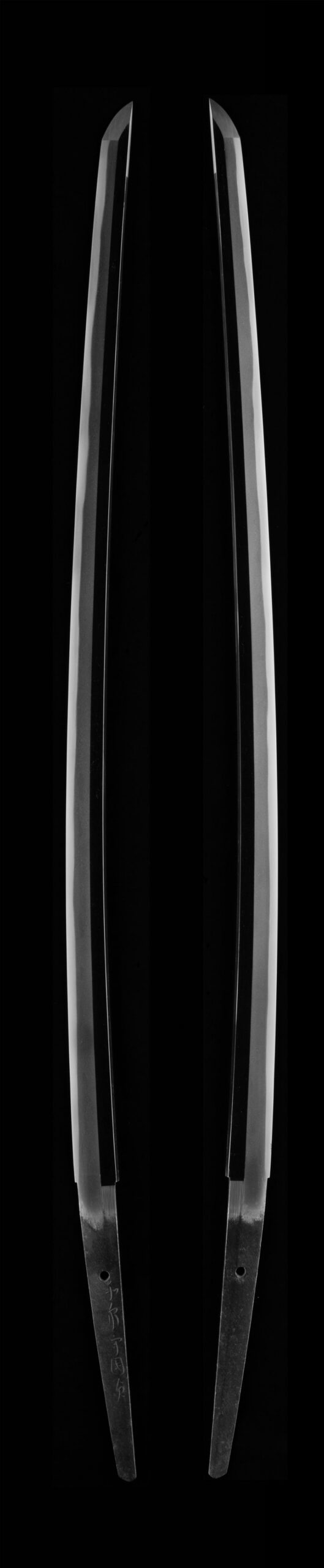
Izumi no kami Kunisada
- Status: Available
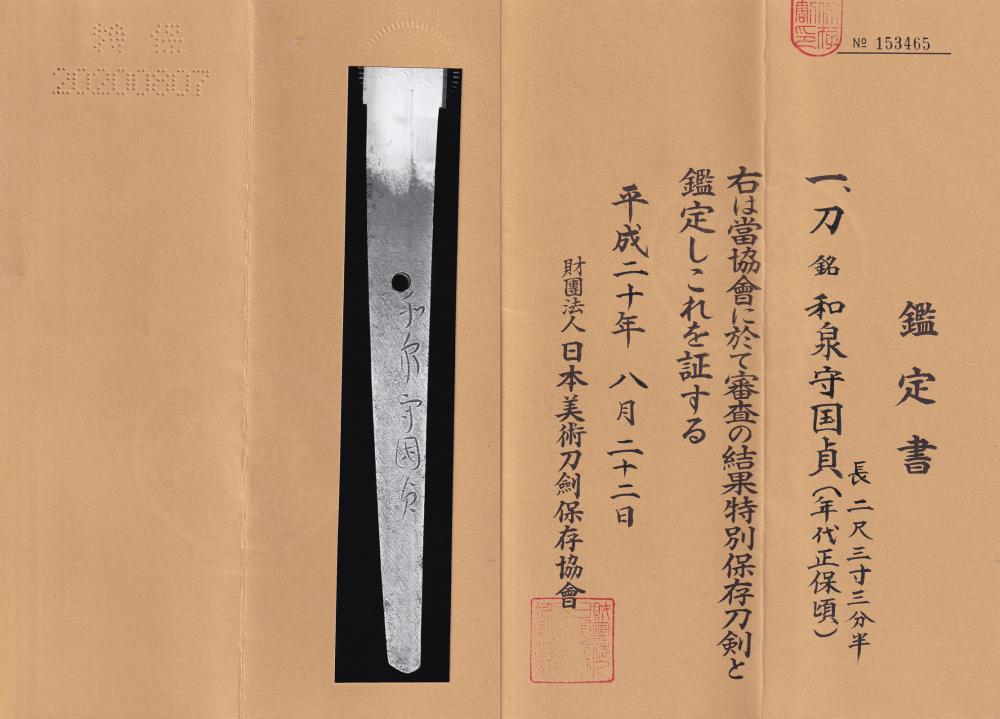
- Kanteisho: Tokubetsu Hozon
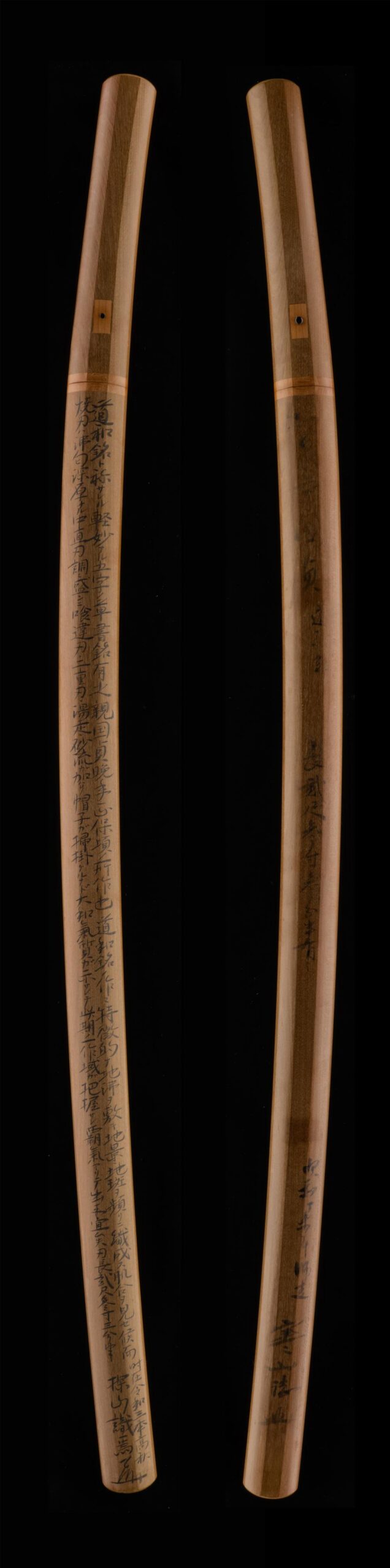
道和銘ト称サレル軽妙ナル五字ノ草書銘有之親国貞晩年正保頃ノ所作也道和銘ノ作ニ特徴的ナ
地沸ヲ敷キ地景・地斑ヲ頻リニ織成ス肌合ヲ⾒セ候⽽焼刃ハ沸匂深厚ナル中直刃調ニ盛ンニ喰
違刃・⼆重刃・湯⾛・砂流ガ加ハリ帽⼦ガ掃掛ケルナド⼤和気質ガ⽰サレテ此期ノ⼀作域ガ把
握サレ覇気アリテ出来宜矣
刃⻑貮尺参⼨三分半
時在令和三秊⾼秋
探⼭識焉「花押」
Dōwa-mei to shō-sareru keimyō naru goji no sōsho-mei kore ari. Oya-Kunisada bannen Shōhō goro no
shosa nari. Dōwa-mei no saku ni tokuchō-teki na ji-nie o shiki chikei, jifu o shikiri ni orinasu hada-ai o mise
sōrō shikamo yakiba wa nie-nioi shinkō naru chū-suguha-chō ni sakan ni kuichigai-ba, nijūba, yubashiri,
sunagashi ga kuwawari bōshi ga hakikakeru nado Yamato-kishitsu ga shimesarete konogo no issaku’iki ga
haaku-sare haki arite deki yoroshii.
Hachō ni-shaku san-sun san-bu han
Jizai Reiwa sannen kōshū
Tanzan kore o shirusu + kaō
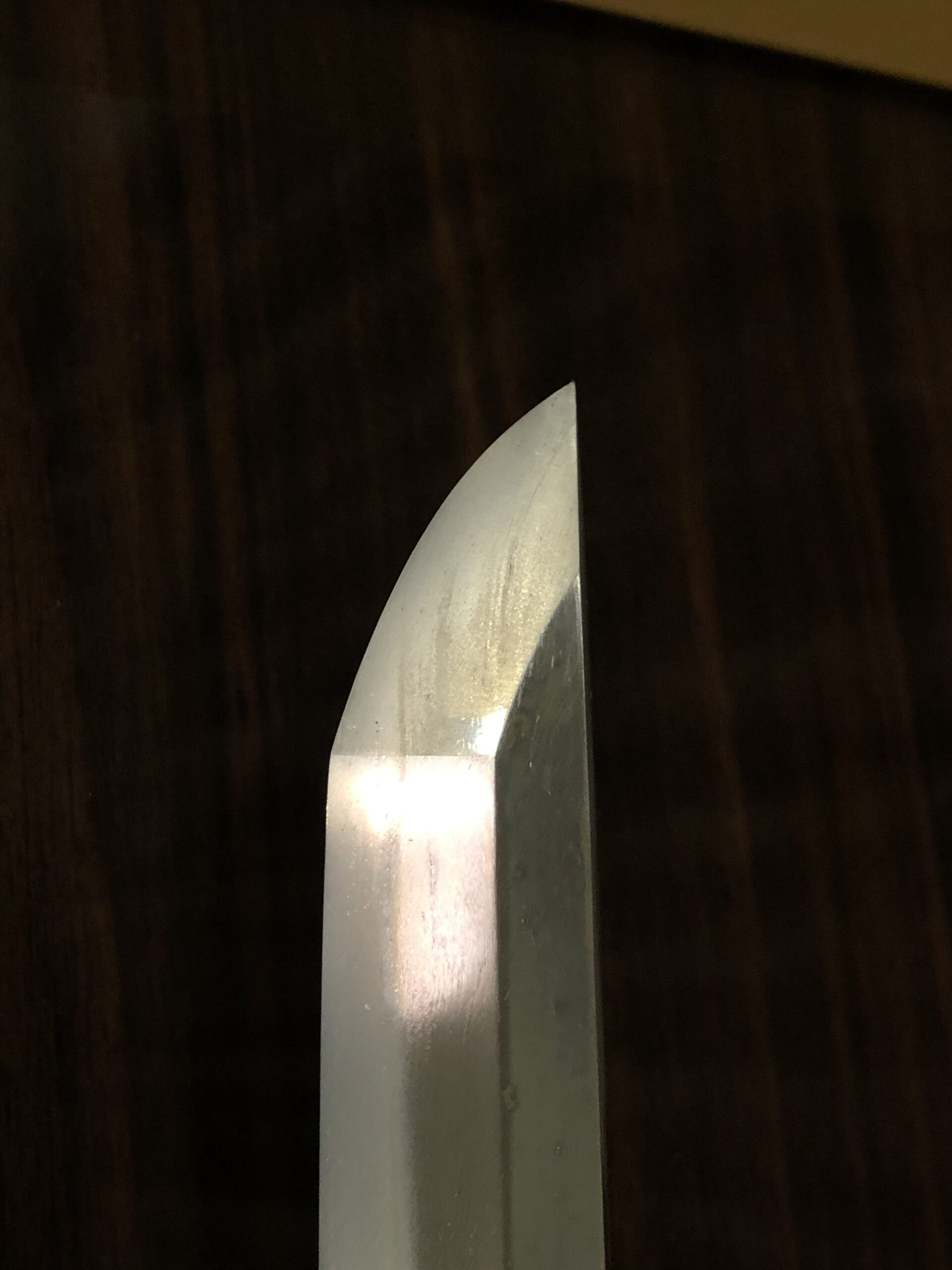
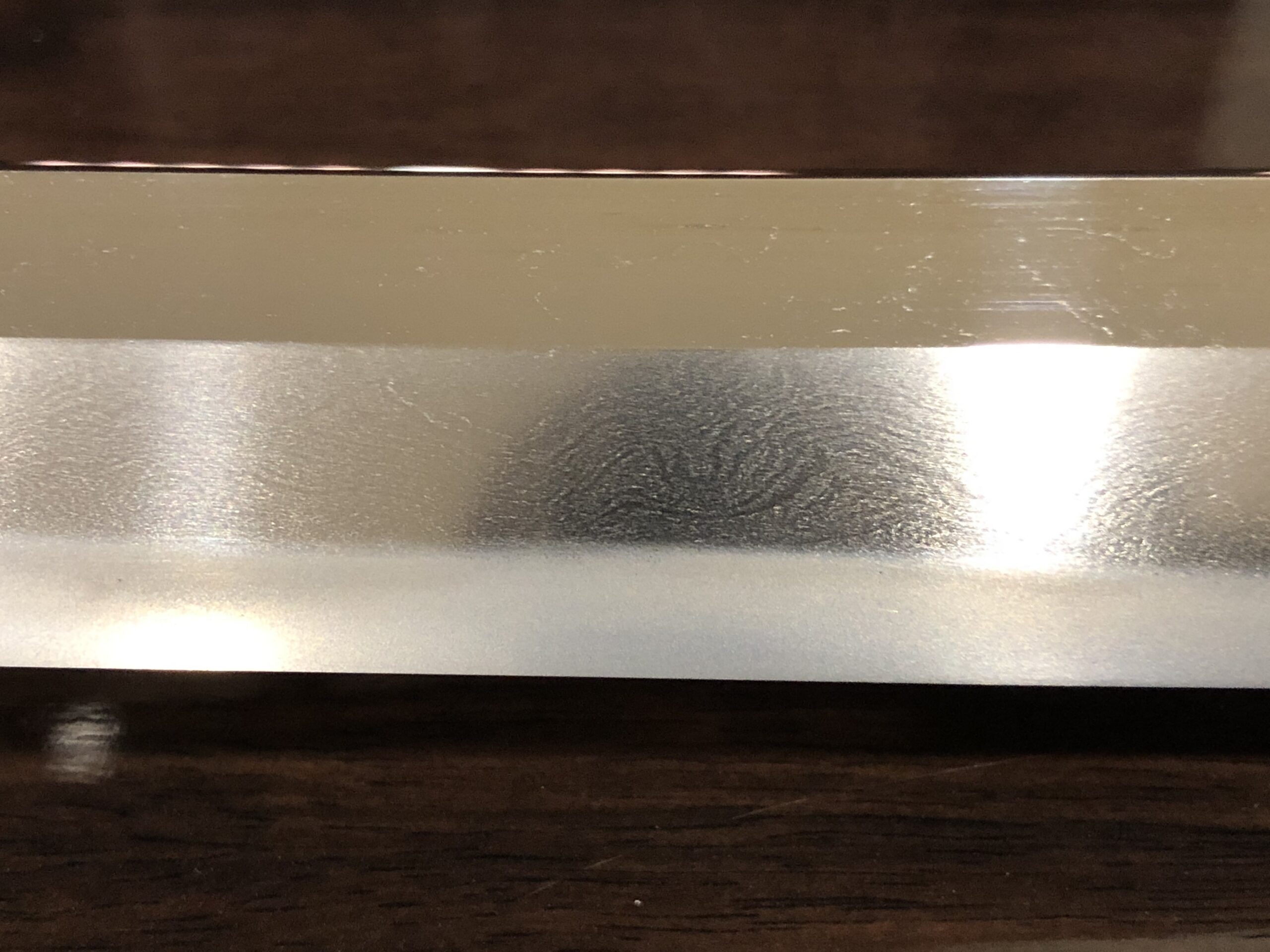
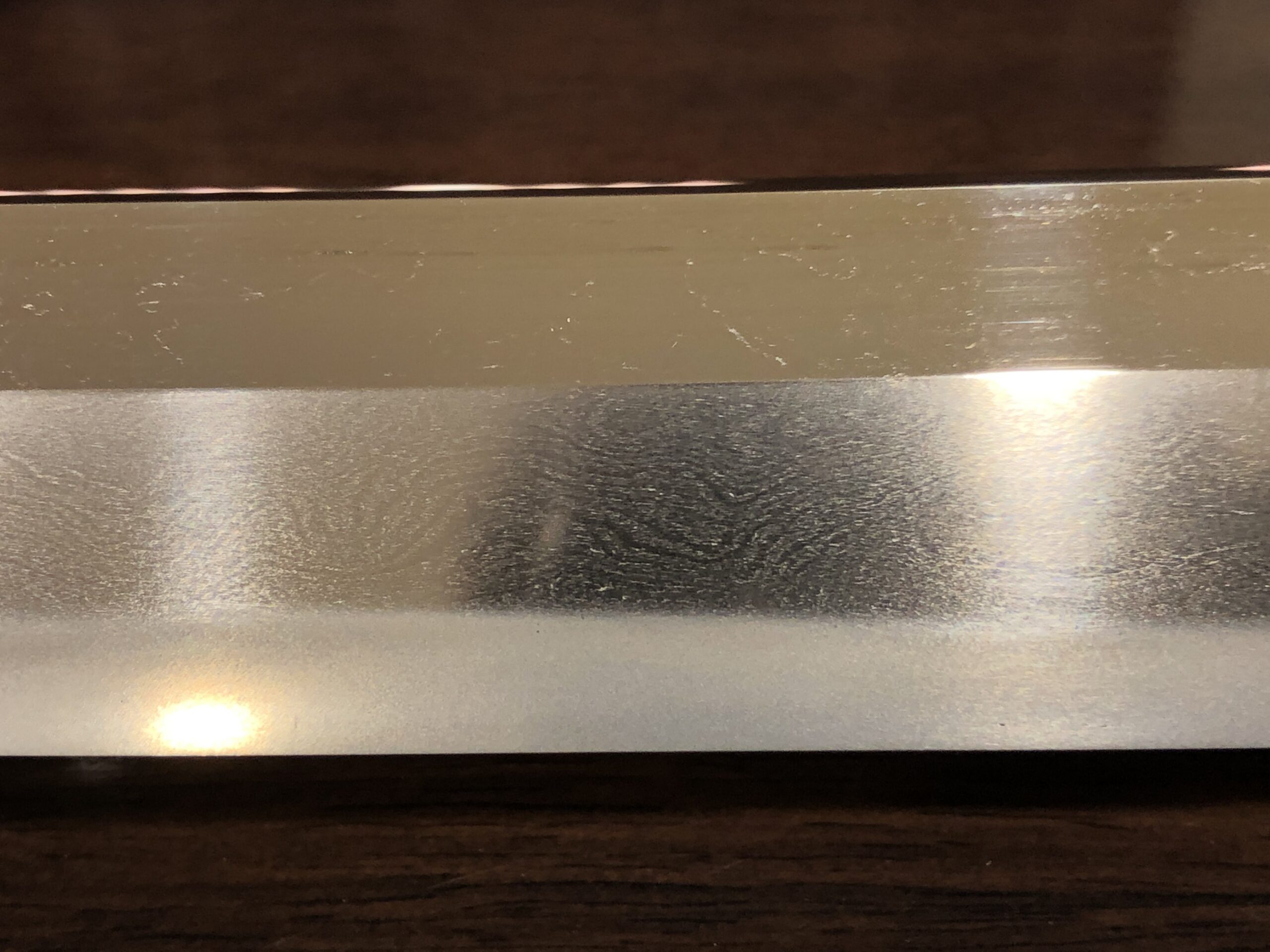
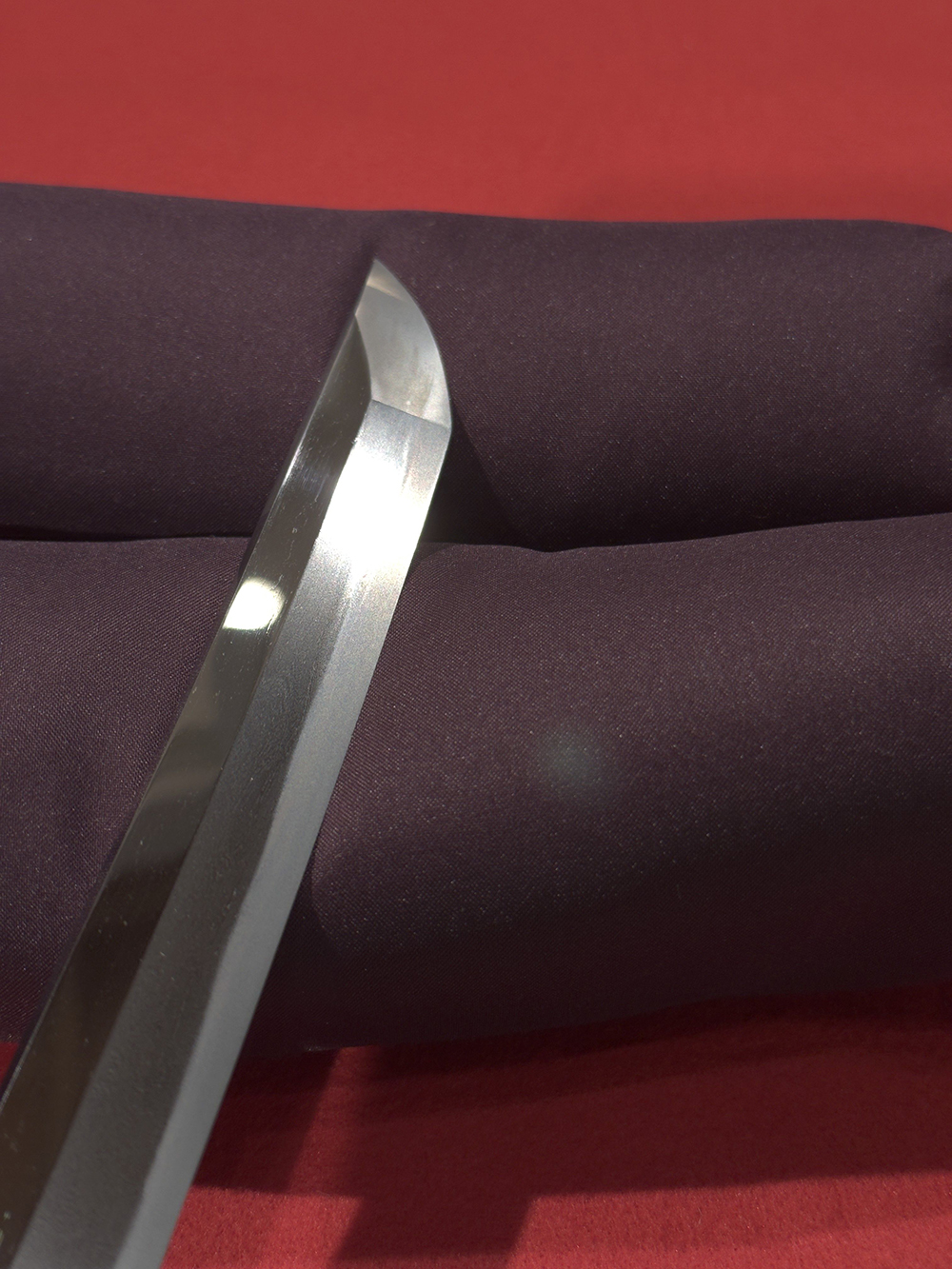
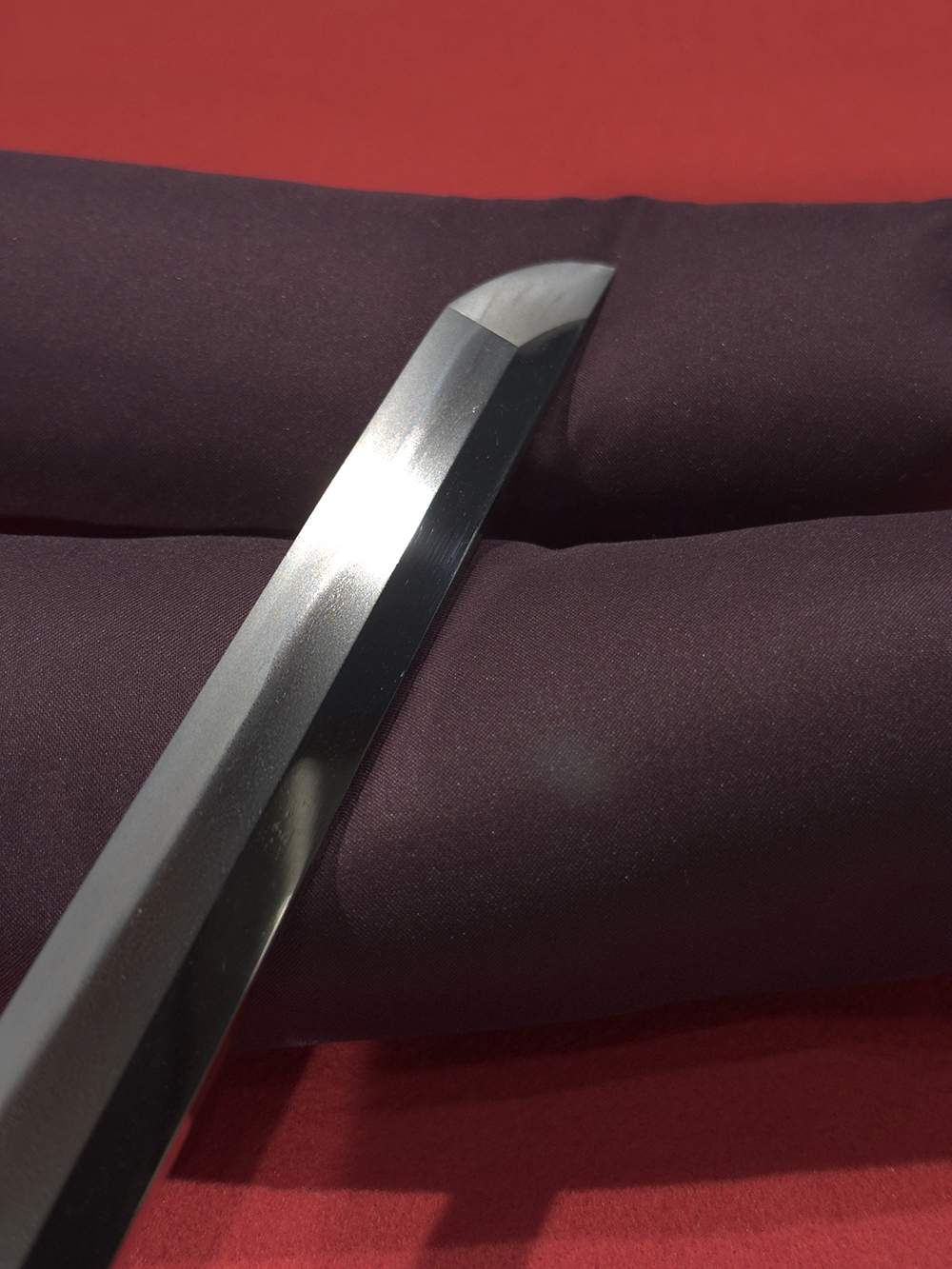
Dōwa-mei refers to the fluently executed five-character cursive script signature of Oya-Kunisada,
which the smith used in his later years, i.e., around Shōhō (1644–1648). This blade displays ji-nie
and features plenty of chikei and jifu interwoven with the forging structure that is typical for the
Dōwa-mei phase of this smith. With the yakiba being a nie-laden chū-suguha with a wide nioiguchi
and with much kuichigai-ba, nijūba, yubashiri, and sunagashi, and the bōshi featuring hakikake, we
can recognize Yamato characteristics, which reflects one of the known styles of Oya-Kunisada
from this time period. The blade is of an ambitious style and of an excellent deki.
Blade length ~ 70.7 cm
Written by Tanzan [Tanobe Michihiro] in the height of fall of Reiwa three (2021) + monogram.
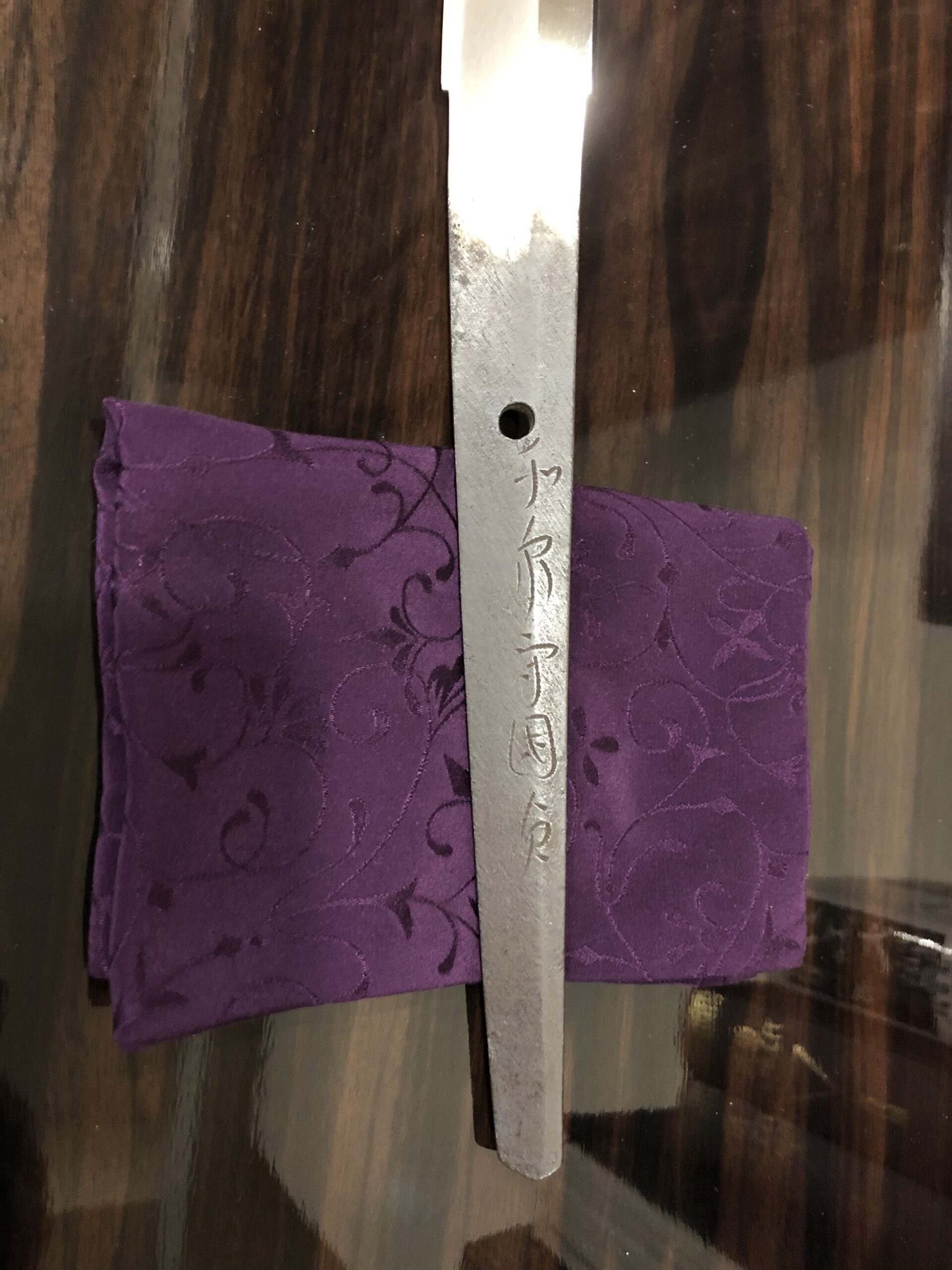
和泉守国貞
道和銘
刃⻑貮尺参⼨参分半有之
昭和丁未年師⾛
寒⼭誌「花押」
Izumi no Kami Kunisada
Dōwa-mei
Hachō ni-shaku san-sun san-bu han kore ari
Shōwa hinoto-hitsuji shiwasu
Kanzan shirusu + kaō
Izumi no Kami Kunisada
[Bears a] Dōwa-mei
Blade length ~ 70.7 cm
Written by [Satō] Kanzan in December of the hear of the sheep of the Shōwa era (1967) + monogram.
KUNISADA (国貞), 1st gen., Kan´ei (寛永, 1624-1644), Settsu – “Sesshū-jū Fujiwara Kunisada” (摂州住藤原国貞), “Izumi no Kami Fujiwara Kunisada” (和泉守藤原国貞), “Ōsaka ni oite Izumi no Kami Fujiwara Kunisada” (於大坂和泉守藤原国貞), “Ōsaka jōka ni oite Izumi no Kami Kunisada” (大坂於城下和泉守国貞, “made by Izumi no Kami Kunisada in the castle town of Ōsaka”), “Sesshū Ōsaka-jū Fujiwara Kunisada” (摂州大坂住藤原 国貞), real name Inoue Yoshihiro (井上良広), he was born on the 17th year of Tenshō (天正, 1589) in Obi (飫肥) in Hyūga province and was meant to become a monk of the local Saikyōji (西教寺), but he refused and went on the recommendation of the Itō family (伊東) – the daimyō of the Obi fief (飫肥藩) – to Kyōto to start an apprenticeship as swordsmith under Horikawa Kunihiro (堀川国広), the exact date of when he entered this apprenticeship is unknown but when his master died in the 19th year of Keichō (慶長, 1614), Kunisada was only 25 years old and because his early signatures are similar to Echigo no Kami Kunitomo (越後守国儔), a senior student of Kunihiro, it is assumed that Kunisada completed his training under Kunitomo, after that he moved with his fellow student Kawachi no Kami Kunisuke (河内守国助) to Ōsaka, on the 15th day of the ninth month Genna nine (元和, 1623) he received the honorary title Izumi no Kami, his nyūdō-gō was Dōwa (道和), he died on the fifth day of the fifth month Keian five (慶安, 1652) at the age of 63, his son – the later Inoue Shinkai (井上真改) – succeeded as 2nd gen. Kunisada, for reasons of differentiation he is referred to as Oya-Kunisada (親国貞, lit. “parent Kunisada”) and the second generation to as Shinkai-Kunisada (真改国貞), his later works signed in cursive script are also called “Dōwa-mei Kunisada” (道和銘国貞, see picture below) or “sōsho-mei Kunisada” (草書銘国貞), the change to this signature style took place at the latest in the eighth month Shōhō two (1645), it is also said that these works are actually daisaku-daimei of Inoue Shinkai but daimei of Shinkai can usually be distinguished among others on the basis of the right inner part of the character for “Kuni,” at Shinkai, the part that resembles the hiragana syllable u (う) crosses the central vertical stroke, at Oya-Kunisada we can still see a reminiscence of a Keichō-shintō-sugata, the jigane is an itame with chikei and plenty of ji-nie which stands out as zanguri, the hamin is wide and has a Kyō-yakidashi, it appears as pointed midare mixed with gunome-midare and ashi, later works show more gunome, that means the development to the later Ōsaka-shintō style is almost completed in Oya-Kunisada’s later years, the bōshi is mostly sugu with a ko-maru-kaeri, sometimes also a small-dimensioned midare-komi, also some muneyaki can appear after the end of the kaeri, we know a blade of Oya-Kunisada that bears a shin no kurikara in the hitsu, the tip of the tang is a ha-agari kurijiri and the yasurime are ō-sujkai with keshō, the tangs are in general carefully finished, ō-wazamono, jōjō-saku – Markus Sesko