Project Description
来国安 — Rai Kuniyasu
Katana in shirasaya with sayagaki, accompanied by koshirae
Yamashiro / Settsu · late Kamakura, Gentoku era (元徳, 1329–31)
- Status: available
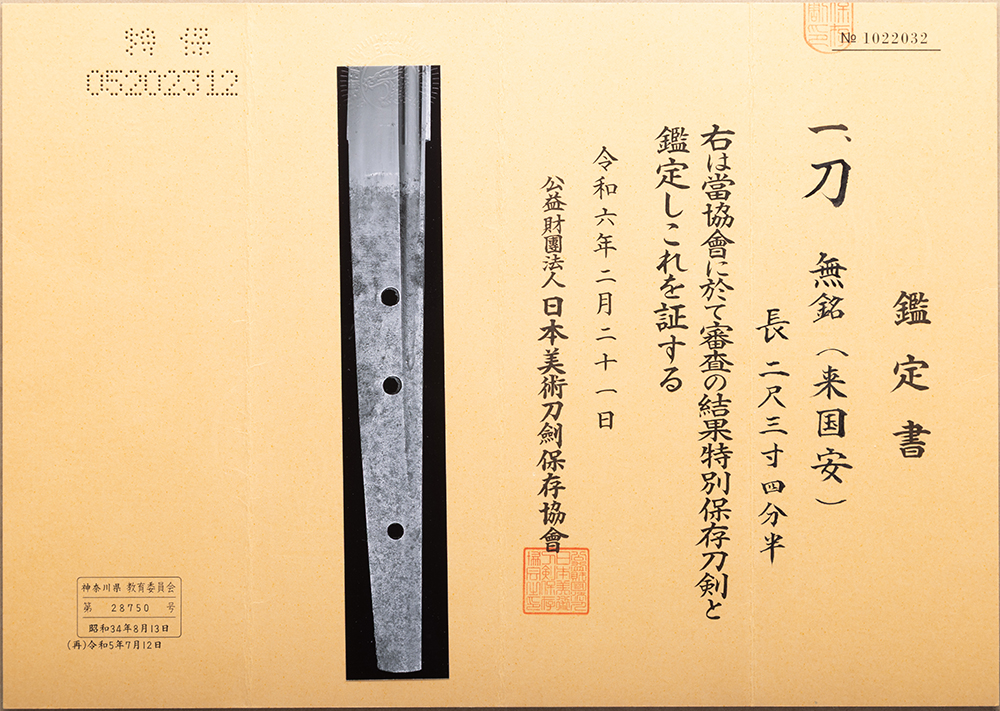
- Kanteisho: Tokubetsu Hozon
KUNIYASU (国安), Gentoku (元徳, 1329-1331), Settsu – “Rai Minamoto Kuniyasu” (来源国安), “Rai Kuniyasu” (来国安), Nakajima-Rai group (中島来), according to tradition the son or grandson of Rai Kunisue (来国末), the Ōseki Shō (往昔抄) says he was the son of Rai Kunitoshi (来国俊) and the Kōsei Kotō Meikan (校正古刀銘鑑) sees him as son-in-law of Rai Kunitoshi, there exists a date signature of the second year of Gentoku (1330), he worked first in Yamashiro but moved later to the village of Awaji (淡路) in Settsu´s Nakajima fief, therefore he is also referred to as Awaji-Rai (淡路来), because of the homonymy (Awaji village and Awaji province) his place of residence was in the past also wrongly quoted as having been the Mitachizaki fief (三立崎) of Awaji province, he is also listed with the nickname Awajibō (淡路房)
————————–
- 銘 Mei: 無銘(来国安)— mumei, attributed to Rai Kuniyasu
- 鑑定 Certification: NBTHK 特別保存刀劍 (Tokubetsu Hozon Tōken) · № 1022032 · Reiwa 6 (21 February 2024)
- 長さ Nagasa: 二尺三寸四分半 — 71.1 cm
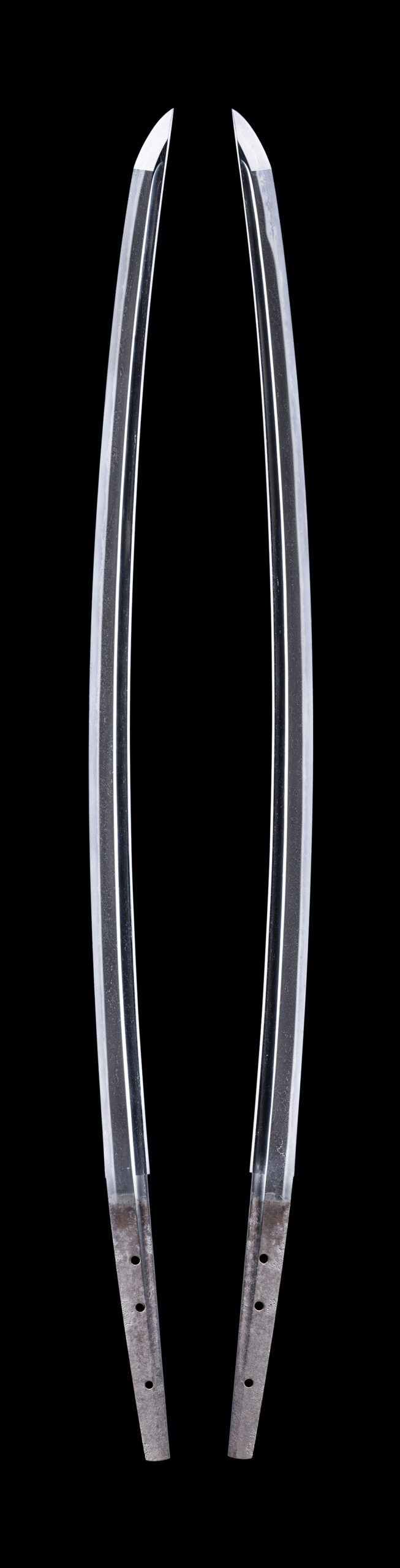
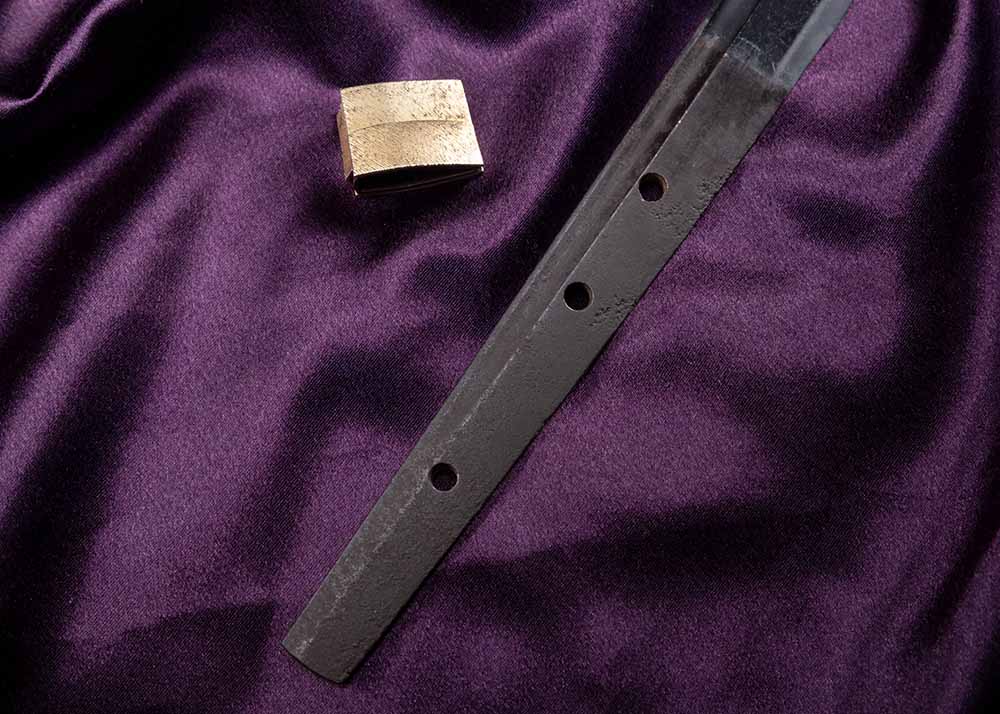
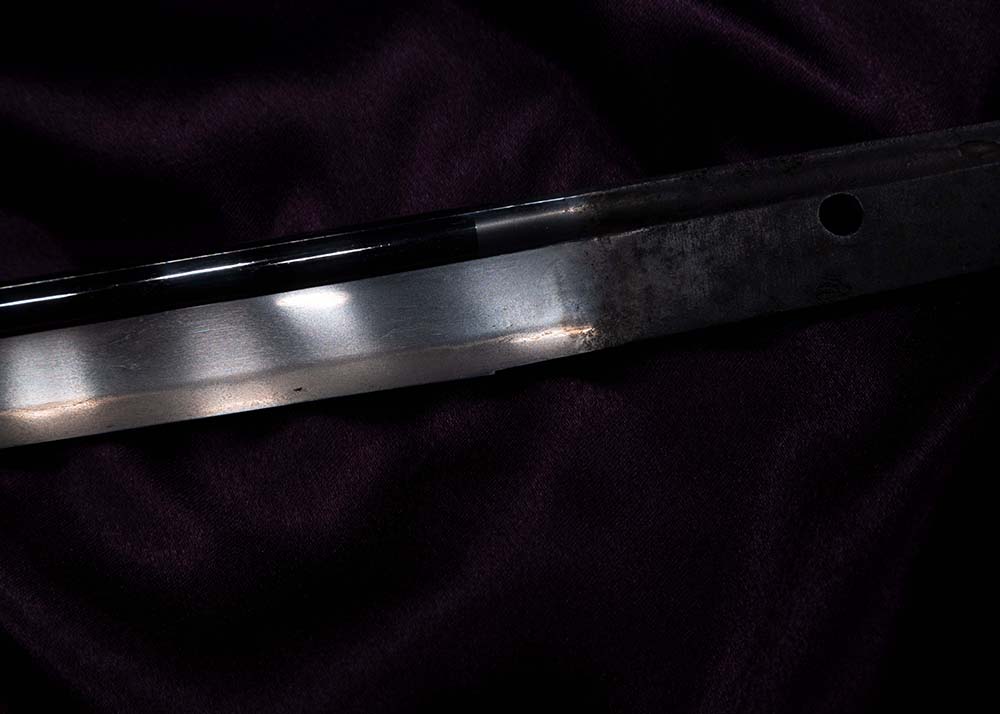
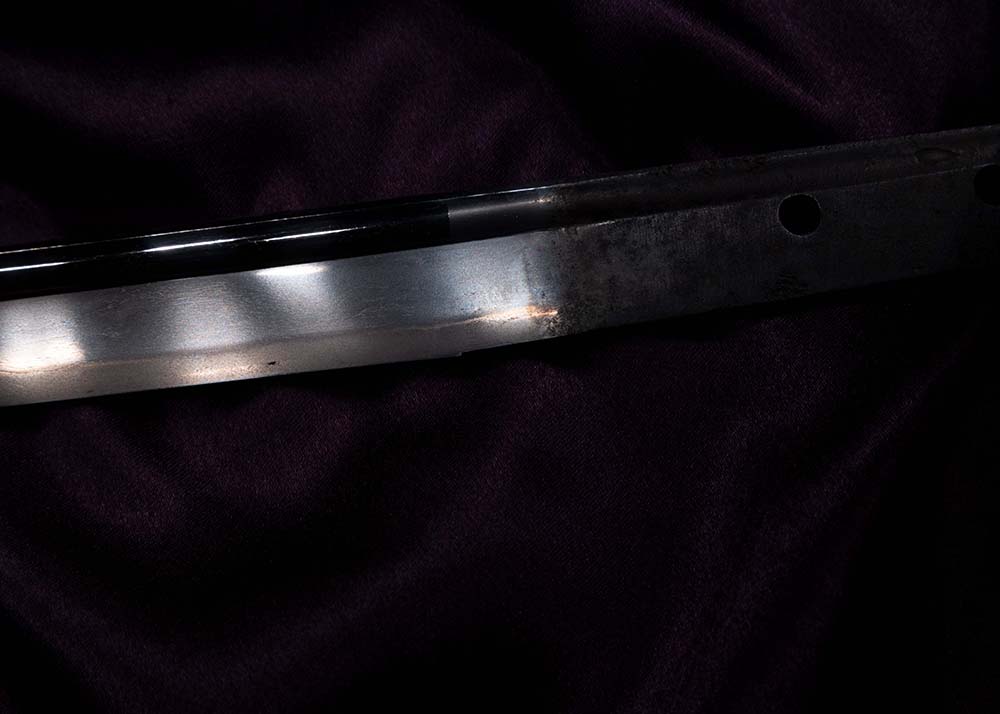
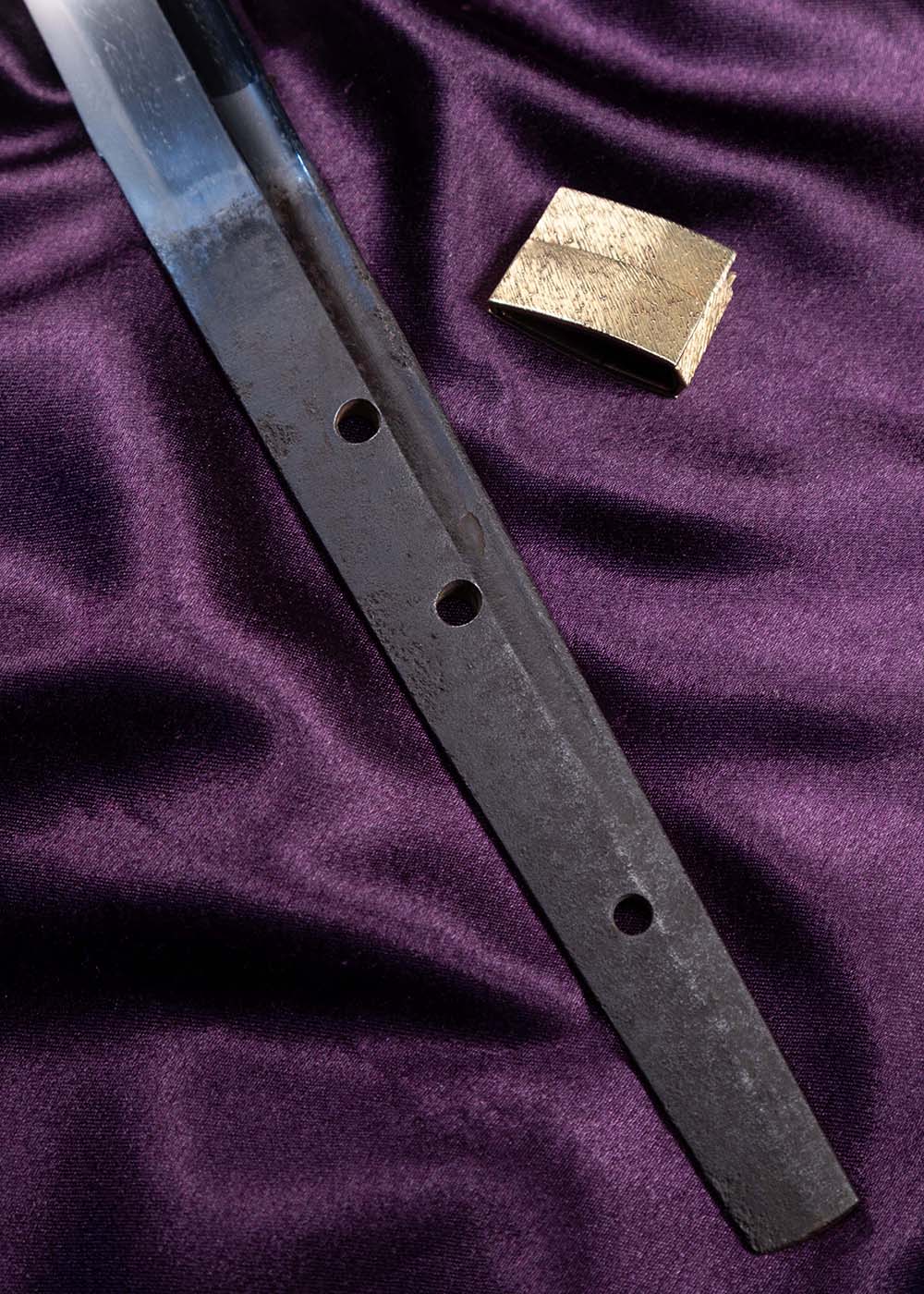
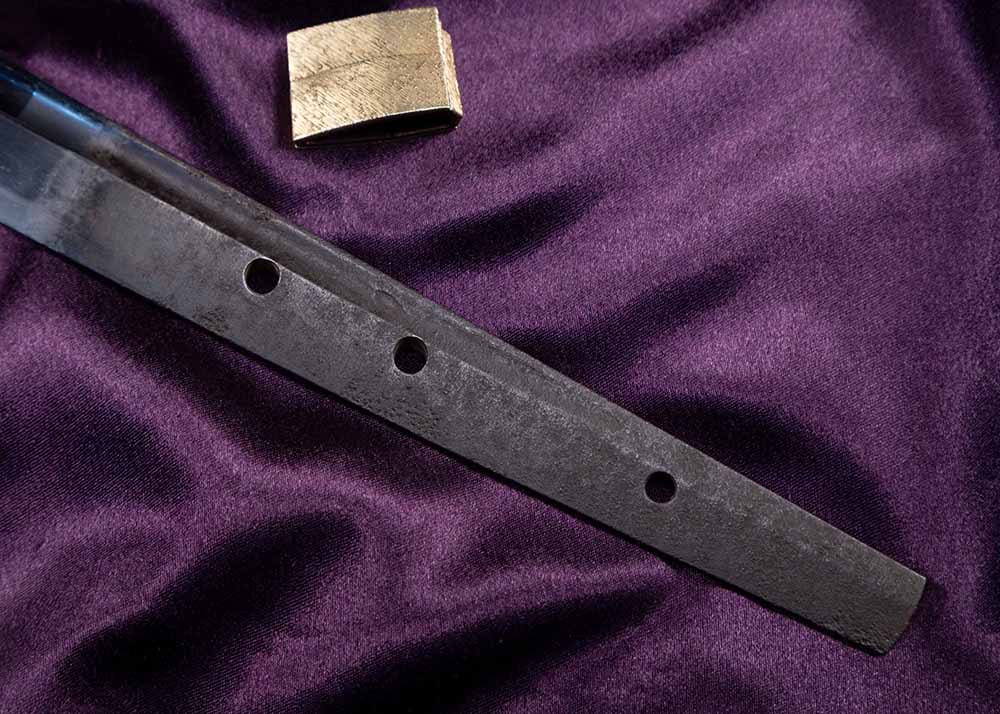
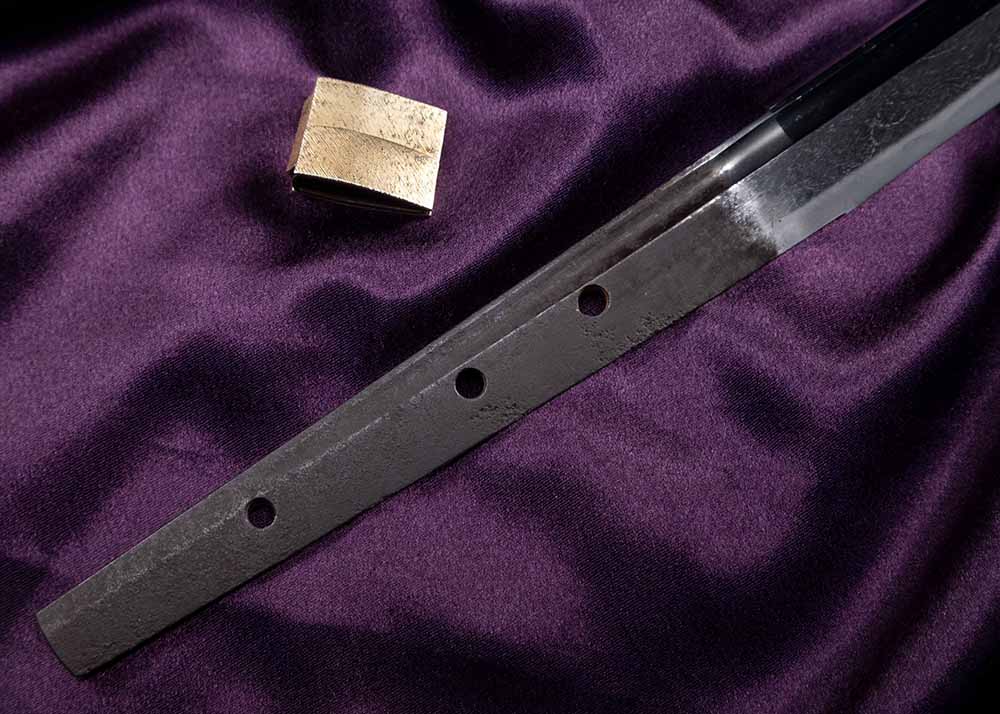
- 中心 Nakago: ō-suriage, mumei, three mekugi-ana
- 登録 Registration: Kanagawa Pref. № 28750, Shōwa 34 (1959); re-registered Reiwa 5 (2023)
Rai Kuniyasu (来国安) — signing in full 来源国安, Rai Minamoto Kuniyasu — was active in the Gentoku era (1329–31), at the very close of the Kamakura period. He belongs to the Rai school of Yamashiro, the Kyoto lineage of Kuniyuki, Kunitoshi, and Kunimitsu that stands at the heart of Yamashiro-den. The old records disagree on his exact place in the family: tradition makes him a son or grandson of Rai Kunisue; the Ōseki-shō records him as a son of Rai Kunitoshi, while the Kōsei Kotō Meikan takes him for Kunitoshi’s son-in-law. A dated blade of Gentoku 2 (1330) survives from his hand. He worked first in Yamashiro but later removed to the village of Awaji in the Nakajima fief of Settsu — whence his group is known as Nakajima-Rai (中島来) or Awaji-Rai (淡路来), and he himself is sometimes listed under the sobriquet Awajibō. (The coincidence of the village name with Awaji province led earlier catalogues to misplace him in the Mitachizaki fief of that province.)
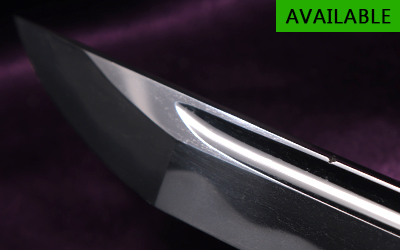
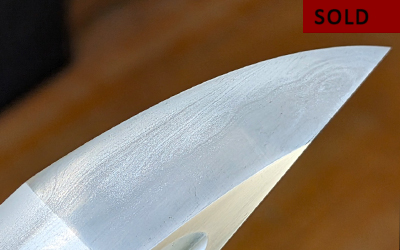
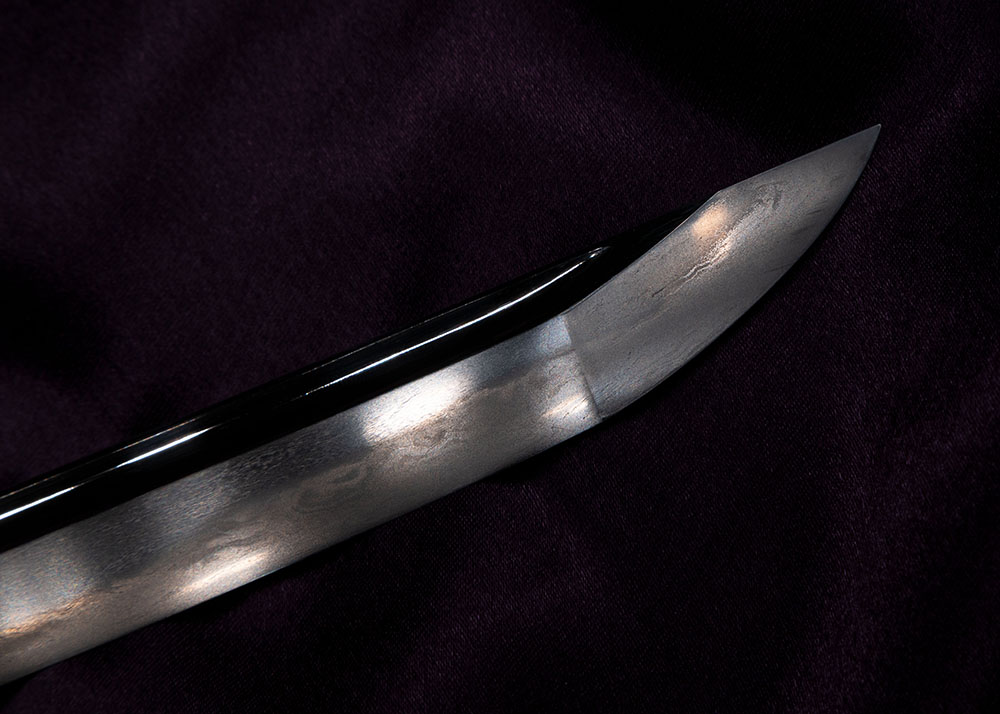
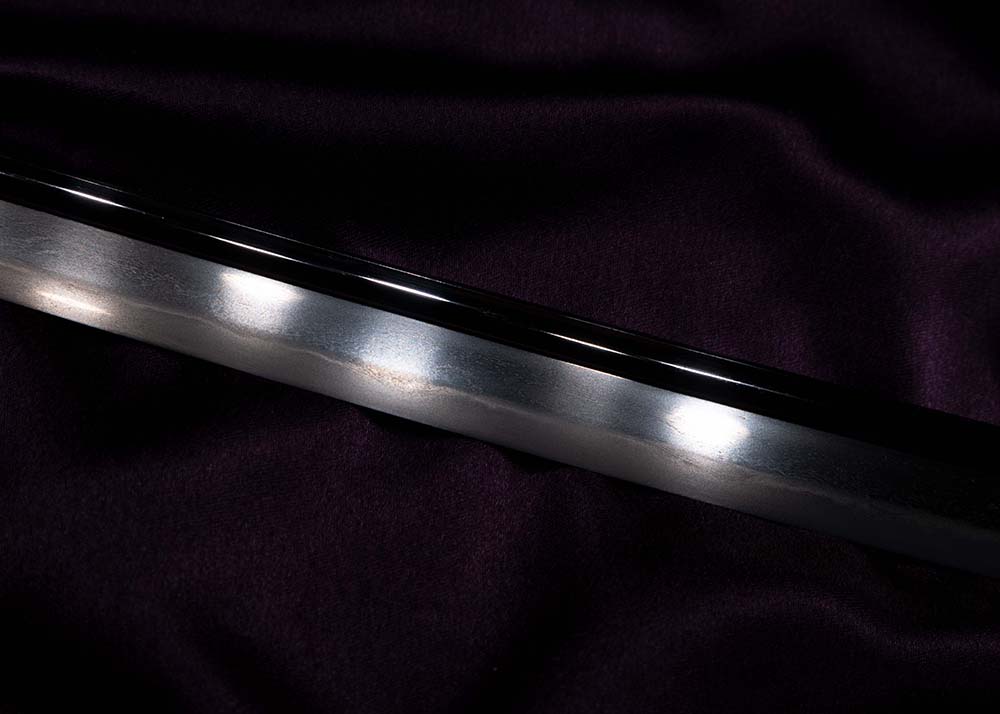
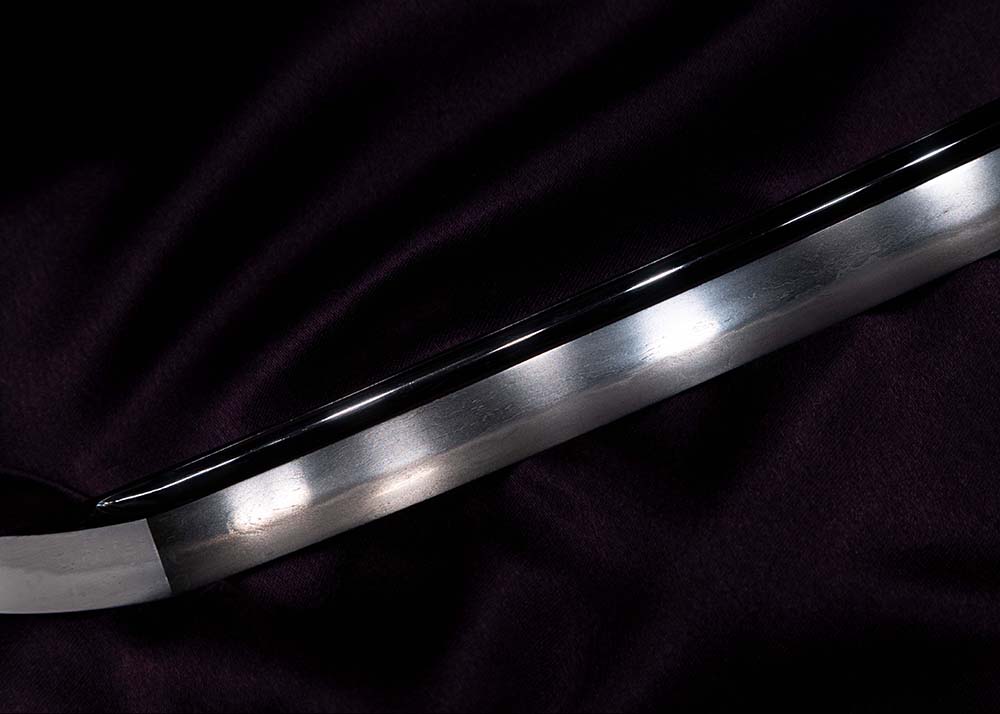
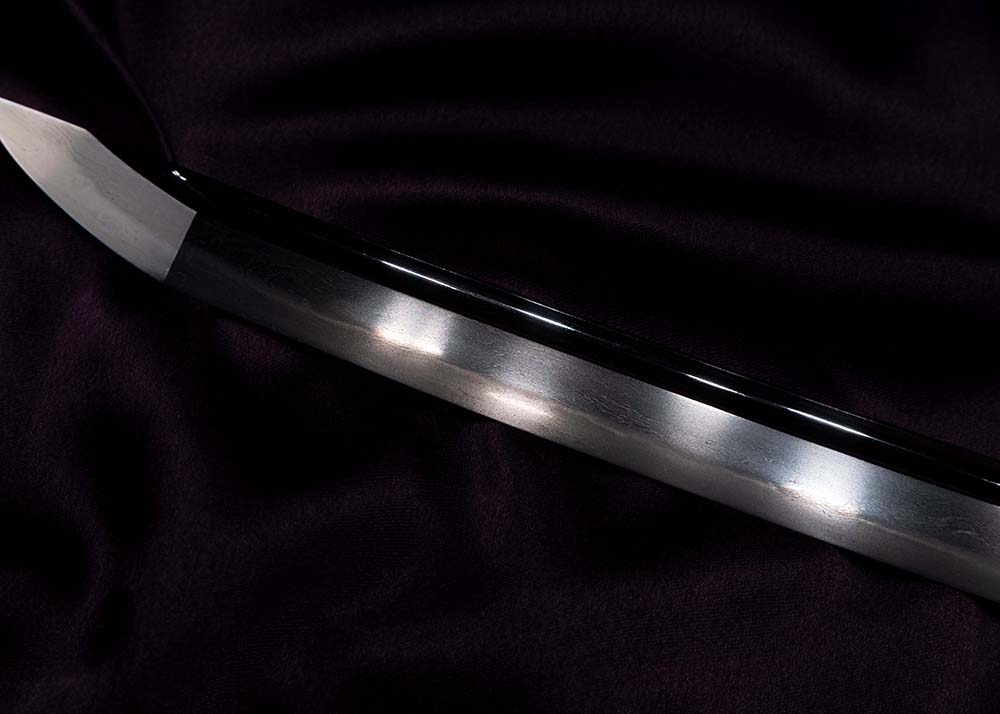
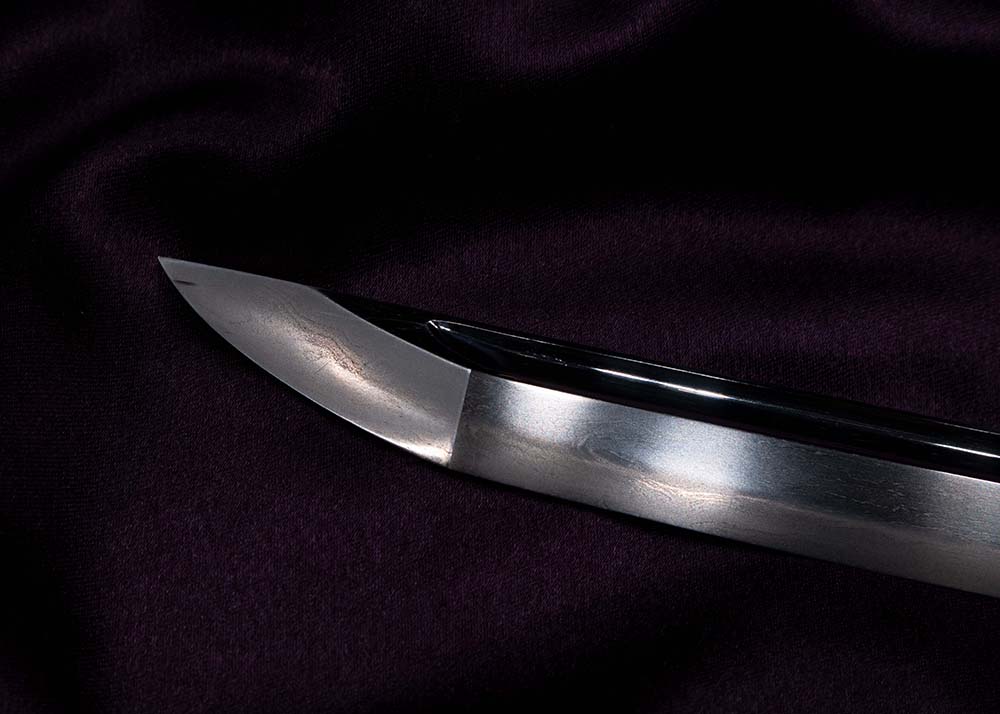
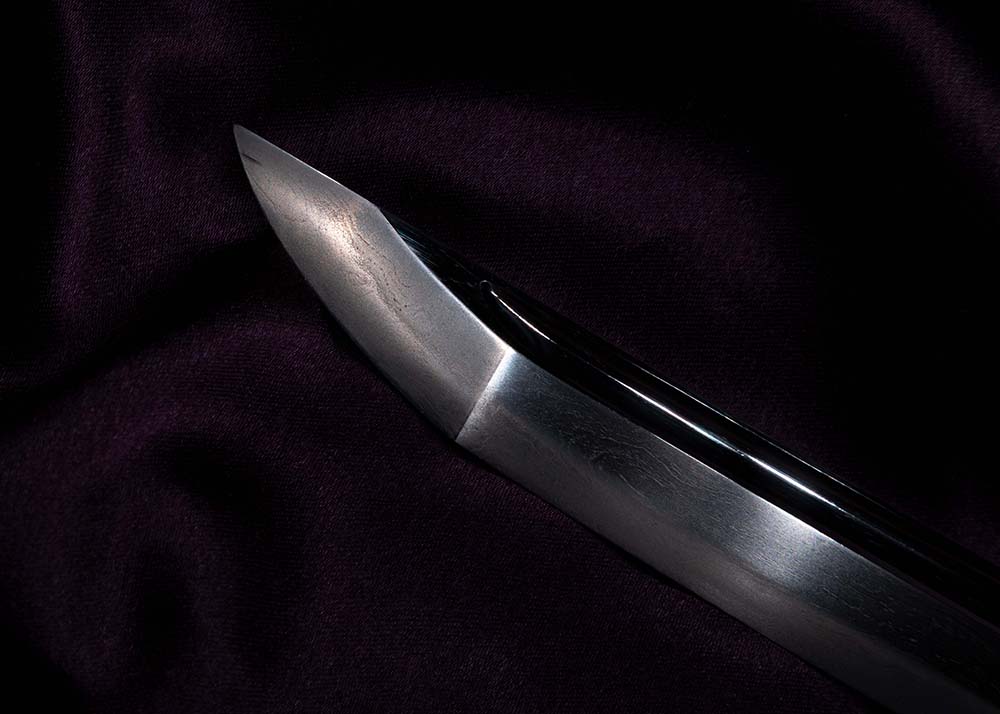
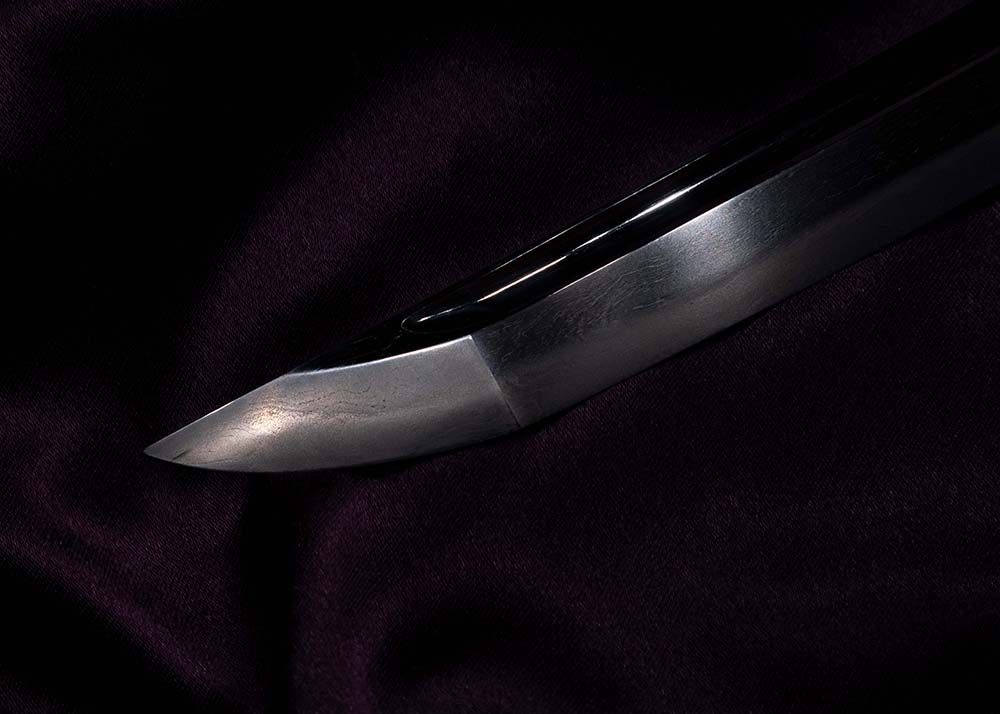
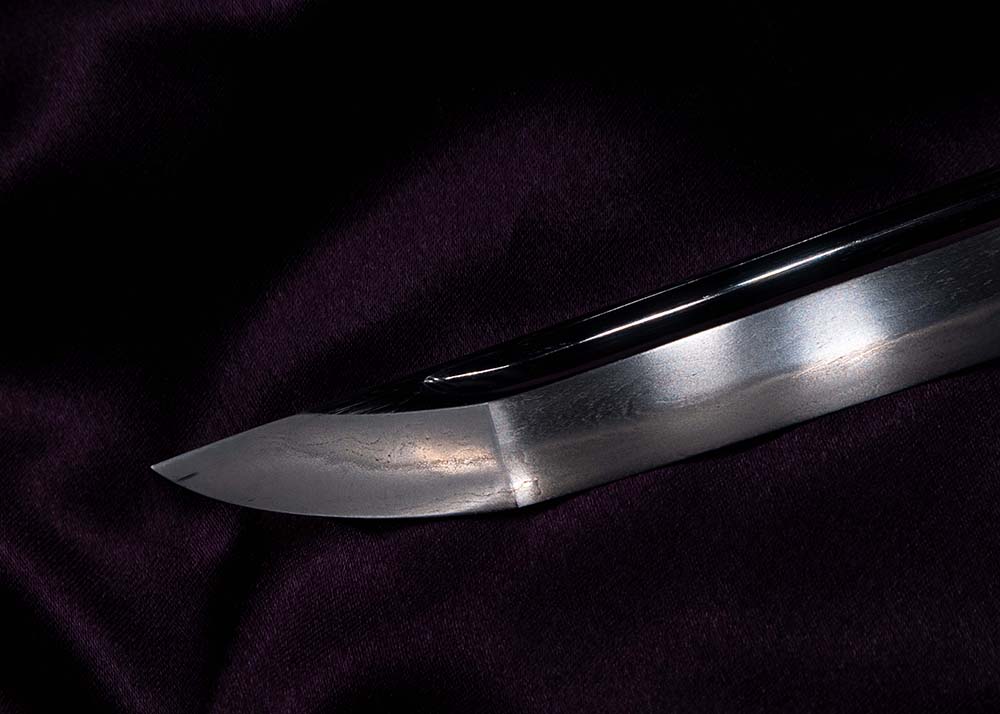
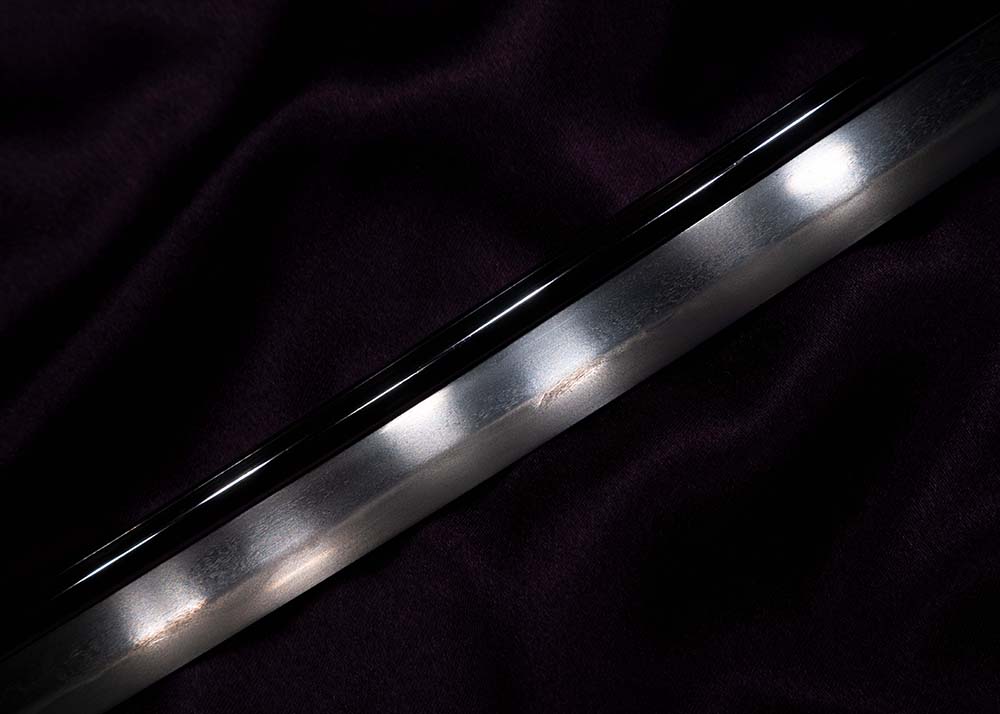
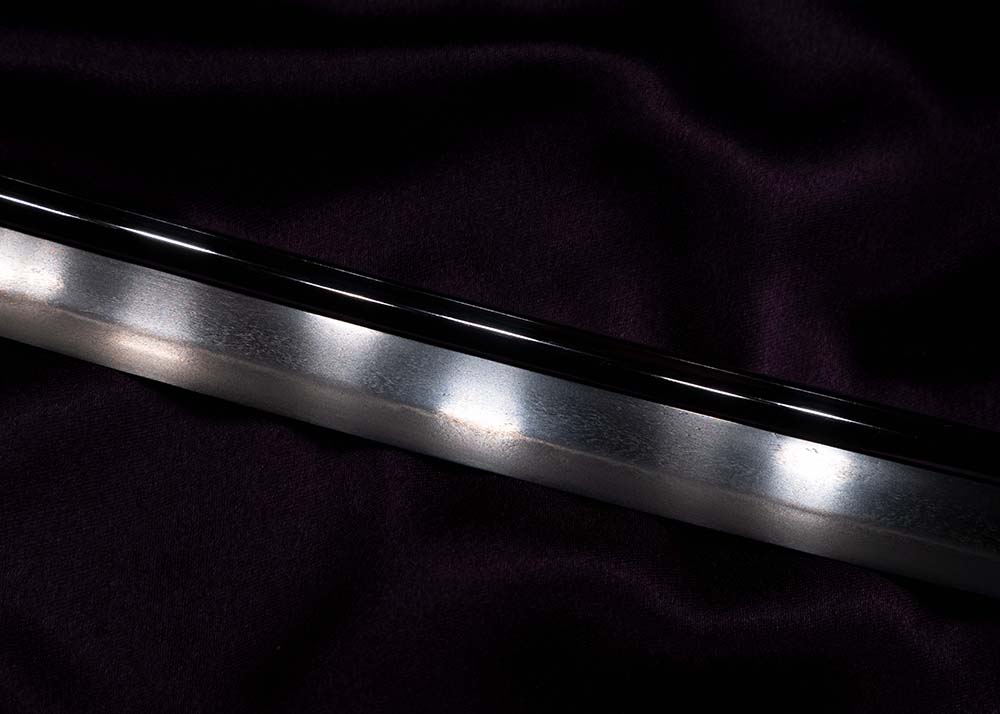
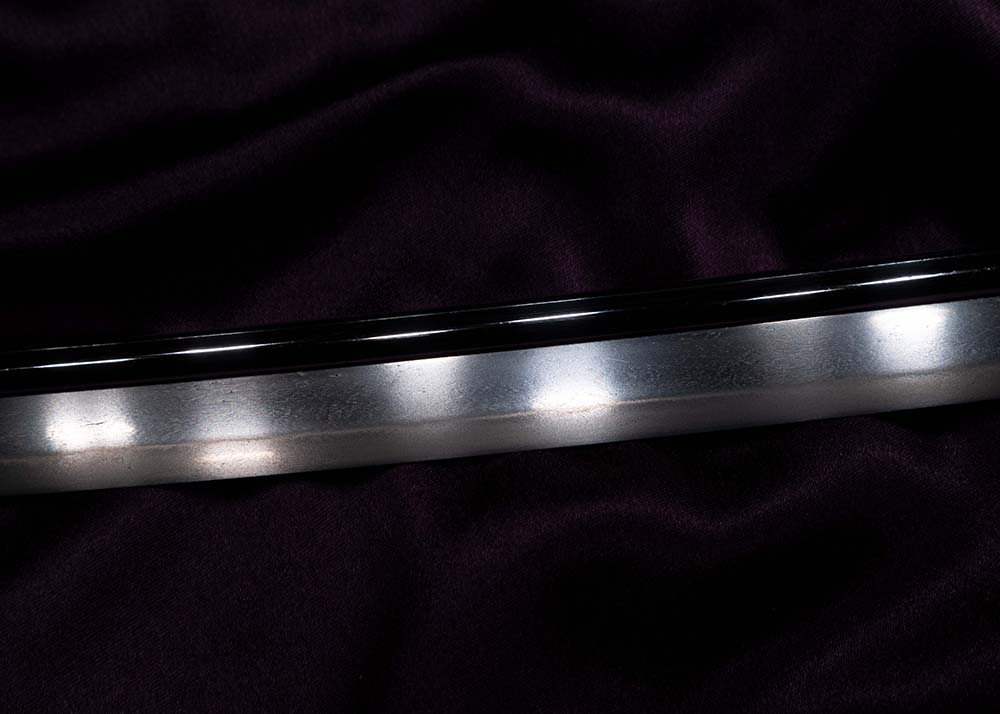
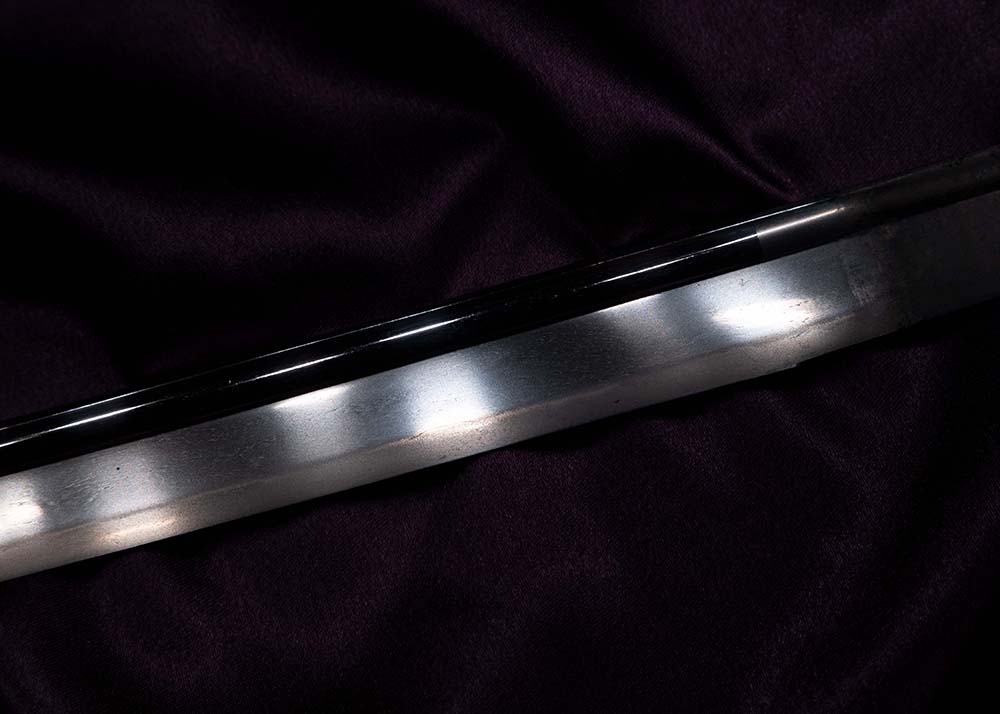
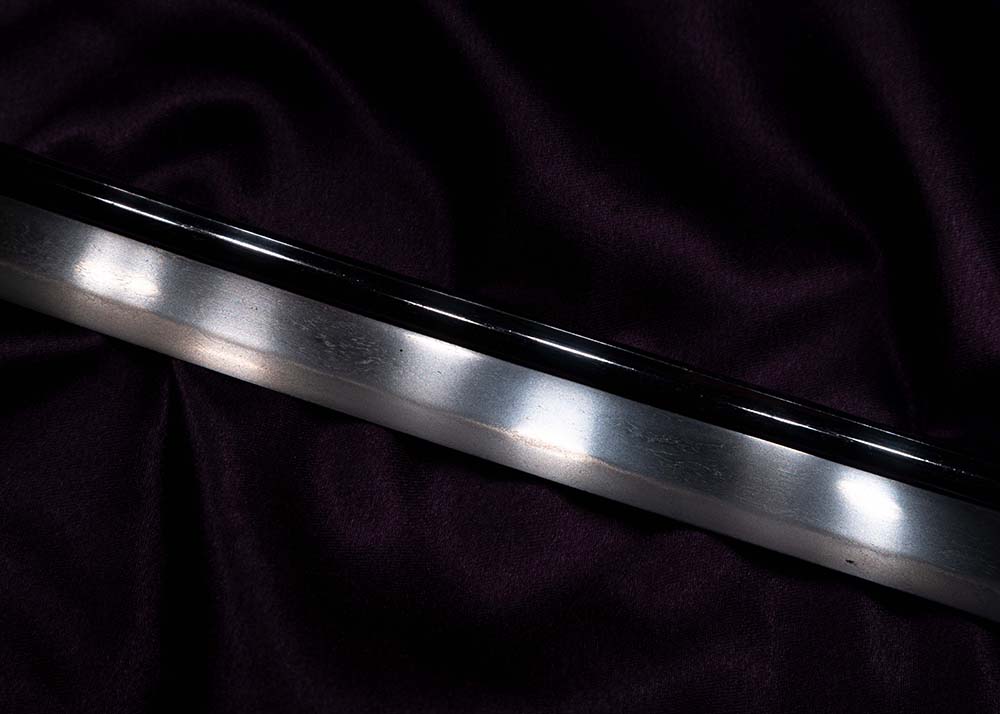
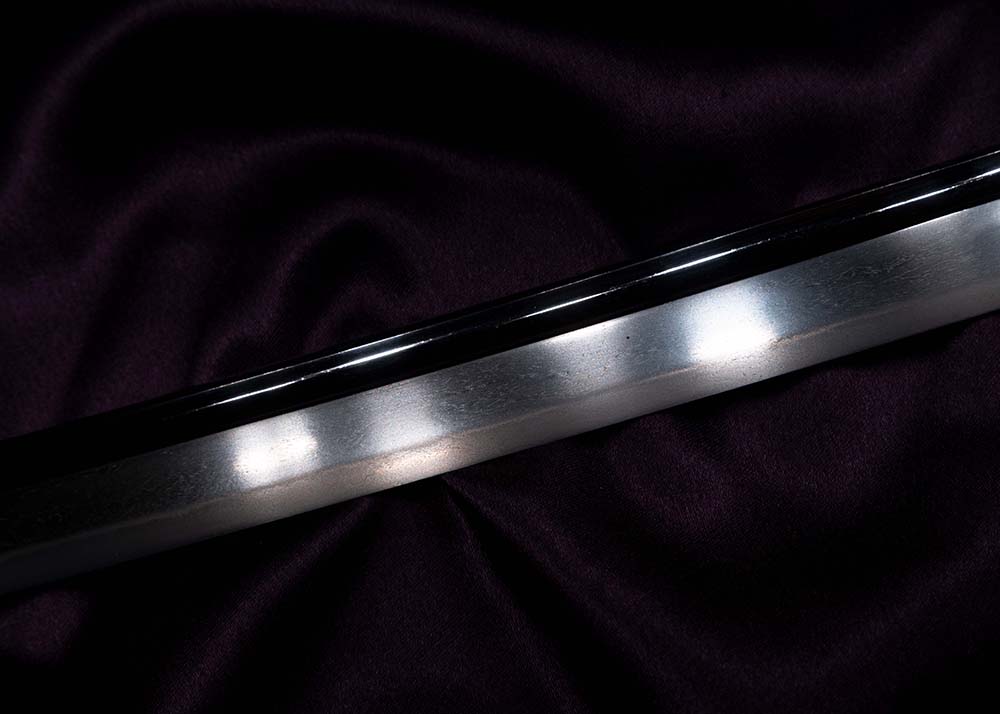
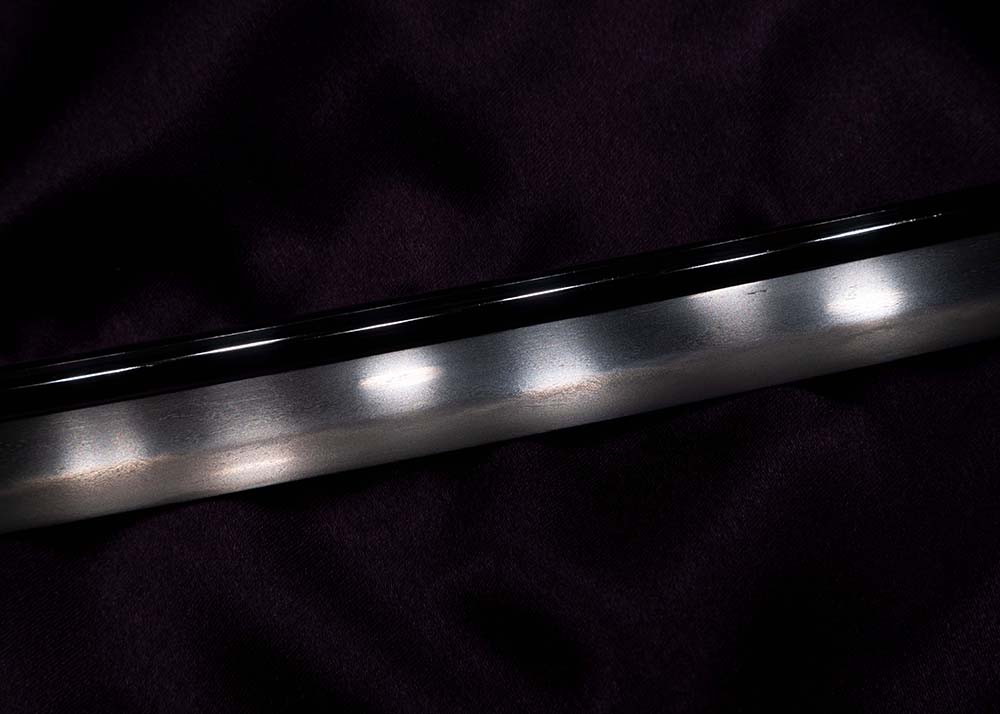
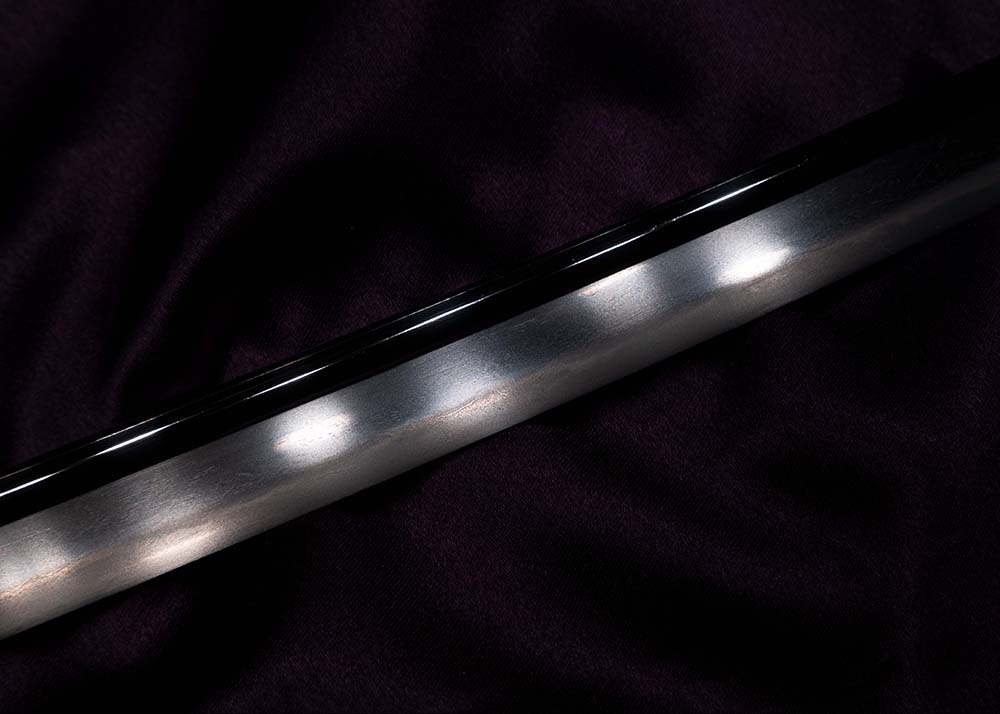
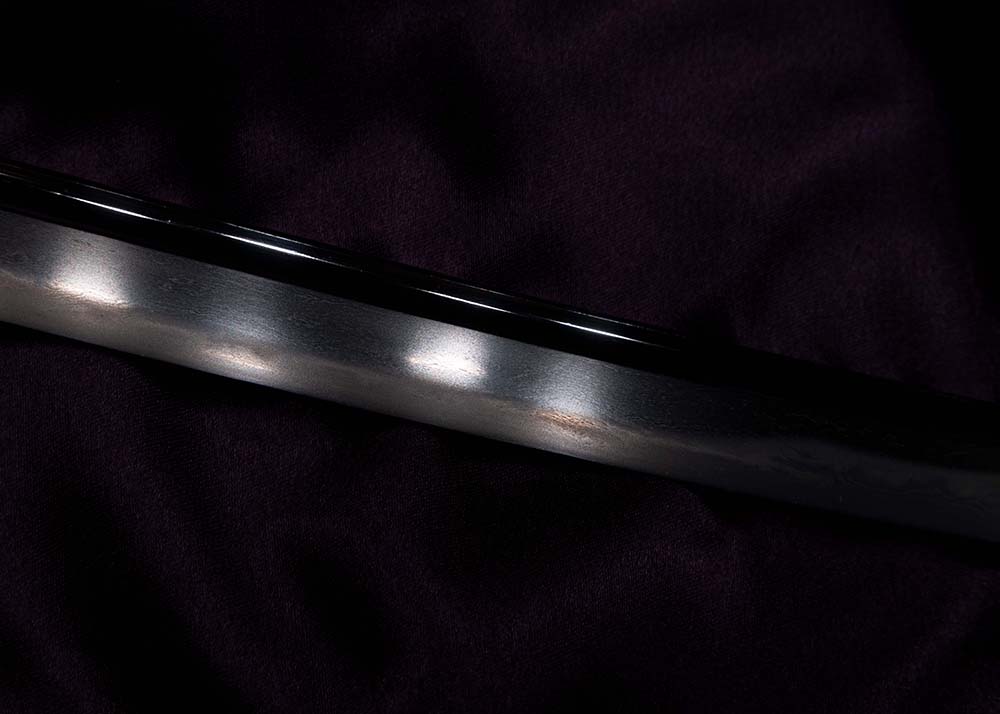
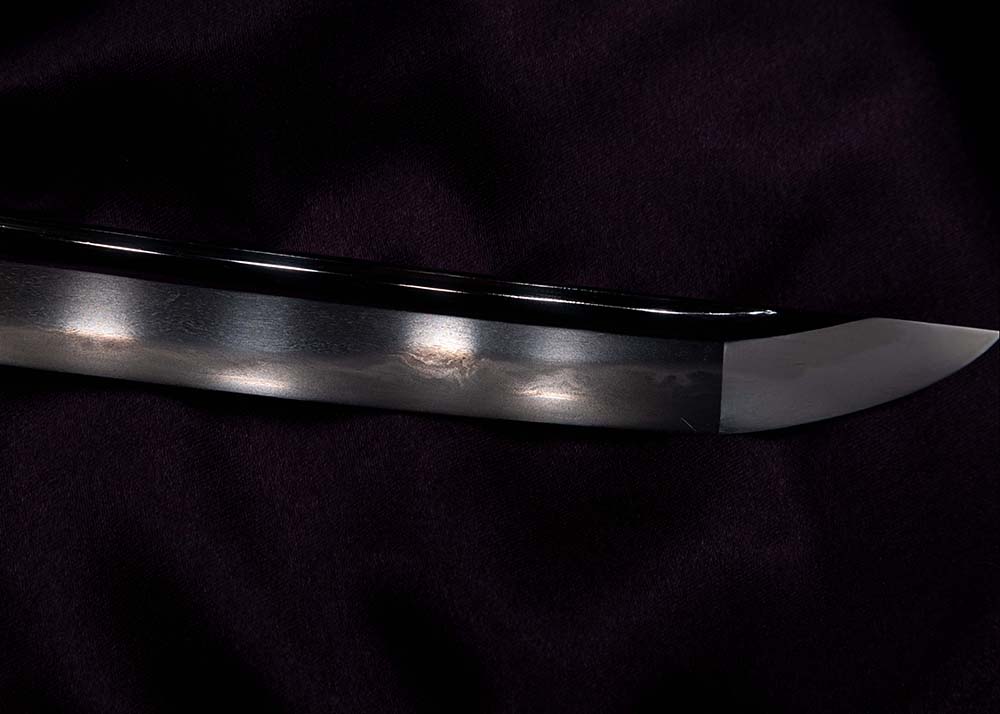
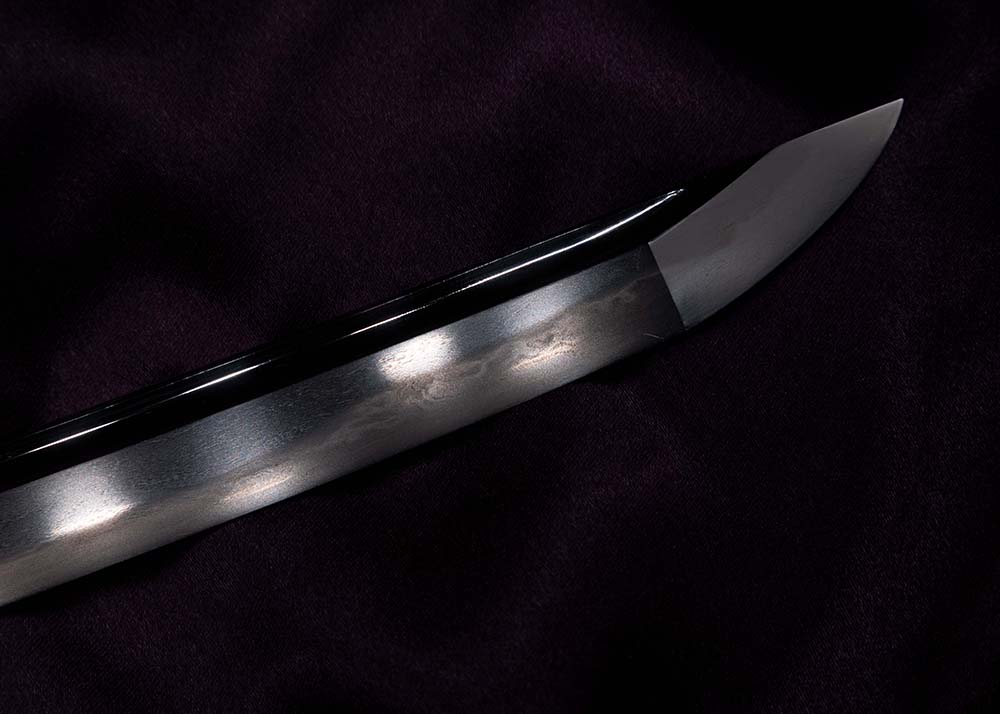
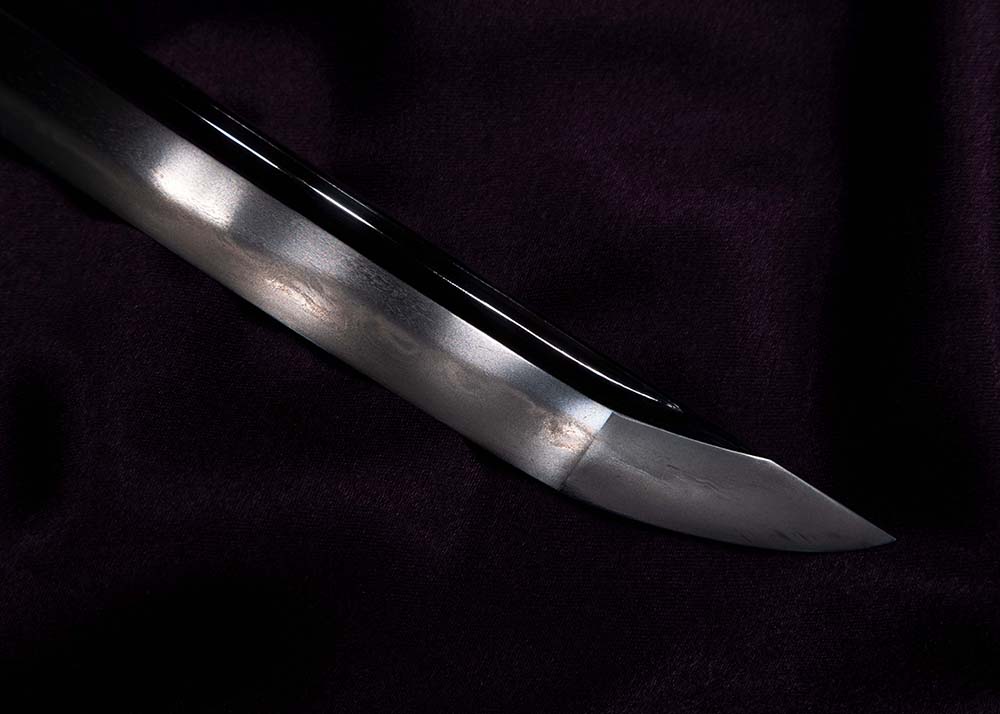
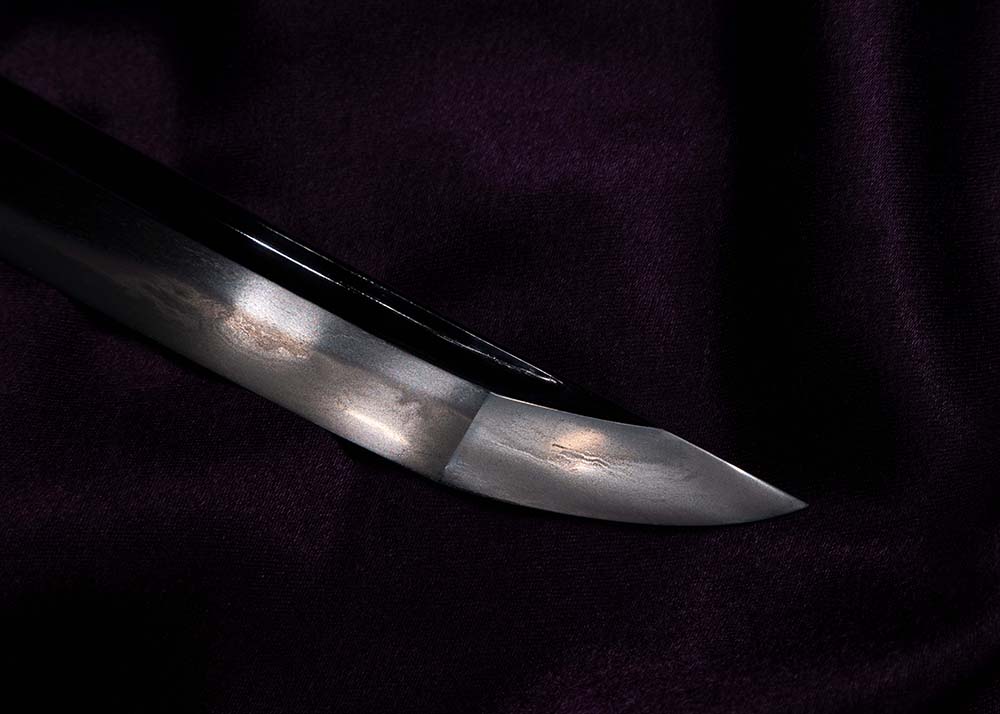
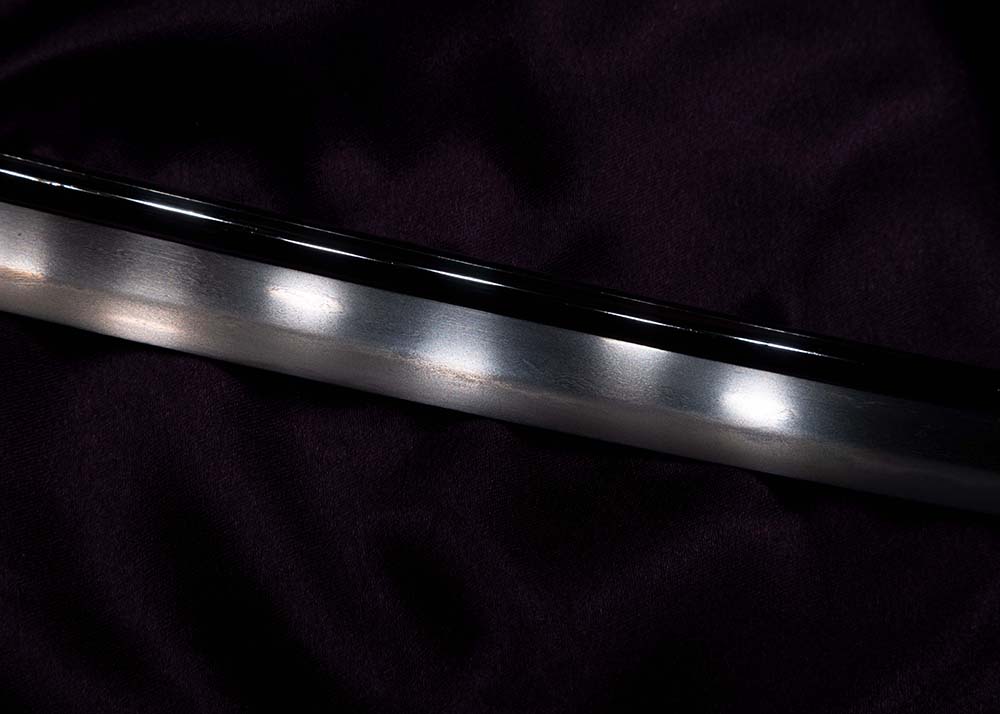
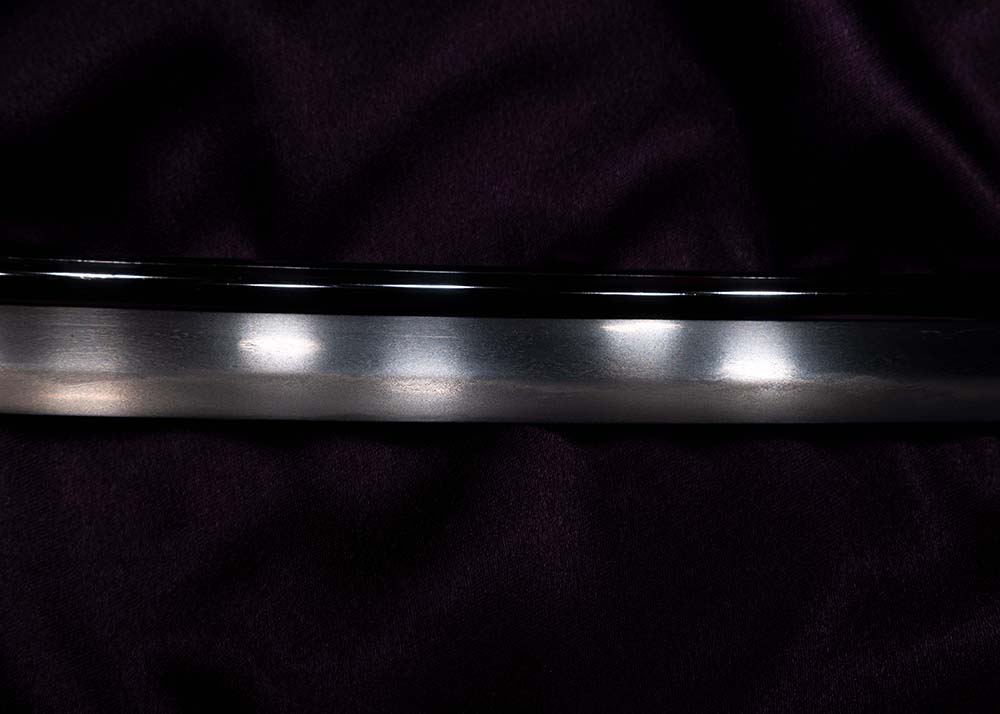
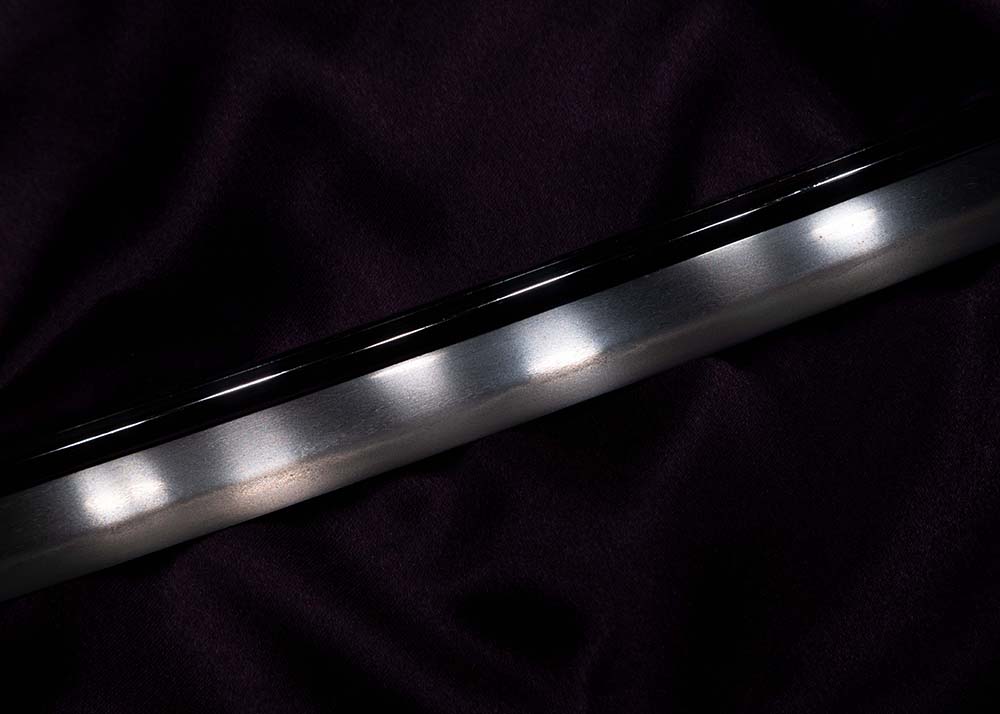
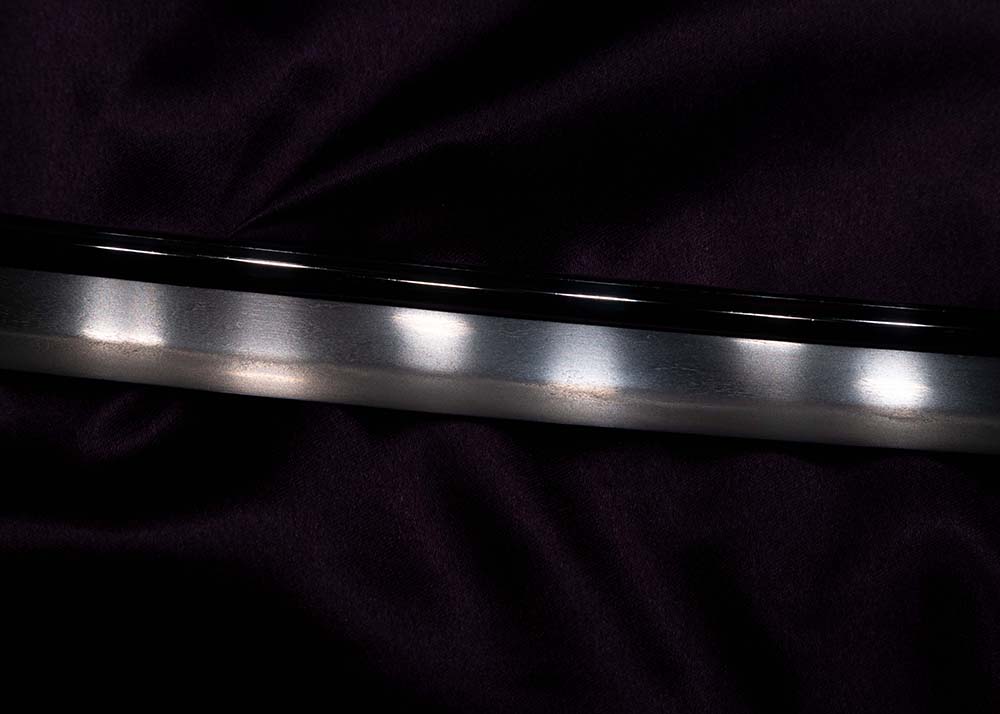
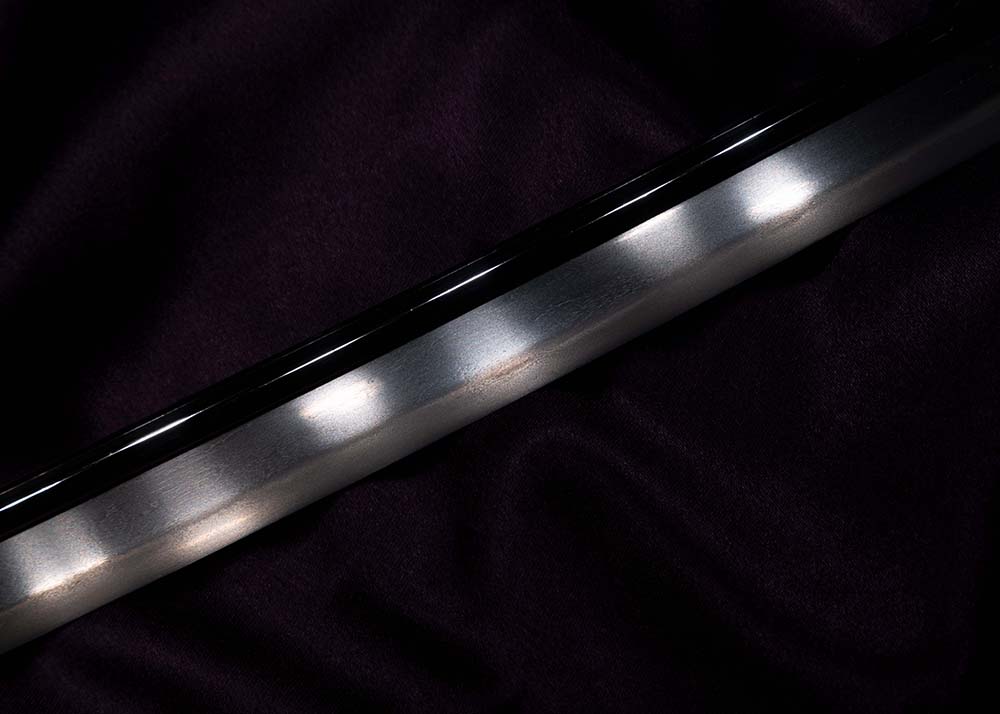
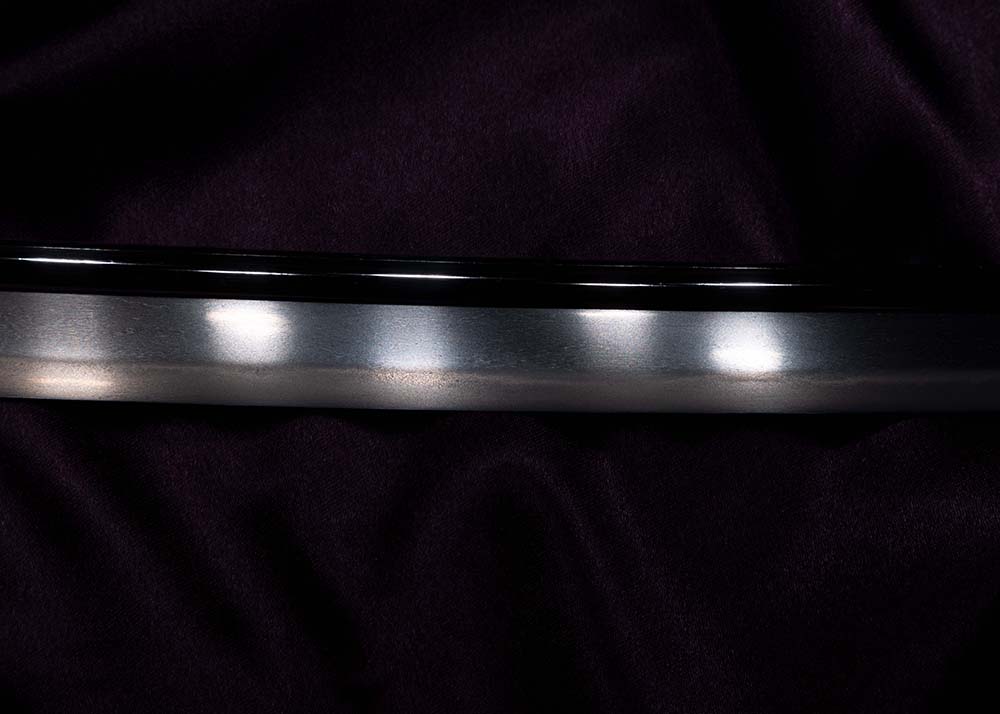
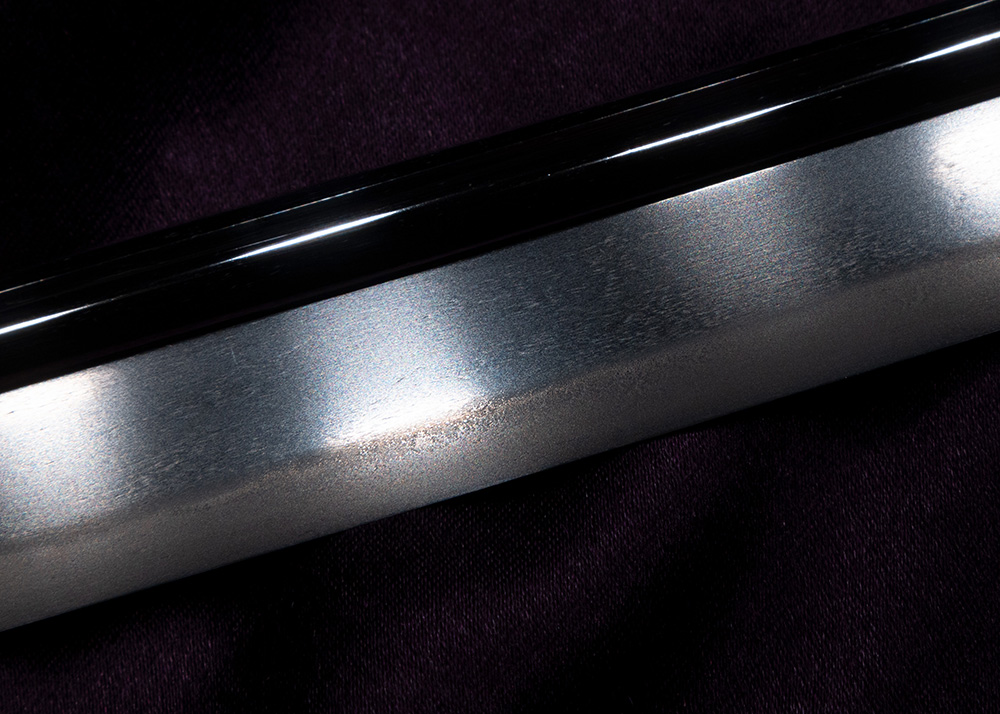
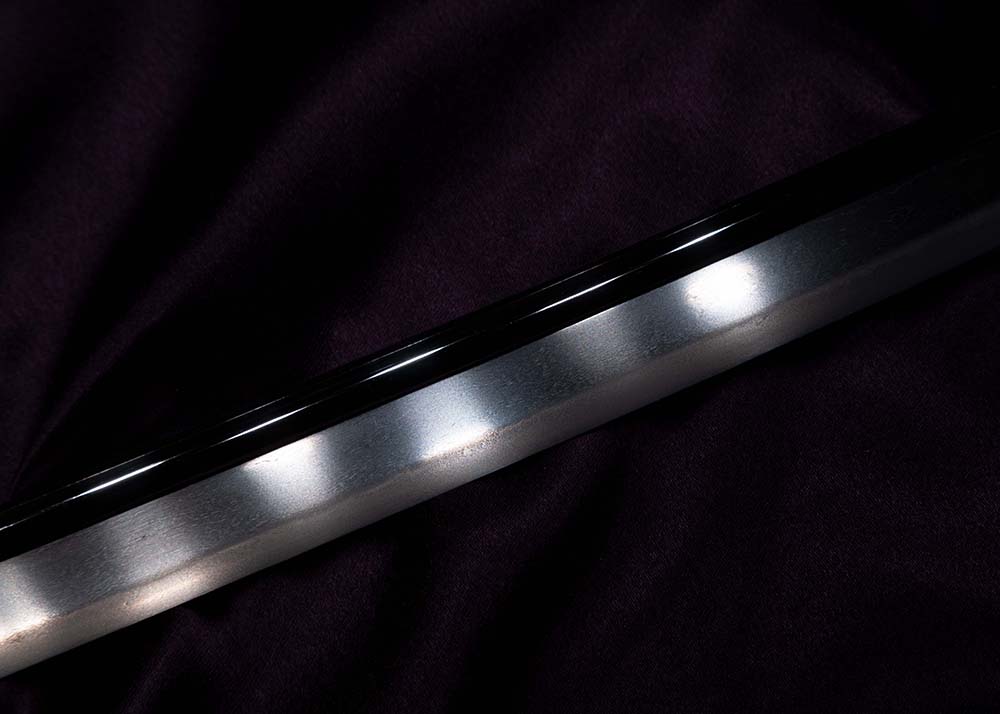
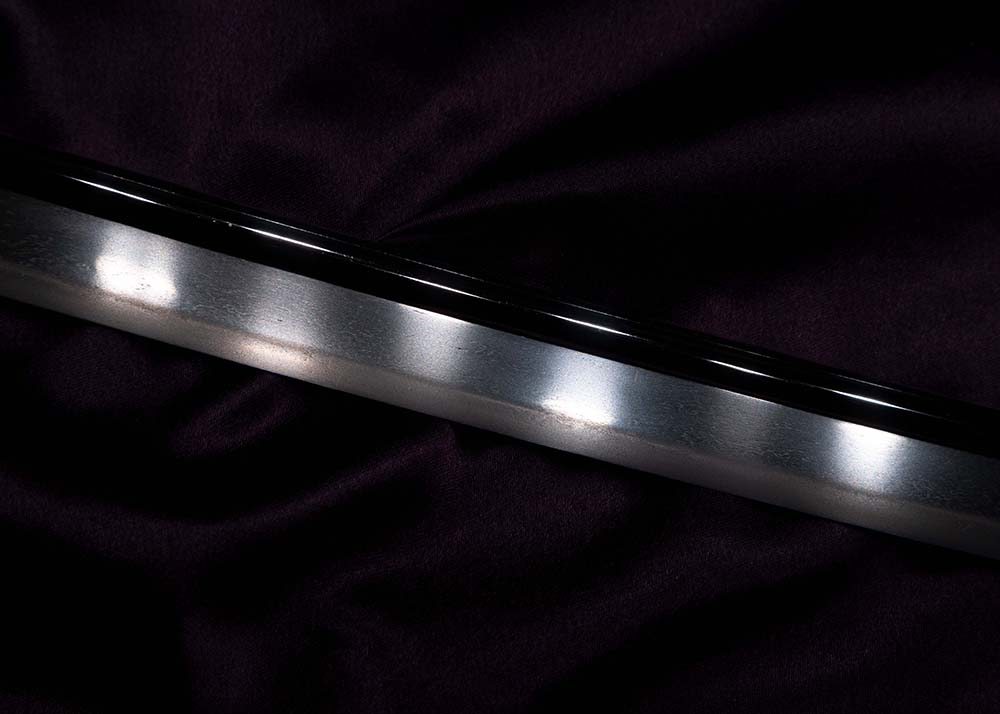
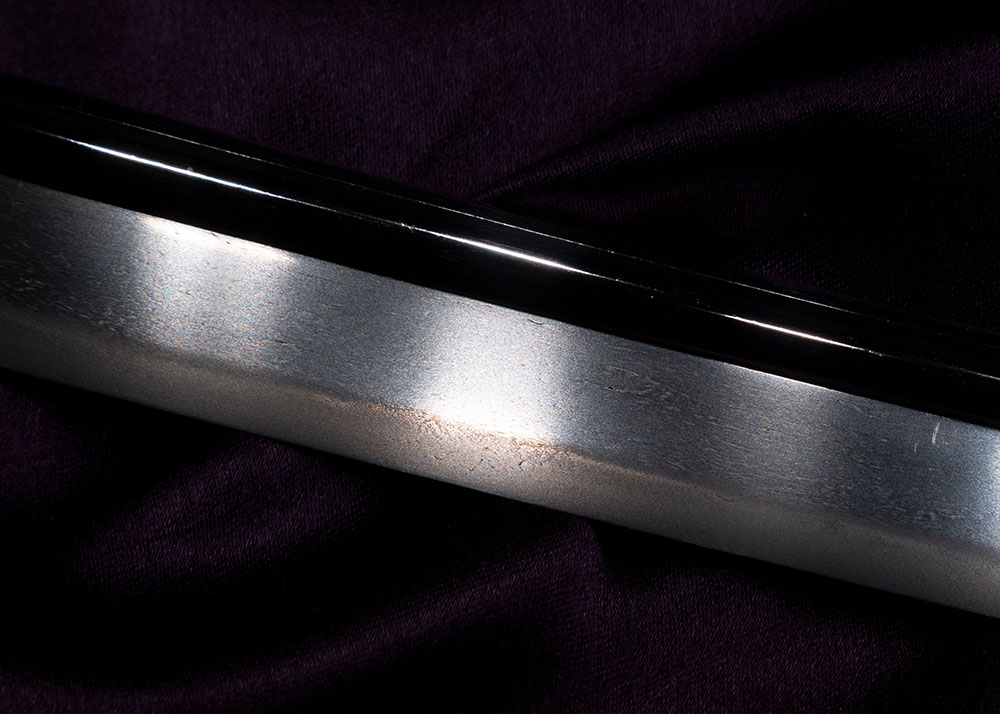
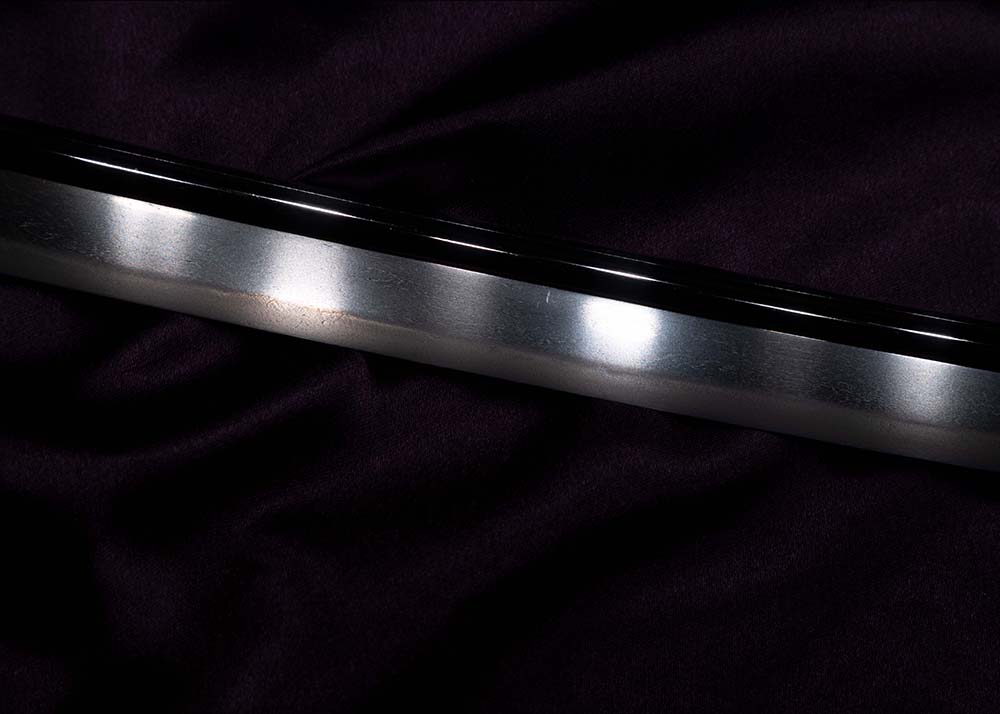
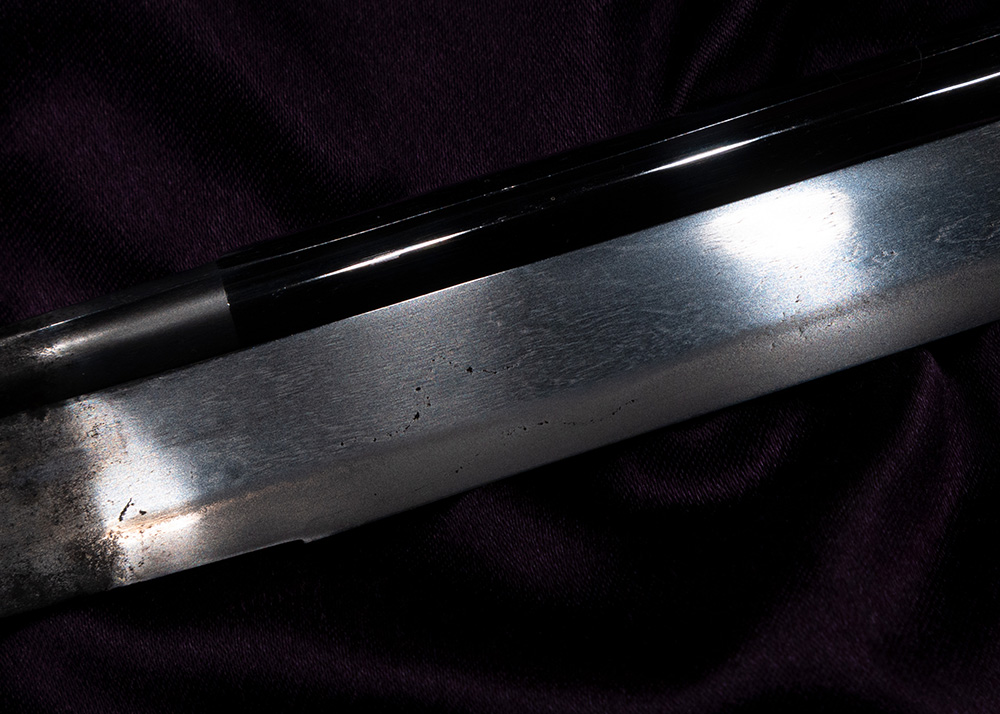
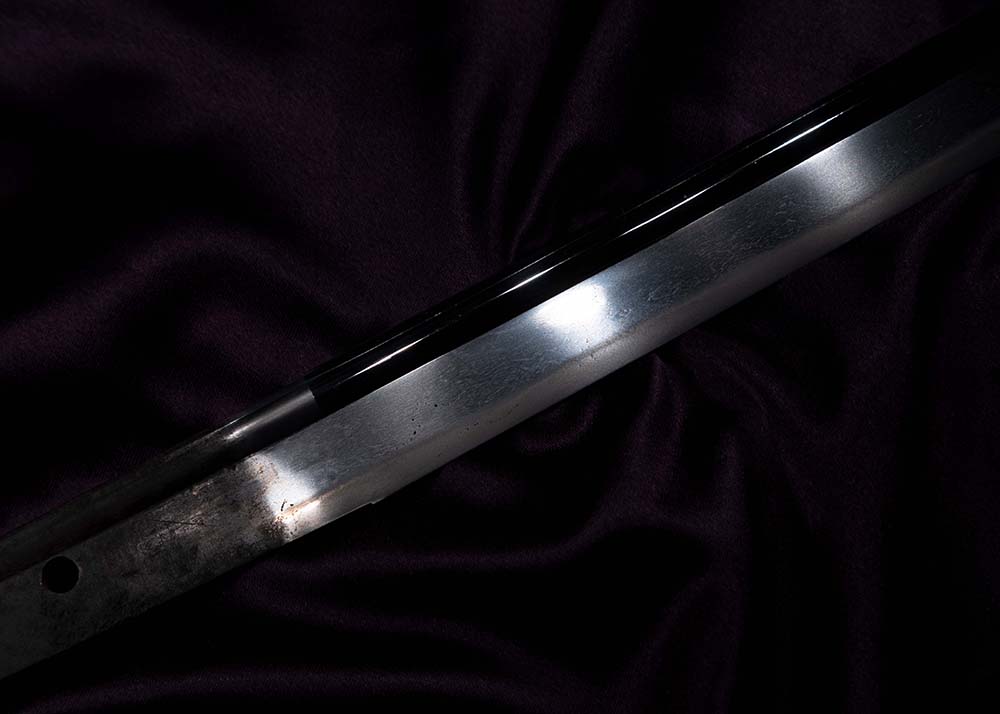
This is an ō-suriage, mumei katana of 71.1 cm. The tang has been shortened over time, as is the norm for Rai blades that began as long slender Kamakura tachi. The workmanship reads as thoroughly Yamashiro: a bright, tightly-forged ko-itame-hada bearing ji-nie, beneath a suguha-based hamon in ko-nie-deki with a soft, luminous nioiguchi, the bōshi turning back in ko-maru.
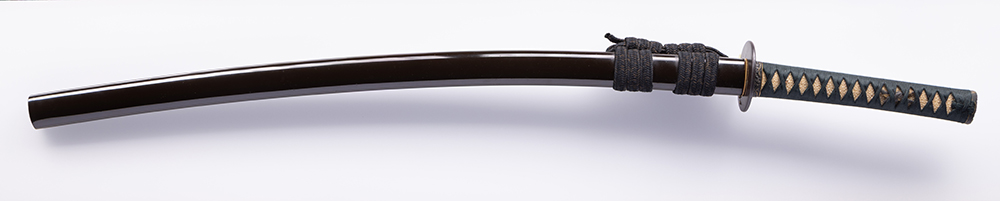
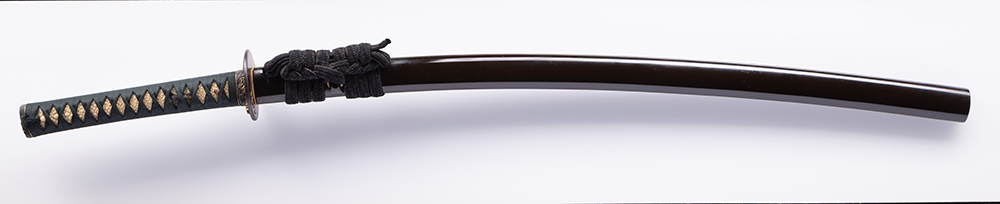
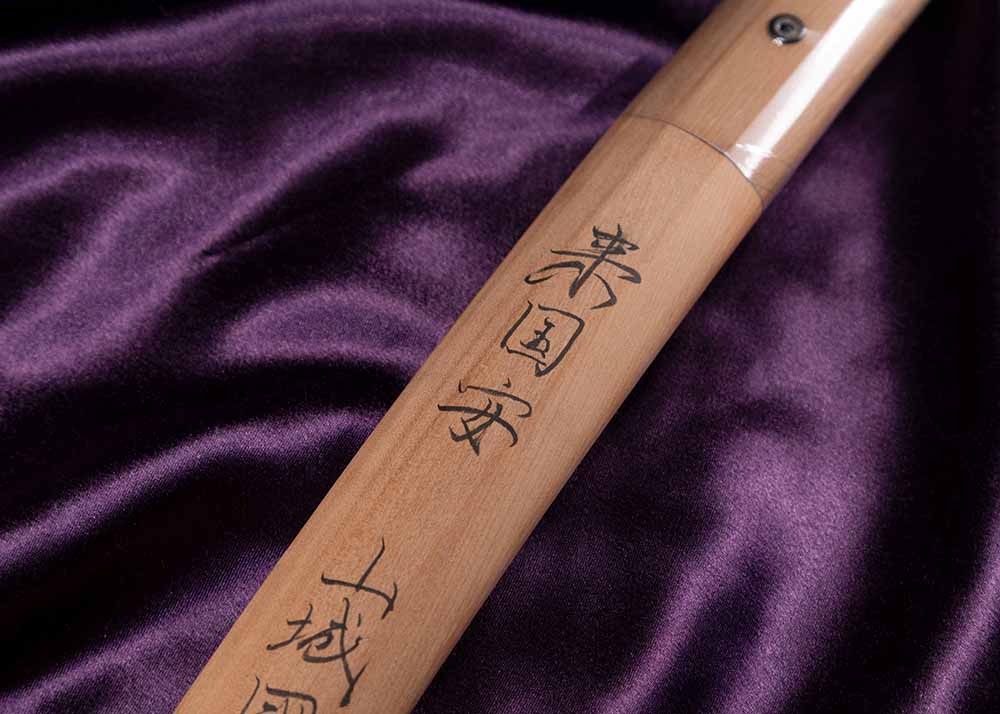
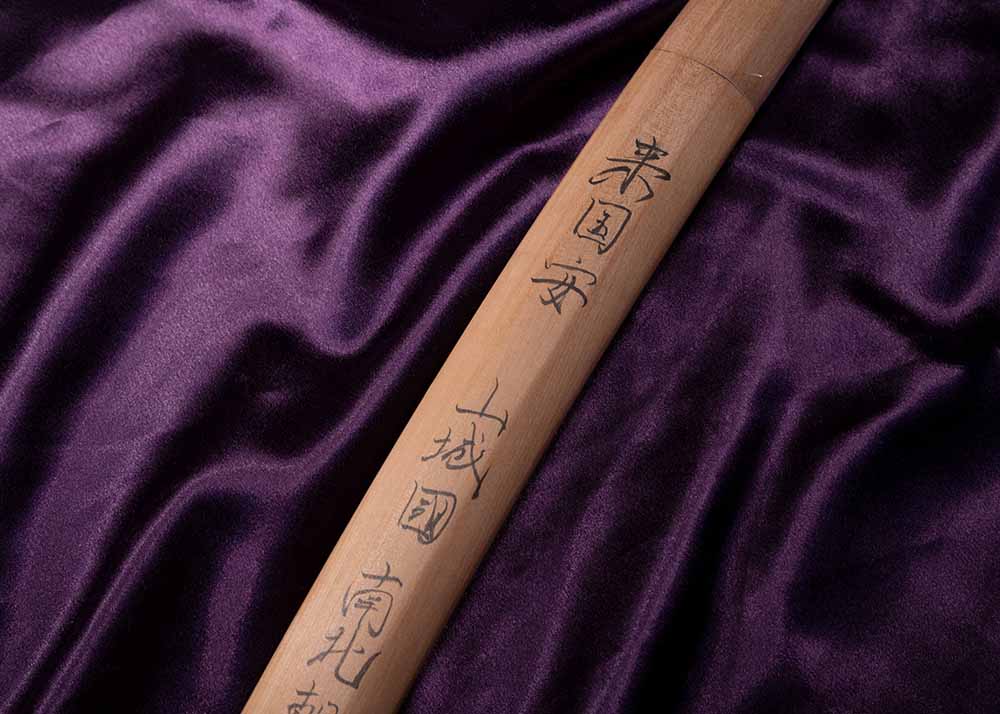
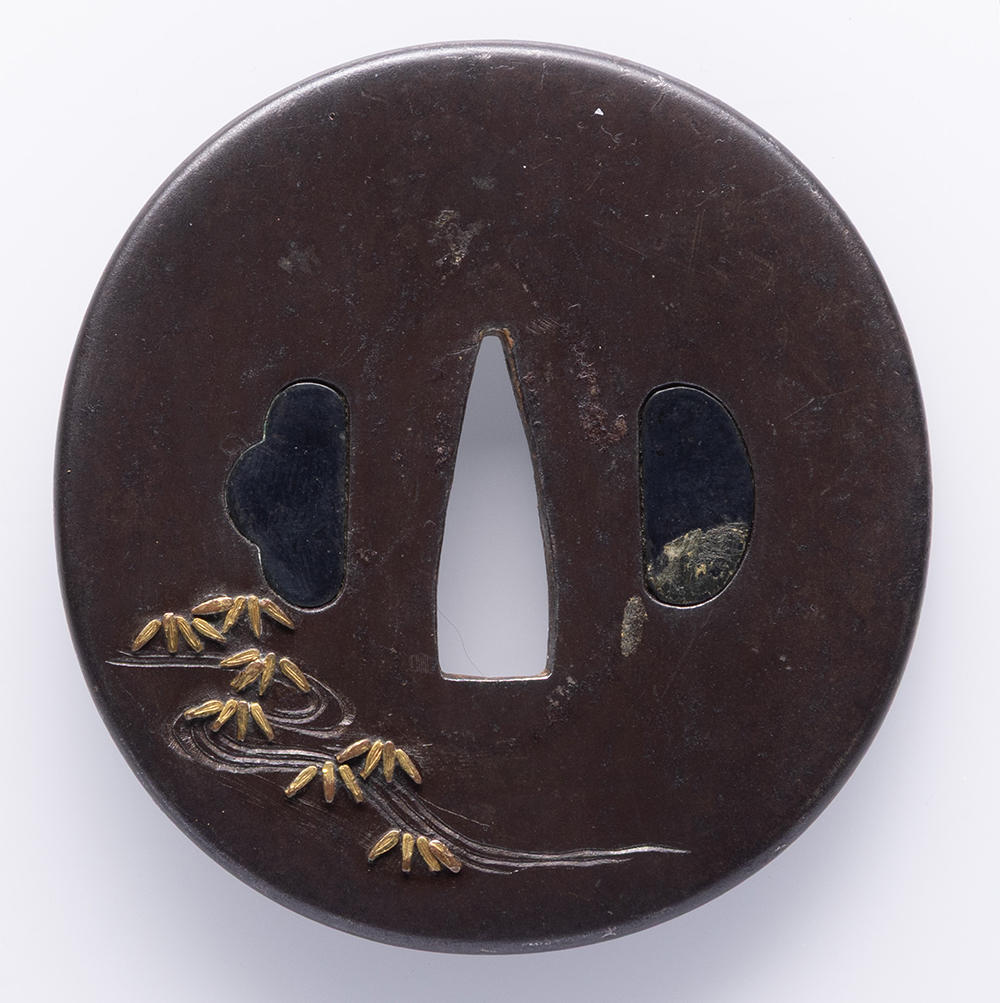
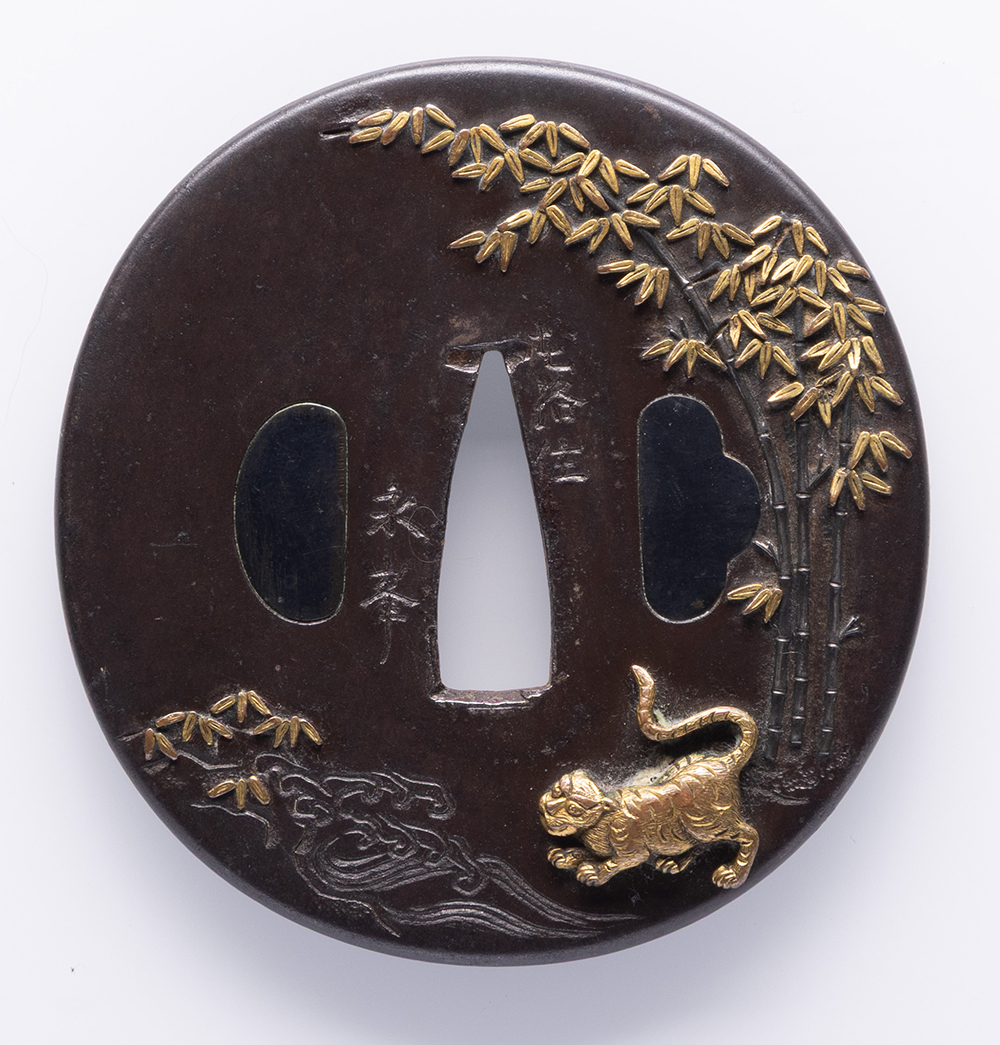
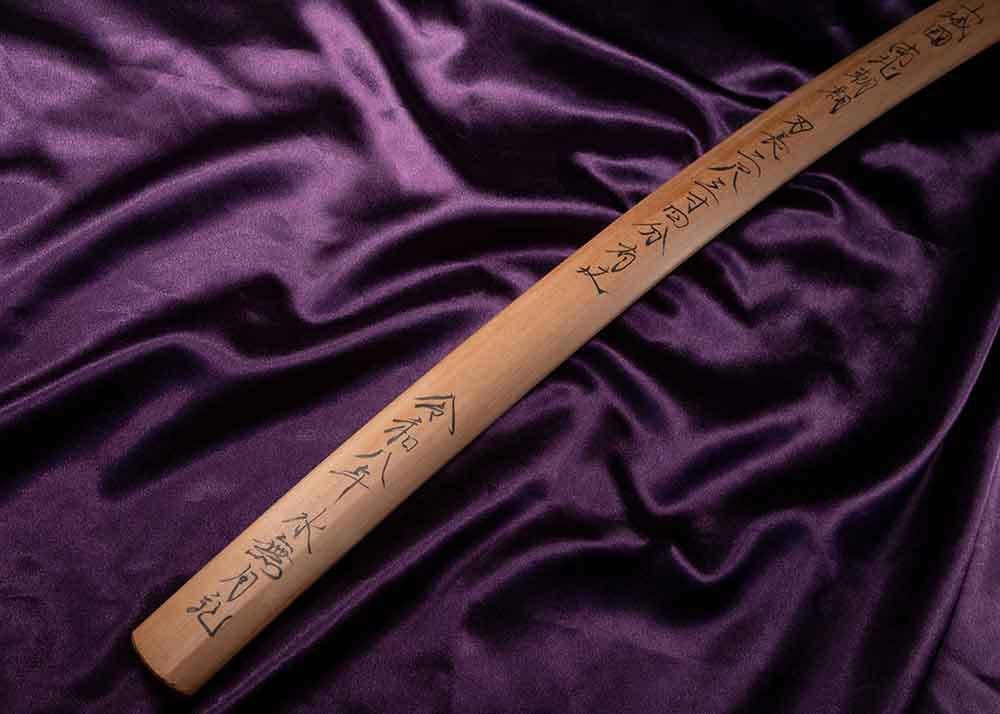
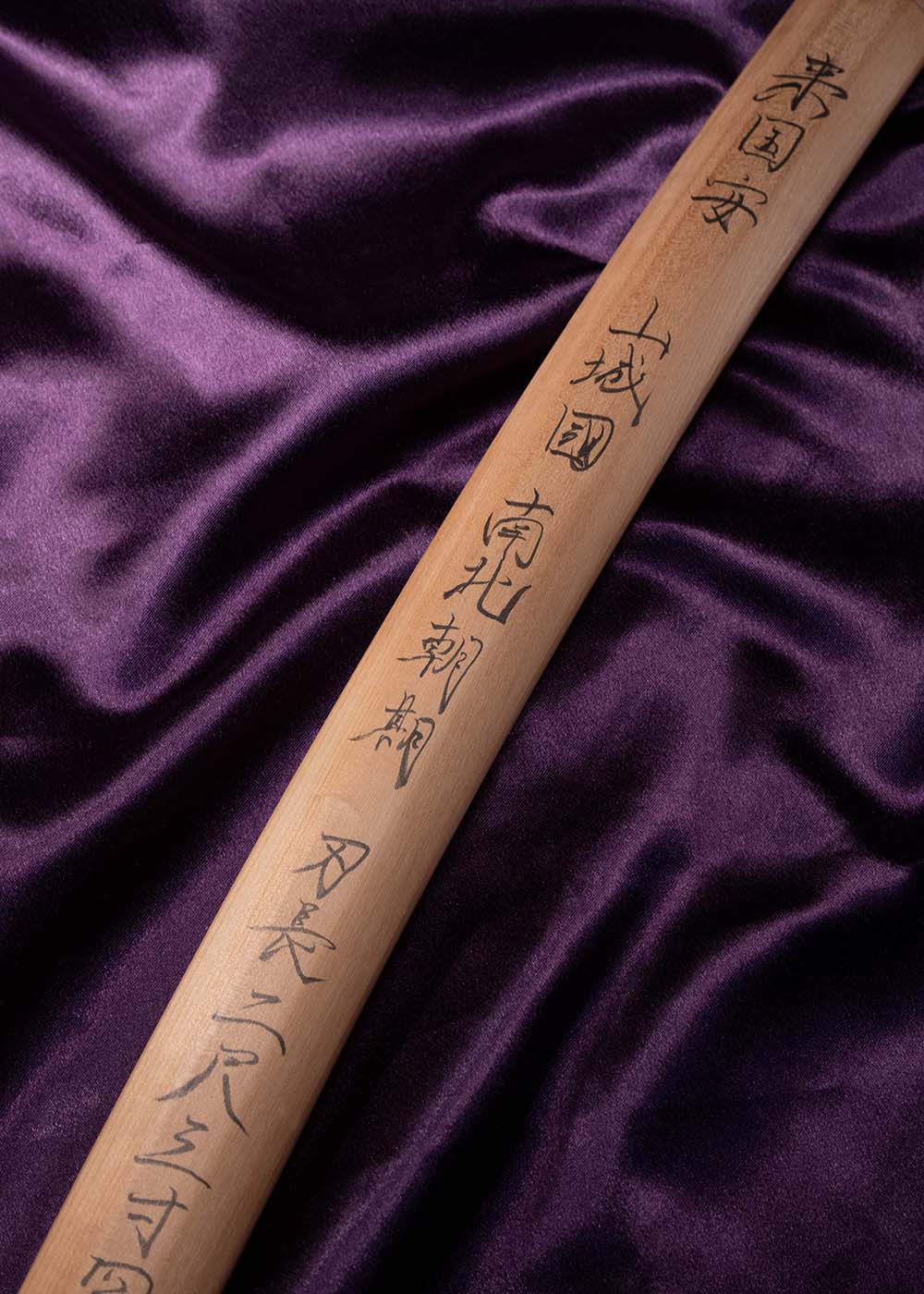
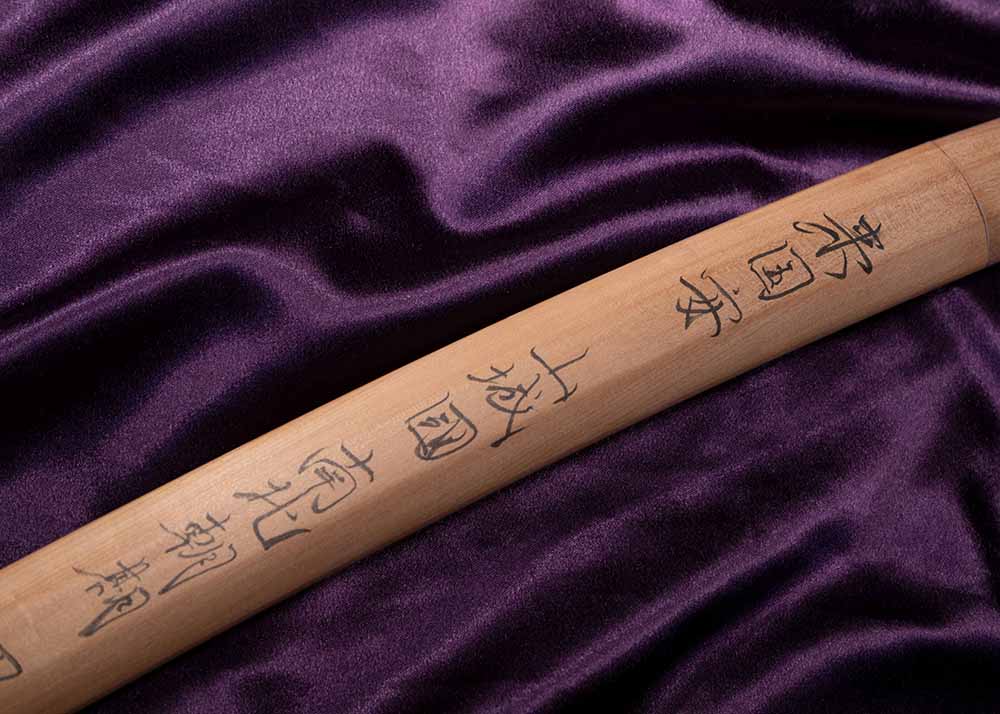
The shirasaya carries a brushed attribution to opening 来国安 / 山城國 — “Rai Kuniyasu / Yamashiro province” — corroborating the attribution. Accompanying the shirasaya is a buke-zukuri katana mounting: a deep, brown-black lacquer saya (tame/roiro), a tsuka wrapped in black ito over same in twisted hineri-maki with lozenge menuki, mounted with a tiger-and-bamboo tsuba. Round, in a warm brown-patinated ground with two hitsu-ana, the plate shows a tiger prowling out of a gilt bamboo grove above stylized water — bamboo leaves, beast, and reeds picked out in gold takabori-iroe / zōgan — with reeds by flowing water continuing the theme on the reverse. The take-ni-tora (bamboo-and-tiger) motif is a classic of East Asian art, emblematic of courage and of shelter from the storm.